
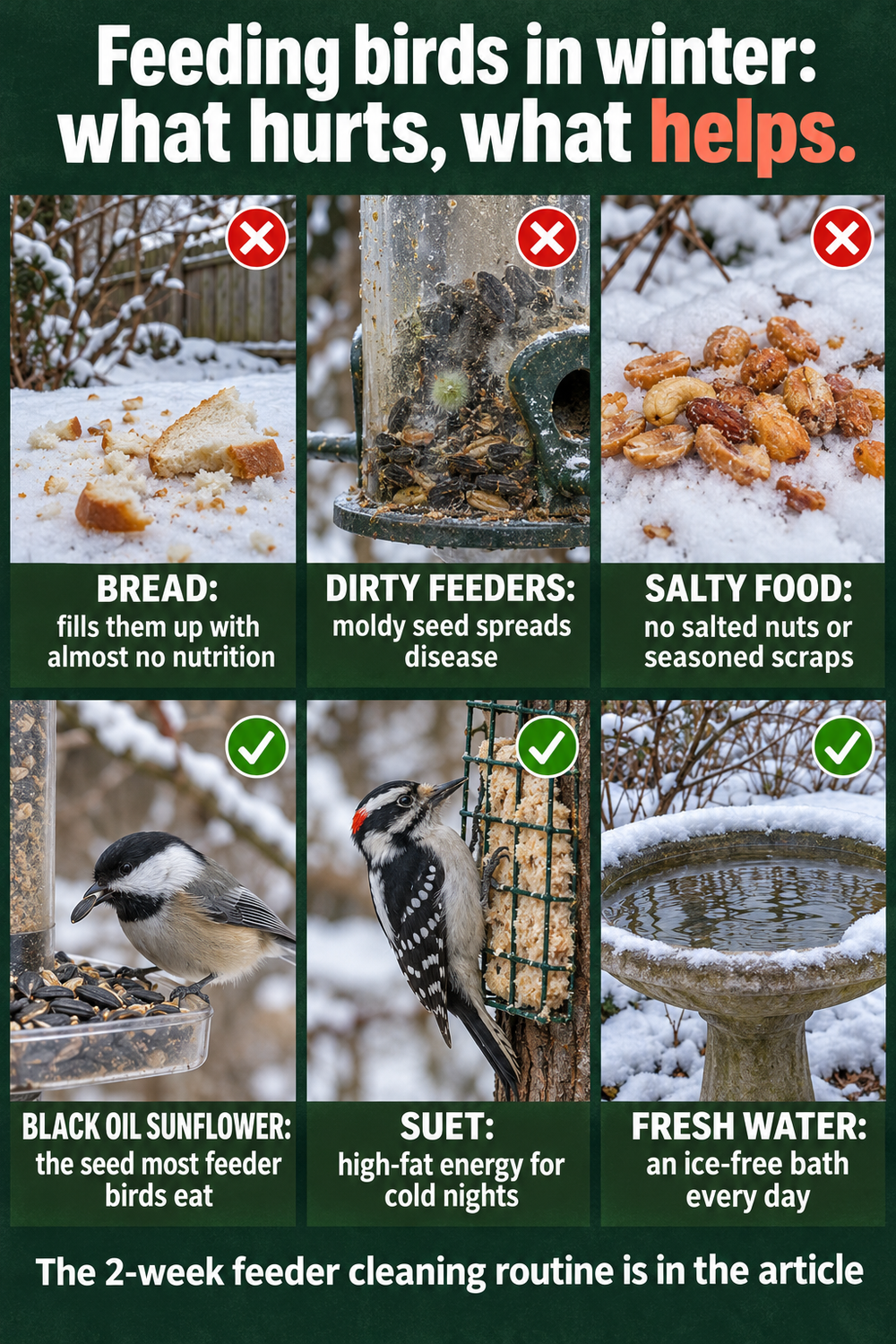
Winter bird feeding helps most when the food is high in fat and the feeder is clean. Bread, salty scraps and moldy seed do more harm than good. Here’s what to offer instead, what each common feeder bird eats, and the simple cleaning routine that keeps birds healthy.
Quick answer
Quick answer: Skip bread, salted or seasoned food and old, moldy seed. Offer black oil sunflower seed, suet and fresh, ice-free water. Clean seed feeders about every 2 weeks: scrub, soak in 1 part bleach to 9 parts water, rinse well and dry before refilling.
Winter bird feeding: what hurts birds
Bread and baked goods
Bread fills a bird’s stomach without giving it the fat and protein it needs to get through a cold night. Moldy bread is worse. Leave it out entirely.
Dirty feeders and moldy seed
Crowded feeders spread disease. Project FeederWatch at the Cornell Lab links feeder hygiene to diseases such as salmonellosis and the eye disease seen in House Finches. Wet seed that clumps or smells musty should go in the trash, not the feeder.
Salty or seasoned food
Salted nuts, chips and leftovers with seasoning are not bird food. Choose unsalted, plain nuts and seed.
These three are easy to fix, and fixing them matters more than the brand of seed you buy.
What helps birds in winter
Black oil sunflower seed
Thin shells and a high fat content make black oil sunflower the seed that the widest range of feeder birds eat: cardinals, chickadees, titmice, nuthatches, finches and more. If you buy only one seed, buy this one.
Suet
Suet is pure energy. Woodpeckers, nuthatches, chickadees and wrens use suet feeders all winter. Offer it in a wire cage; in cold weather it keeps for days.
Fresh, ice-free water
Birds need water to drink and to keep their feathers clean, and open water is scarce in a freeze. A heated bird bath or a de-icer made for bird baths is one of the most useful things you can add in winter. Never add antifreeze or salt.
Cover nearby
Place feeders about 10 feet from shrubs or a brush pile. Birds can dart to cover when a hawk passes, but cats have less room to hide close to the feeder.
What to feed birds in winter, bird by bird
| Bird | Favorite winter foods | Best feeder |
|---|---|---|
| Northern Cardinal | sunflower, safflower | tray or sturdy hopper |
| Chickadees | sunflower, suet | tube, suet cage |
| Dark-eyed Junco | millet, cracked corn | on the ground or a low tray |
| Blue Jay | peanuts, sunflower | tray |
| Downy Woodpecker | suet, peanuts | suet cage |
| American Goldfinch | nyjer, sunflower chips | finch tube |
| Tufted Titmouse | sunflower, peanuts | tube, hopper |
| White-breasted Nuthatch | suet, sunflower | suet cage, tube |
| Mourning Dove | millet, cracked corn | ground, tray |
How to clean a bird feeder (every 2 weeks)
What you need
- Rubber gloves and a stiff brush or bottle brush
- Household bleach and a bucket
- A place outdoors or a utility sink, not the kitchen sink
Steps
- Empty the feeder and throw away old seed and hulls.
- Scrub every part with hot, soapy water to remove debris.
- Soak in 1 part bleach to 9 parts water for about 10 minutes.
- Rinse thoroughly with clean water.
- Let it dry completely before refilling, so new seed doesn’t mold.
- Rake up spilled seed and hulls under the feeder.
Clean more often in wet weather or when the feeder is very busy. If you see a sick bird (puffed up, crusty eyes, lethargic), FeederWatch advises taking feeders down for 2 weeks and cleaning them before you put them back.
Common winter feeding mistakes
- Letting seed get wet and clump in the tube.
- Filling feeders to the top every few days without ever cleaning them.
- Cheap mixes full of filler that birds kick out onto the ground.
- Stopping suddenly in the middle of a cold snap. If you can, keep feeding steadily through the winter.
Frequently Asked Questions
Is it OK to feed birds bread in winter?
It’s better not to. Bread has little of the fat and protein birds need on cold nights, and it molds quickly.
When should I start feeding birds in winter?
Many people feed year-round. In winter, keep feeders full from the first hard freeze through early spring.
Do birds become dependent on feeders?
Research shows most feeder birds still get much of their food from wild sources. Feeders help most during cold snaps and snow.
Where should I put my bird feeder?
Either within 3 feet of a window or more than 30 feet away, to reduce window strikes, and about 10 feet from cover.
In Short
- No bread, no salty scraps, no moldy seed.
- Sunflower, suet and open water help most in winter.
- Clean feeders every 2 weeks with a 1:9 bleach soak.
You might also like: Downy vs hairy woodpecker · Types of woodpeckers
Sources: Cornell Lab of Ornithology, How to Clean Your Bird Feeder; Project FeederWatch, Cleaning and preventing disease; National Audubon Society, Three Easy but Important Ways to Keep Your Bird Feeders Disease-Free.