
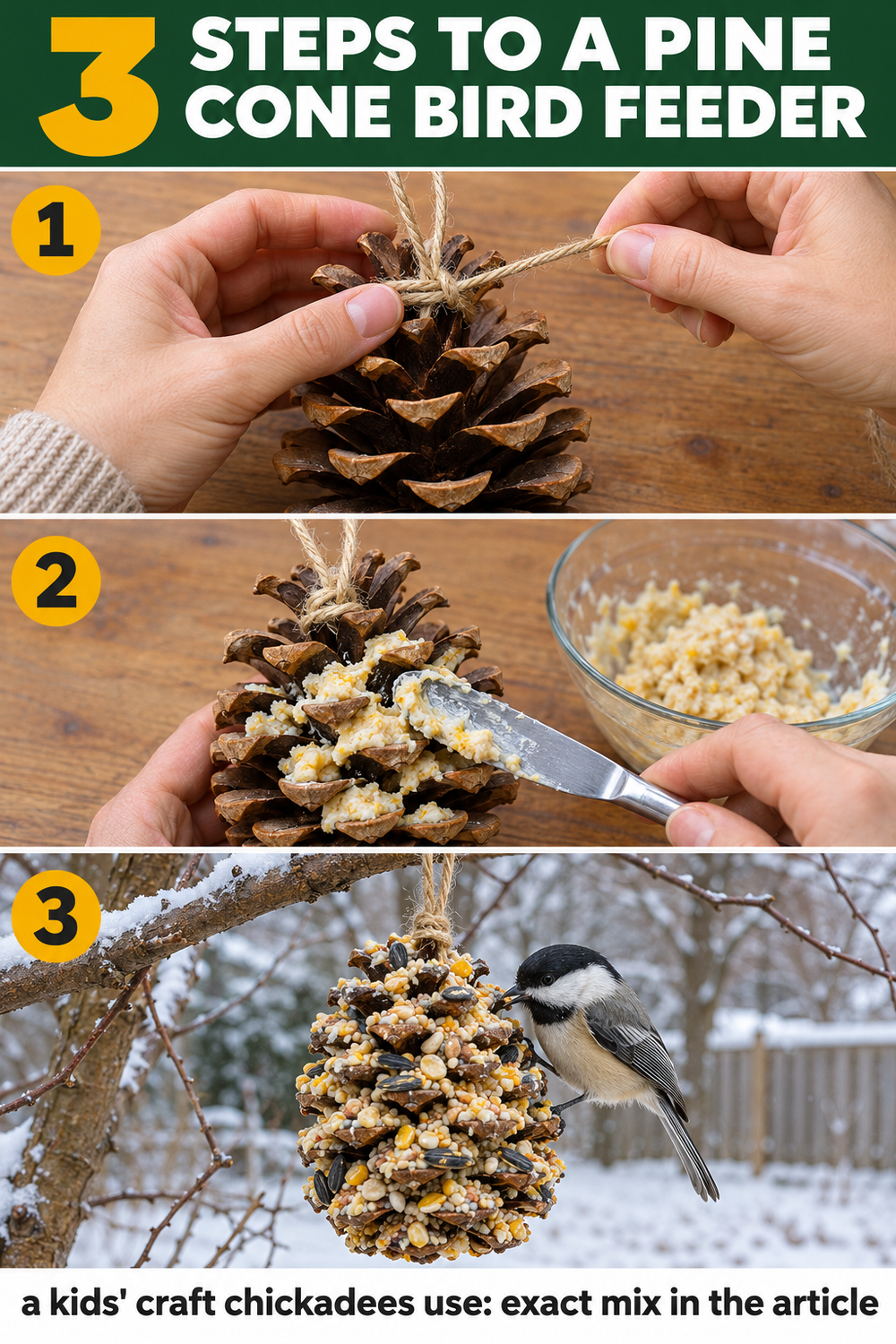
A pine cone bird feeder takes about 15 minutes and works all winter: tie on natural twine, pack the scales with a fat-and-cornmeal mix, then roll it in seed. Below are the exact amounts, a version without peanut butter, and the safety details that make it good for birds, not just cute.
Quick answer
Quick answer: Mix 1/2 cup lard or suet (or unsalted peanut butter) with 1/2 cup cornmeal. Tie natural twine to a large open pine cone, press the mix into the scales with a butter knife, roll it in black oil sunflower or a mixed seed, and hang it near shrubs, 5-6 feet off the ground.
What you need (makes 3-4 feeders)
- 3-4 large, open pine cones (dry them indoors for a few days if they’re closed)
- Natural cotton or jute twine, about 18 inches per cone
- 1/2 cup lard, rendered suet or unsalted natural peanut butter
- 1/2 cup yellow cornmeal
- 2 cups birdseed: black oil sunflower, a mix with millet, or sunflower chips
- A butter knife or spoon, a shallow dish for the seed, newspaper for the table
How to make a pine cone bird feeder, step by step
Step 1: Tie the twine
Wrap the twine around the top 2-3 rows of scales and knot it twice, leaving a long loop for hanging. Natural twine is better than thin fishing line or yarn, which birds can get tangled in.
Step 2: Pack the scales
Stir the lard or peanut butter with the cornmeal until it’s thick and spreadable. Cornmeal stretches the fat, makes it less sticky and easier for birds to eat. Use the knife to press the mix deep between the scales, from the bottom up.
Step 3: Roll it in seed and hang it
Roll the cone in the dish of seed and press with your hands so the seed sticks. Chill the feeders in the freezer for 30 minutes so they firm up, then hang them outside.
The next part decides whether birds actually find and use it.
Where to hang it
- 5-6 feet off the ground, on a branch or a shepherd’s hook.
- About 10 feet from shrubs or trees: close enough for birds to escape a hawk, far enough that cats can’t ambush them.
- Where you can see it from a window, so kids can watch who comes: usually chickadees, titmice, nuthatches and woodpeckers first.
Pine cone bird feeder without peanut butter
If someone in your home has a peanut allergy, or you want a firmer feeder:
| Base | Why use it | Note |
|---|---|---|
| Lard or rendered suet | high energy, firm in cold weather | softens and drips above about 70°F |
| Vegetable shortening | easy to find | softer than lard; use only in cold weather |
| Sunflower seed butter | nut-free, birds like it | choose one without added salt or sugar |
Whatever you use, skip bacon grease and other cooking fats: they contain salt and other additives.
Is peanut butter safe for birds?
Unsalted natural peanut butter is a common ingredient in homemade feeders, and mixing it with cornmeal or fat makes it less sticky. Check the label: no added salt and no xylitol.
Mistakes to avoid
- Using it in warm weather. Soft fat can smear on feathers. Make these feeders when days stay below about 50°F.
- Leaving it out for months. Replace the cone when it’s empty or after 2 weeks, especially in wet weather, so old seed doesn’t mold.
- Hanging it in the open. Birds come faster when cover is nearby.
- Thin string or wire. Use natural twine and keep the loop short.
A kids’ craft that teaches something
This is a great December craft for children aged 3 and up. Older kids can keep a small chart of which birds visit and when: it’s a gentle start to birdwatching. Adults should handle melting the fat if you warm it.
Frequently Asked Questions
What kind of pine cones work best?
Large, open cones from white pine, ponderosa or similar trees. The more open the scales, the more mix they hold.
Do I need to bake the pine cones first?
It’s not required. If you want to remove bugs or sap, bake them on a lined tray at 200°F for 30 minutes and let them cool.
What birds eat from pine cone feeders?
Mostly chickadees, titmice, nuthatches, woodpeckers, juncos and wrens.
How long does a pine cone feeder last?
A few days to 2 weeks, depending on how many birds find it.
In Short
- 1/2 cup fat + 1/2 cup cornmeal, packed into an open cone, rolled in seed.
- Natural twine, 5-6 feet up, about 10 feet from cover.
- Use it in cold weather and replace it every 2 weeks.
You might also like: Downy vs hairy woodpecker · Winter garden hacks
Sources: Cornell Lab of Ornithology (feeder hygiene); National Audubon Society (keeping feeders disease-free).