
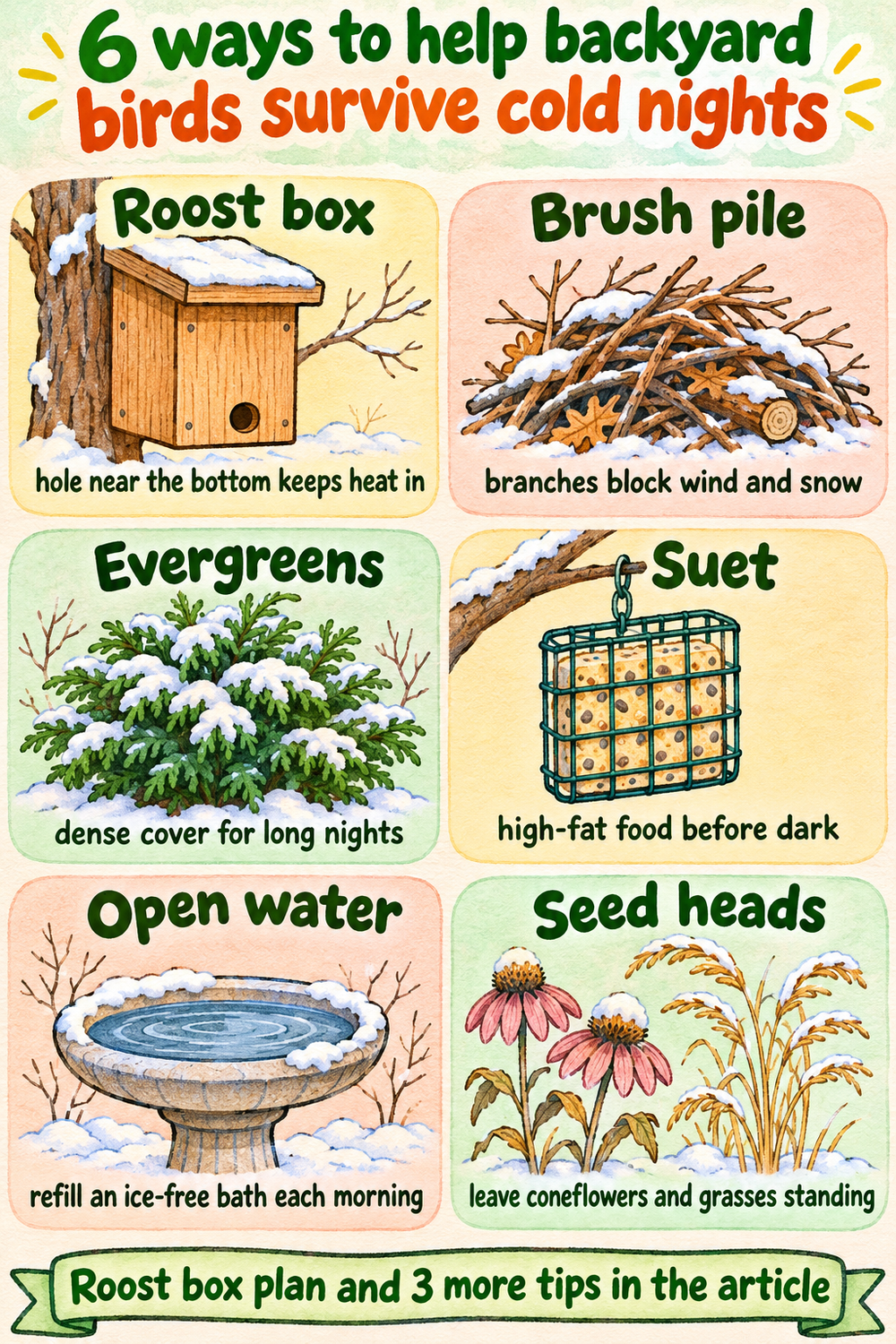
How to keep birds warm in winter starts with shelter, not just seed. Small birds lose a lot of energy on long, cold nights, so they need a place out of the wind, high-fat food before dark and water in the morning. Here are the 6 helps from the pin, 3 more, and a simple roost box plan.
Quick answer
Quick answer: (1) Put up a roost box with the entrance near the bottom, (2) build a brush pile, (3) plant or keep dense evergreens, (4) offer suet in the afternoon, (5) keep open water and refill it each morning, (6) leave seed heads standing. Plus: (7) leave nest boxes up for roosting, (8) keep feeders clean and full before storms, (9) keep cats indoors.
How do birds survive cold nights?
Birds fluff their feathers to trap warm air, shiver to make heat, and many tuck their bills into their feathers. Chickadees can lower their body temperature at night to save energy. Some species pack together in tree cavities or boxes. What they need from us is the fuel (fat-rich food) and the shelter to make those tricks work.
How to keep birds warm in winter: the 6 helps
1. A roost box
A roost box looks like a birdhouse, but the entrance hole is near the bottom and it has several perches inside. Warm air rises and stays trapped above the hole, so a group of small birds stays warmer overnight.
2. A brush pile
Stack branches loosely in a corner of the yard: thicker logs at the bottom, thinner branches on top. Sparrows, juncos, wrens and cardinals shelter inside from wind and hawks. Your Christmas tree can go on top after the holidays.
3. Evergreens
Dense evergreens such as eastern red cedar, spruce, pine, holly and arborvitae block wind and snow. Birds sleep deep inside them on cold nights.
4. Suet before dark
Birds need to “fill up” before a long night. Put out suet or a fat-rich food in the afternoon, so there’s fuel for the night.
5. Open water each morning
Drinking water is scarce in a freeze. A heated bird bath or a de-icer keeps it open; otherwise, refill a shallow basin with warm water in the morning.
6. Seed heads left standing
Coneflowers, black-eyed Susans, asters and native grasses feed finches and sparrows all winter if you leave them standing until spring. Leaving the leaves under shrubs also shelters insects that birds eat (Xerces Society).
The next three are the extra tips the pin promised.
3 more ways to help birds in winter
7. Leave nest boxes up
Many cavity birds, such as chickadees, bluebirds and titmice, roost in nest boxes in winter. Clean them out in fall and leave them up. Plug ventilation gaps in winter if your design allows it, and reopen them in spring.
8. Fill feeders before storms
Birds feed heavily just before snow and ice. Top up feeders and clear snow off trays so food is available when they need it most. Keep feeders clean, about every 2 weeks (Cornell Lab).
9. Keep cats indoors
Birds are busy at feeders in winter and slower in the cold, which makes them easy targets. Keeping cats indoors helps more than any feeder.
A simple roost box plan
What you need
- Untreated 3/4-inch pine or cedar boards
- Galvanized screws, a drill and a 1 1/2-inch hole saw
- 4-6 short dowels for perches inside
Roost box designs vary; this is a typical size, and Cornell’s NestWatch has plans for cavity birds.
Steps
- Build a tall box about 10 x 10 inches inside and 24 inches tall, with a roof that overhangs the front.
- Drill a 1 1/2-inch entrance hole (1 9/16 inch keeps starlings out) about 3 inches above the floor.
- Fix the dowel perches inside in a staggered pattern, from about 6 inches up to near the top.
- Keep ventilation small (plug it in deep cold, reopen it in spring) and drill 2-3 small drainage holes in the floor.
- Mount it 8-12 feet up on a pole or a sheltered side of a tree, facing away from winter winds (usually south or east).
Mistakes to avoid
- Putting out food in the morning only.
- Clearing every stem and leaf in fall.
- Adding cotton, fabric or dryer lint to boxes: they hold moisture and can tangle feet.
- Feeding bread or salty scraps.
Frequently Asked Questions
Do birds use roost boxes?
Some do, especially bluebirds, chickadees and wrens. It may take a season before birds find one.
Should I put straw in a birdhouse for winter?
No. Leave boxes empty and clean; birds add what they need in spring.
What is the best food for birds in winter?
High-fat foods: suet, black oil sunflower and peanuts.
Do birds get cold feet?
Bird legs have a special blood-flow system that limits heat loss, so their feet stay just warm enough.
In Short
- Shelter first: roost boxes, brush piles, evergreens.
- Fat-rich food before dark and open water in the morning.
- Leave seed heads and nest boxes, fill feeders before storms, keep cats in.
You might also like: Native shrubs with winter berries and shelter · Downy vs hairy woodpecker
Sources: Cornell Lab of Ornithology (feeder cleaning); Xerces Society, Leave the Leaves; Cornell NestWatch; National Wildlife Federation, Garden for Wildlife.