
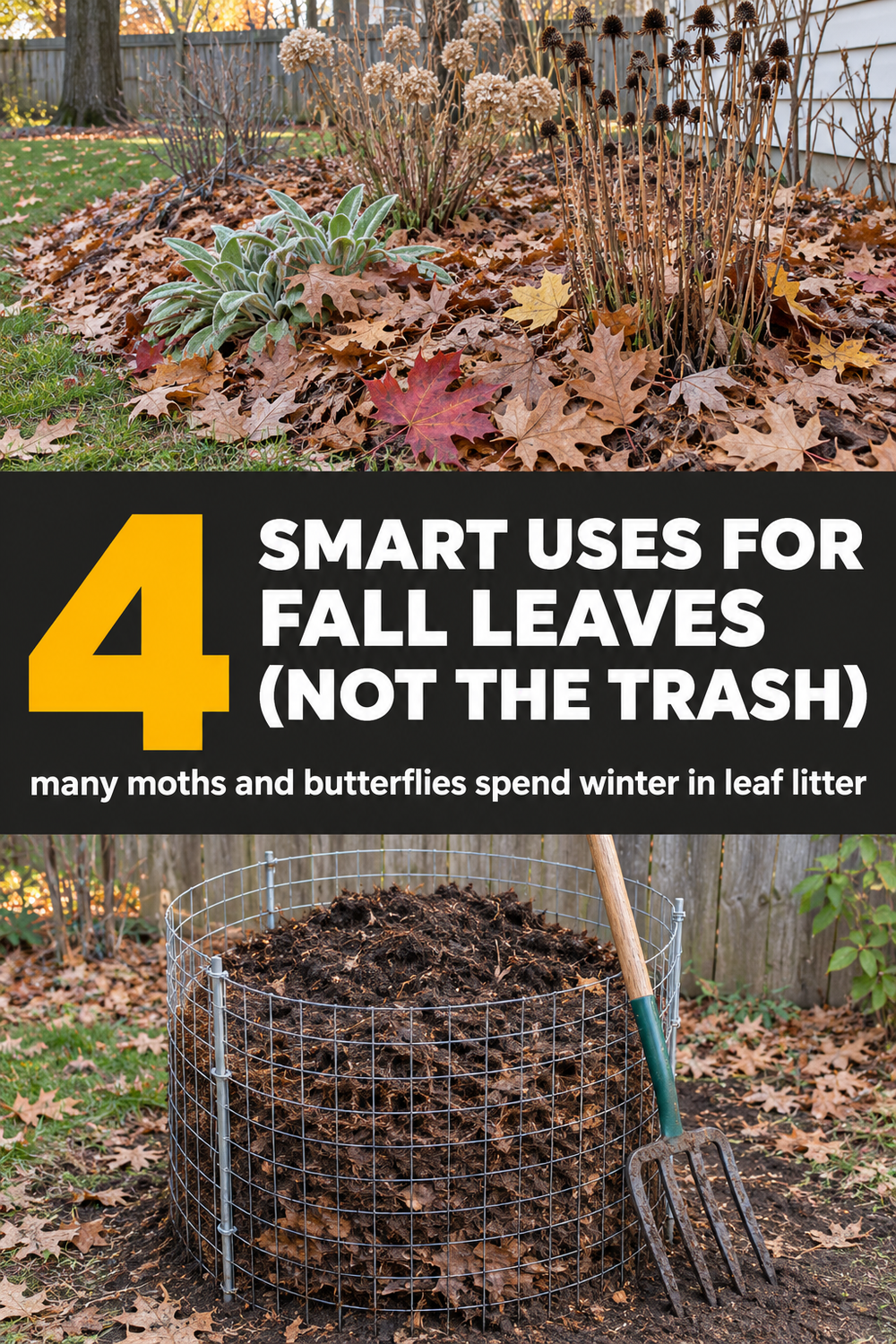
What to do with fall leaves? Use them. Leaves are free mulch, free soil food, and winter shelter for moths, butterflies and other insects. Here are four ways to use them in a typical yard, how thick to spread them, and the few places they shouldn’t stay.
Quick answer
Quick answer: (1) Leave them in garden beds as a 2-3 inch winter mulch, (2) mow them into the lawn with a mulching mower, (3) pile them for leaf mold, a dark, crumbly soil conditioner after 1-2 years, or (4) add them to compost as “browns”. Don’t leave thick, matted layers on the lawn, on paths or piled against tree trunks.
Why fall leaves are worth keeping
The Xerces Society, which works to protect insects, points out that many butterflies and moths spend winter in leaf litter as eggs, caterpillars or chrysalises. The woolly bear caterpillar, for example, overwinters under leaves. Bumble bee queens burrow into the ground under leaf litter too. Bag the leaves and those insects go to the landfill, along with nutrients your soil could use.
Leaves also protect bare soil from erosion and break down into organic matter that improves both sandy and clay soils.
What to do with fall leaves: 4 smart uses
1. Leave them in garden beds
Rake or blow leaves onto perennial beds and under shrubs, about 2-3 inches deep. They insulate the soil, hold moisture and feed the soil as they break down. Keep them a few inches away from the crowns of perennials and the bark of shrubs.
Tip: Large, flat leaves like maple can mat. Shred them first or mix with smaller leaves.
2. Mow them into the lawn
A light layer of leaves can stay on the lawn if you chop them up. Mow with a mulching mower until the pieces are about the size of a dime and you can see grass between them. They break down over winter and feed the soil.
3. Make leaf mold
Leaf mold is decomposed leaves: dark, crumbly and excellent for holding water in soil.
- Pile leaves in a bin of wire mesh or a corner of the yard, at least 3 x 3 feet.
- Wet them thoroughly.
- Wait. Leaves break down mainly by fungi, which takes 1-2 years (faster if shredded).
- Use it as mulch or mix it into beds and potting mixes.
4. Add them to compost
Leaves are a great “brown” (carbon) ingredient. Mix about 2-3 parts leaves to 1 part greens such as kitchen scraps or grass clippings. Store a bag or two of dry leaves to mix in with summer greens.
That covers most yards. A few places are better without leaves.
Where not to leave fall leaves
- Thick, wet mats on the lawn: they smother the grass. Mow them in or rake them to beds.
- Paths, steps and driveways: wet leaves are slippery.
- Storm drains and gutters: they clog drainage and wash nutrients into streams.
- Piled against tree trunks or the house: they hold moisture against bark and siding.
- Diseased leaves (for example, apple scab or black spot on roses): rake them up and dispose of them.
How thick should leaf mulch be?
| Where | Depth |
|---|---|
| Perennial and shrub beds | 2-3 inches |
| Vegetable beds (winter) | 2-4 inches, shredded |
| Lawn | a light, chopped layer, grass visible |
| Under trees | 2-3 inches, a few inches from the trunk |
Frequently Asked Questions
Do leaves kill grass?
Thick, matted layers can. A light, chopped layer feeds it.
Are oak leaves bad for the garden?
No. They break down slowly but make good mulch; they don’t make soil noticeably acidic.
When should I clean up leaves in spring?
Wait until daytime temperatures are consistently above about 50°F, so overwintering insects have emerged. Then pull mulch back from emerging plants.
Can I use leaves in raised beds?
Yes. Shredded leaves make a good winter cover and break down into the soil by spring.
In Short
- Beds: 2-3 inches of leaves as mulch.
- Lawn: chop them with the mower; the rest goes to leaf mold or compost.
- Not on paths, drains, trunks or as thick mats on grass.
You might also like: The garlic growth cycle · Raised garden beds
Sources: Xerces Society, Leave the Leaves; National Wildlife Federation, Garden for Wildlife; UMass Extension, Fertilizing guidelines.