
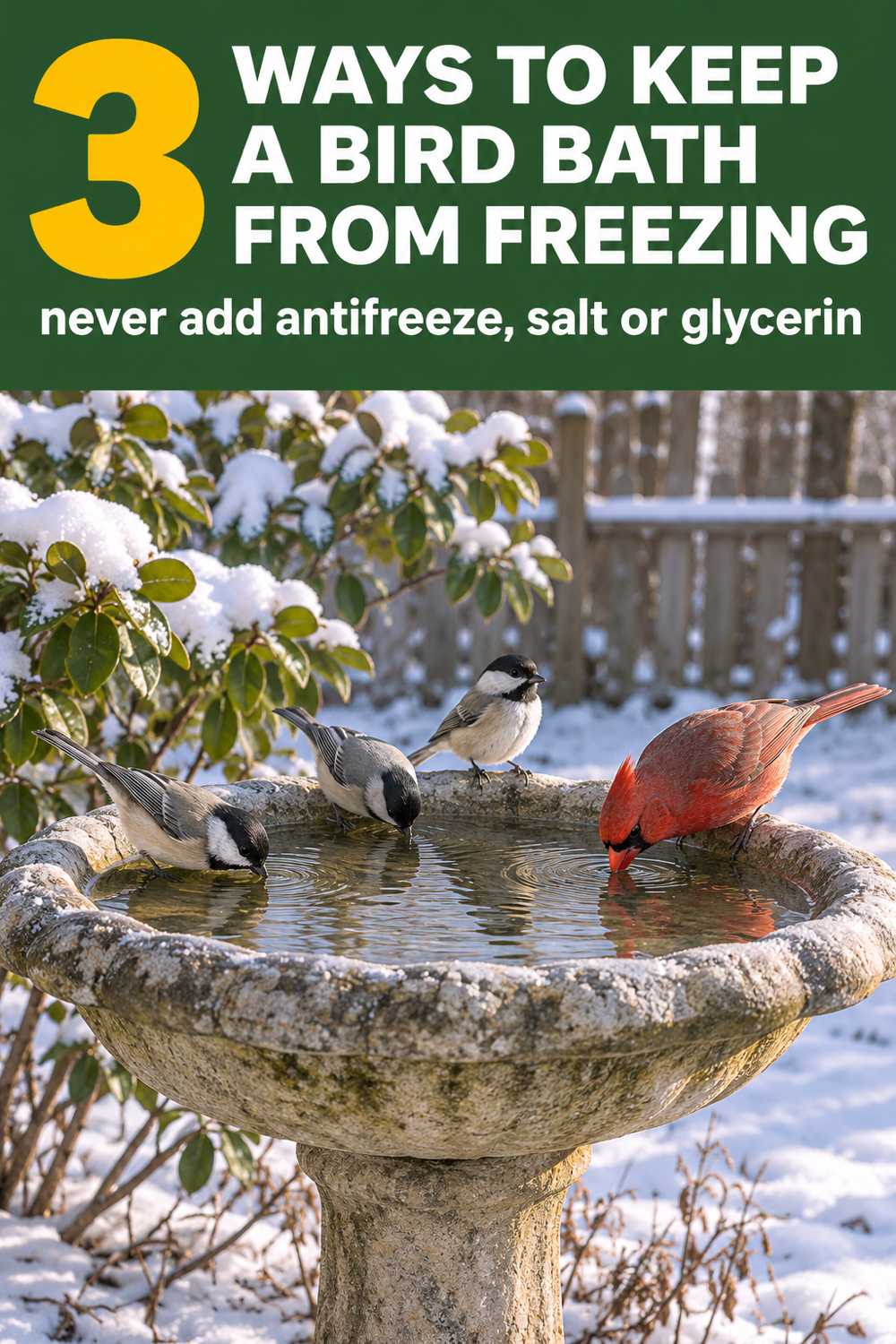
A winter bird bath can draw more birds than a feeder when every puddle is frozen. The three safe ways to keep it open are a heated bath, a de-icer made for bird baths, or a dark, shallow basin in the sun that you refill each morning. Here’s how each works, and what never to add.
Quick answer
Quick answer: (1) Use a heated bird bath with a thermostat, or (2) a bird bath de-icer in your existing bowl, plugged into a GFCI outdoor outlet, or (3) set a shallow, dark basin in full sun and refill it with warm water each morning. On very cold days, lay a plastic grille over the bowl so birds can drink but not bathe. Never add antifreeze, salt or glycerin.
Why birds need water in winter
Birds eat snow when they have to, but melting it costs body heat. Open water lets them drink without that cost, and clean feathers insulate better. In a freeze, a reliable bird bath becomes a busy spot: robins, bluebirds, cardinals and chickadees all use it, including birds that never visit seed feeders.
3 ways to keep a winter bird bath from freezing
1. A heated bird bath
A bath with a built-in heater and thermostat keeps water just above freezing and switches off in mild weather. It’s the most reliable option.
- Choose one with a thermostat, so it doesn’t run all the time.
- Plug it into a GFCI outdoor outlet and use an outdoor-rated extension cord if needed.
- Keep the water level topped up: an empty heated bowl can overheat.
2. A de-icer in your existing bath
A small submersible or bowl-mounted de-icer made for bird baths turns a regular bath into a winter one.
- Follow the de-icer maker’s instructions for which basin materials it can be used in.
- Never use a de-icer meant for livestock troughs in a shallow bird bath unless the label allows it.
3. Sun, a dark bowl and a morning refill
No electricity? Use a shallow, dark plastic or rubber basin (2 inches deep at most) in the sunniest, most sheltered spot. Dark colors absorb heat. Bring it in at night or knock out the ice in the morning and refill with warm (not hot) water. It won’t stay open all day in deep cold, but it gives birds water at their busiest time.
All three work. The next part is what keeps birds safe at the bath.
The grille trick for very cold days
The Nature Conservancy points out that birds that bathe on a frigid day can end up with iced feathers, and suggests a nonmetallic grille over a heated bath. On very cold days (many birders use roughly 20°F as a guide; there is no official cutoff), lay a plastic grid over the bowl: birds can drink through it but can’t splash in.
What never to add to a bird bath
- Antifreeze (ethylene or propylene glycol): toxic to birds and pets.
- Salt: harmful to drink and damages feathers.
- Glycerin or sugar: mats feathers and grows bacteria.
Only clean water belongs in a bird bath.
Where to put a winter bird bath
- In sun, out of the wind.
- About 5-10 feet from shrubs, so birds can escape but cats can’t hide right next to it.
- Within reach of an outdoor outlet if you use a heater.
- Where you can see it from a window and refill it easily in snow.
Keeping it clean in winter
Even in cold weather, change the water and scrub the bowl at least once a week. Fewer bacteria grow in cold, but droppings and seed hulls still collect. Use a brush and hot water; for a deeper clean, a dilute bleach soak, then rinse very well.
Common winter bird bath mistakes
- Water deeper than 2-3 inches.
- Chipping hard at ice in a ceramic or concrete basin, which can crack it.
- An unplugged heated bath left empty, or an indoor extension cord outside.
- Placing it right next to dense bushes where cats wait.
Frequently Asked Questions
Do birds really use bird baths in winter?
Yes. Many birds visit more often in winter, when other water is frozen.
Is a heated bird bath safe for birds?
Yes, when it has a thermostat and is plugged into a GFCI outlet. On very cold days, a grille keeps birds from bathing.
Can I just put out a bowl of warm water?
Yes, especially in the morning. It will freeze again, so refill it once or twice a day.
How cold is too cold for birds to bathe?
There’s no official cutoff; many birders use roughly 20°F as a guide and let birds drink only on colder days.
In Short
- Heated bath, de-icer, or a dark basin in sun refilled each morning.
- GFCI outlet, a grille on very cold days, weekly cleaning.
- Never antifreeze, salt or glycerin.
You might also like: Downy vs hairy woodpecker · Winter garden hacks
Sources: The Nature Conservancy, Should You Provide Water for Birds in Winter?; National Audubon Society; Cornell Lab of Ornithology (cleaning).