
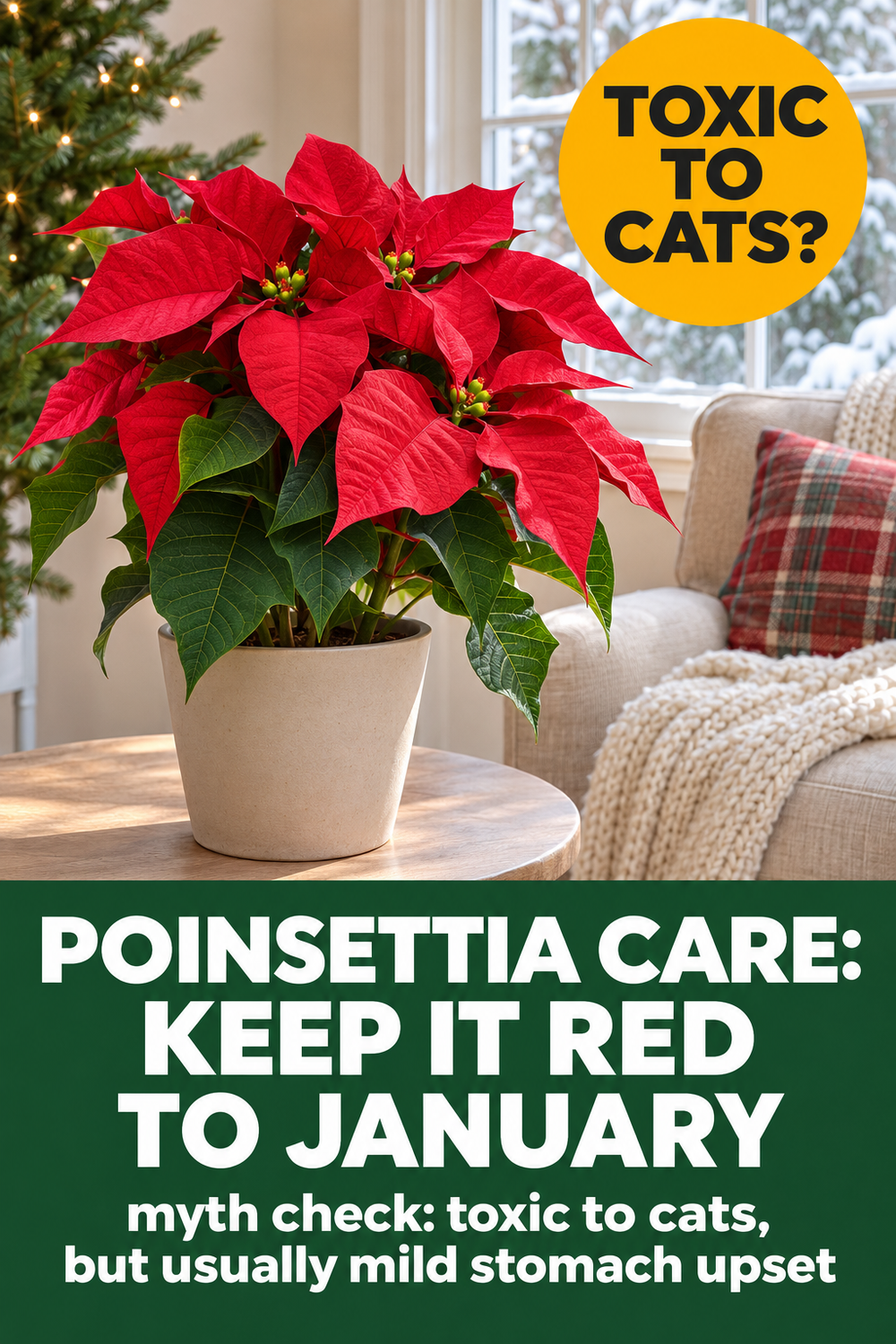
Good poinsettia care comes down to bright light, steady warmth and careful watering. Do those three and a store-bought poinsettia stays colorful for 6-8 weeks. Below: the exact conditions, how to water, and what the ASPCA actually says about poinsettias, cats and dogs.
Quick answer
Quick answer: Put your poinsettia in bright, indirect light, keep it at 60-70°F and away from drafts, heat vents and cold windows. Water when the soil surface feels dry, poke holes in or remove the foil sleeve so water drains, and never let it sit in a saucer of water. Poinsettias are listed as toxic to cats and dogs, but usually cause only mild mouth and stomach irritation.
What you need
- A spot near a bright window, but not touching cold glass
- A saucer or tray under the pot
- A finger to check the soil (no special tools)
How to care for a poinsettia, step by step
1. Bring it home wrapped
Poinsettias are tropical (Euphorbia pulcherrima comes from Mexico). On the way home from the store, keep it in its sleeve: even a short walk below 50°F can damage the leaves.
2. Fix the foil
Decorative foil traps water around the roots. Either remove it, or poke a few holes in the bottom and set the pot on a saucer.
3. Give it bright, indirect light
A spot near an east, west or bright south window is ideal. Too little light and the leaves drop early.
4. Keep it steady and warm
Extension guidance recommends keeping poinsettias below about 75°F and away from doors, heater vents and air-conditioner vents. Poinsettias react to sudden changes in light, temperature and moisture by dropping leaves.
5. Water only when the surface is dry
- Touch the soil.
- When the surface feels dry, water slowly until it drains from the bottom.
- Empty the saucer after 10 minutes.
Wilting can mean too dry or too wet, so always check the soil before watering.
The next question is the one most people ask in December.
Are poinsettias poisonous to cats and dogs?
The ASPCA lists poinsettias as toxic to cats and dogs, and also notes that their toxicity is generally overrated. The milky sap irritates the mouth and stomach and can sometimes cause vomiting. Serious poisoning is rare.
What that means in practice:
- Keep the plant out of reach of pets that like to chew.
- If a pet chews a leaf and seems unwell (drooling, vomiting), call your veterinarian or the ASPCA Animal Poison Control Center.
- For homes with curious pets, a Christmas cactus is a safer holiday plant: the ASPCA lists it as non-toxic.
The sap can also irritate human skin, so wear gloves if you cut stems.
Why is my poinsettia dropping leaves?
| Symptom | Likely cause | Fix |
|---|---|---|
| Lower leaves yellow and drop | overwatering or soggy foil | let the soil dry slightly, remove the foil |
| Sudden leaf drop | cold draft, heat vent or a move | move it to a steady, bright spot |
| Wilting, dry soil | underwatering | water thoroughly, then check every 2-3 days |
| Bracts fading quickly | too little light or too warm | brighter spot, keep below 75°F |
How to keep a poinsettia alive after Christmas
You can keep it as a green houseplant. Water when dry, keep it in bright light, and fertilize lightly from spring. Getting the red bracts again next year needs about 14 hours of complete darkness every night from early October for 8-10 weeks, which is a project for patient gardeners.
Frequently Asked Questions
How long do poinsettias last?
With good care, about 6-8 weeks of color indoors, often into January.
Can poinsettias go outside?
Only in frost-free zones (10-11). Below 50°F they suffer damage.
Should I fertilize a poinsettia in December?
No. Wait until the colorful bracts fade and new growth starts.
What do the red “flowers” consist of?
The red parts are bracts (modified leaves). The real flowers are the small yellow buds in the center.
In Short
- Bright light, 60-70°F, no drafts, no heat vents.
- Water when the surface is dry; never let it sit in water.
- Toxic to cats and dogs per the ASPCA, but usually only mildly irritating.
You might also like: Christmas flowers · Winter garden hacks
Sources: University of Illinois Extension, Caring for Poinsettias; UMass Extension, Holiday plant care; ASPCA toxic and non-toxic plants list.