
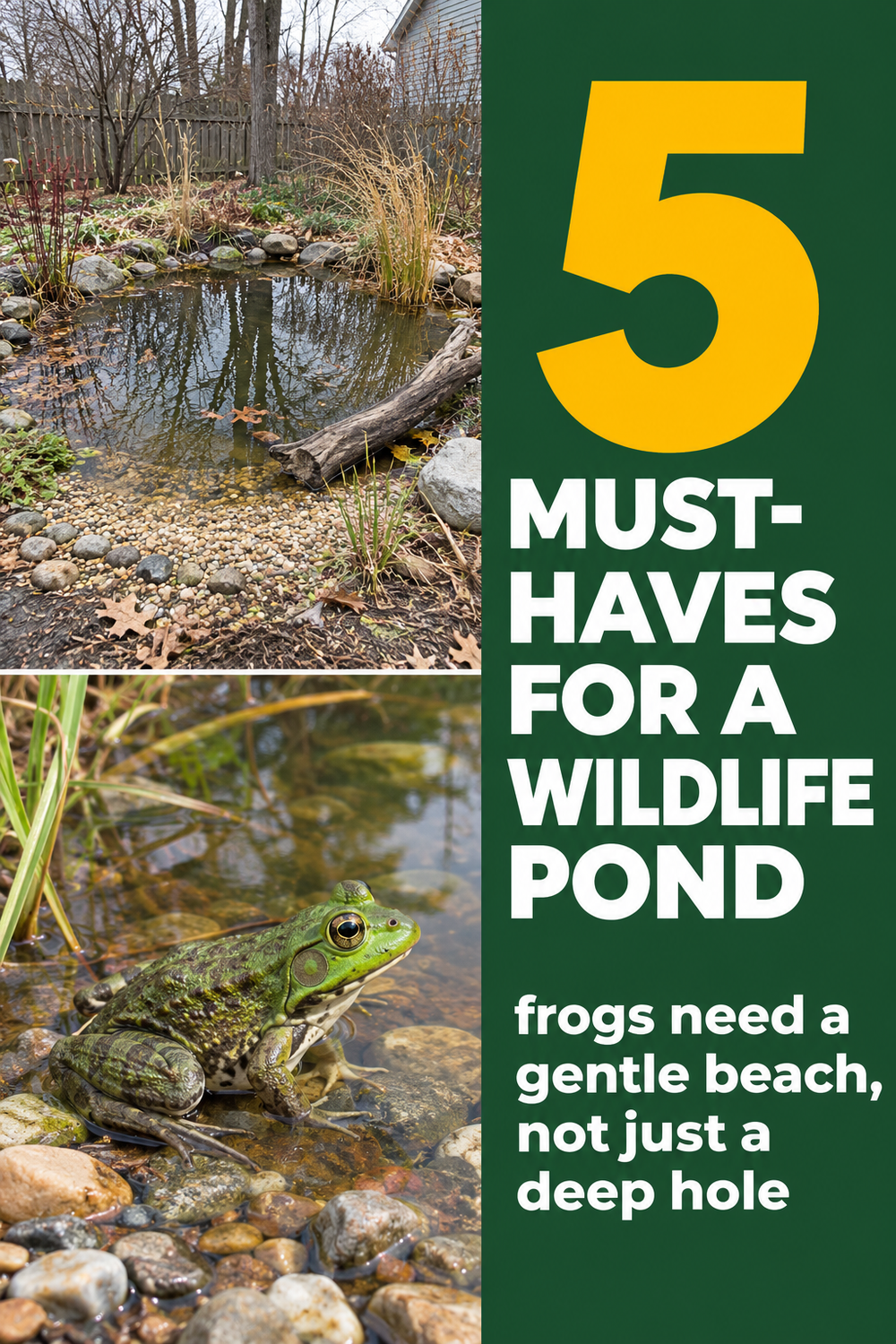
A wildlife pond doesn’t have to be big to work, but it needs the right shape. The five must-haves are a gently sloping beach, a deeper middle, native plants, no fish and no chemicals. Winter is a good time to plan where it goes. Here’s how to design one for a backyard.
Quick answer
Quick answer: Give your wildlife pond (1) at least one long, gently sloping side or a pebble beach so animals can get in and out, (2) a deeper zone (about 2 feet in cold zones) for winter, (3) native plants at the edges and in the water, (4) no fish, which eat tadpoles and eggs, and (5) no chemicals. Put it in part sun, away from overhanging trees.
1. A gentle beach (the most important part)
The most common failure: frogs can jump in, but the sides are too steep to get out (National Wildlife Federation). The RHS recommends at least one long, shallow slope. If your liner or preformed pond has steep sides, add a ramp of stones or a half-submerged log. Birds also drink and bathe at the shallow edge.
2. A deeper zone
A deeper middle keeps water cooler in summer and gives frogs and insects a place that doesn’t freeze solid in winter. In zones 5 and colder, aim for about 2 feet at the deepest point; in mild zones, 18 inches is plenty.
3. Native plants
Plants shade the water, add oxygen, give dragonflies a place to emerge and frogs a place to hide.
| Zone of the pond | Examples (check what’s native to your region) |
|---|---|
| Wet edges | blue flag iris, swamp milkweed, pickerelweed, sedges |
| Shallow water | arrowhead, native water lilies |
| Floating and submerged | native pondweeds |
Avoid invasive water plants such as water hyacinth, parrot feather and yellow flag iris, which many states regulate.
4. No fish
Fish eat tadpoles, frog eggs and the insects adult frogs need. Extension and wildlife groups, including NWF, advise leaving fish out of a pond meant for frogs.
5. No chemicals
No algae treatments, fertilizer or pesticides near the pond. A bit of algae in spring settles as plants grow.
Those five decide whether wildlife moves in. The rest is about size and location.
How big should a small wildlife pond be?
| Pond | Size | Good for |
|---|---|---|
| Container pond | a large tub or half barrel, 2-3 ft wide | birds, insects, small frogs; add a ramp |
| Small pond | about 4 x 6 ft | frogs, toads, dragonflies |
| Medium pond | 8 x 10 ft or more | more species, more stable water |
Even a container pond can attract dragonflies and birds within weeks.
Where to put it
- Part sun: 4-6 hours of sun keeps plants healthy without overheating the water.
- Away from big trees: fallen leaves rot and use up oxygen.
- On a low, level spot, but not where runoff from lawns or driveways flows in.
- Near cover: shrubs, long grass or a log pile nearby helps frogs move safely.
Important rules
- Never move frogs, toads, tadpoles or spawn from the wild into your pond. Wildlife will find it on its own, and moving animals is illegal in many states and can spread disease.
- Children: even shallow water can be a drowning risk. Supervise young children, and consider fencing or a sturdy grid.
- Local rules: check HOA rules and local codes before digging a larger pond.
Frequently Asked Questions
How long until frogs find a new pond?
Often within the first spring or summer, if there are frogs nearby.
Do I need a pump?
Not for a wildlife pond. Plants keep the water healthy; a pump is optional.
Will a pond breed mosquitoes?
A pond with dragonflies, water beetles and other predators usually has few mosquito larvae. Stagnant containers without wildlife are the bigger problem.
When is the best time to build a wildlife pond?
Plan in winter, dig in early spring or fall, and fill it with rainwater when you can.
In Short
- Gentle beach, deeper middle, native plants.
- No fish, no chemicals, part sun, away from big trees.
- Never move wild frogs in; let wildlife find the pond.
You might also like: Plants that thrive under trees · Native perennials for hummingbirds
Sources: National Wildlife Federation, Want to Host a Garden Party for Frogs?; Cornell Cooperative Extension, Attracting wildlife to your pond; Royal Horticultural Society, Wildlife ponds; Texas A&M AgriLife Extension, Water Gardens.