
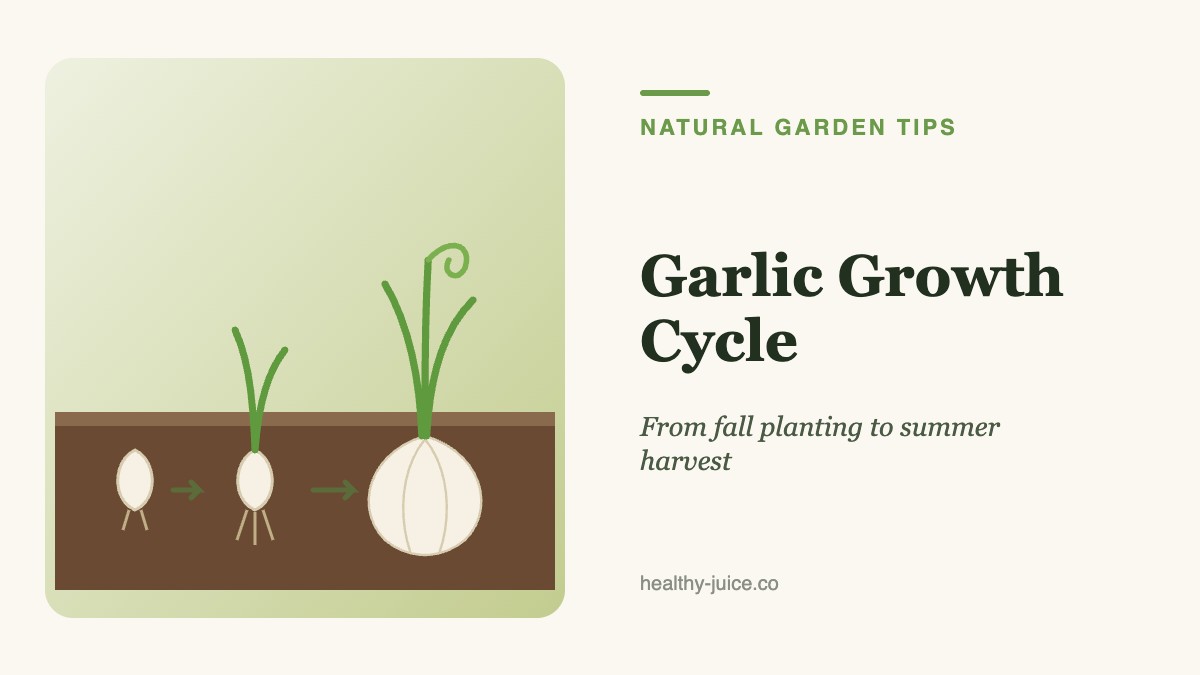
Planting garlic feels like an act of trust. The rest of the garden is winding down, yet you separate a good bulb, press healthy cloves into cool soil, and leave them there for winter.
Garlic is one of the easiest and most rewarding crops for home gardeners. It takes up little space, has few pest problems, and stores for months after harvest. But it also has one of the longest growing cycles in the vegetable garden, often spanning eight or nine months. This guide follows garlic through every stage, from fall planting to curing the harvest.
Hardneck vs. Softneck Garlic
Before planting, it helps to know the two main types of garlic:
- Hardneck garlic produces a stiff central stalk and, in late spring, a curling flower stem called a scape. It is well suited to colder climates, often has fewer, larger cloves, and is prized for its rich flavor.
- Softneck garlic does not usually produce a scape. It tends to have more cloves per bulb, stores longer, and is the type often braided. It is generally favored in milder climates.
Choose varieties suited to your region for the best results.
Stage 1: Fall Planting
In most temperate regions, garlic is planted in fall, a few weeks before the ground freezes. This timing allows roots to develop before winter while limiting top growth.
How to plant garlic:
- Choose good seed garlic. Use large, healthy bulbs from a reputable source or your own best harvest. Grocery store garlic may be treated or poorly adapted to your climate.
- Prepare the soil. Garlic prefers loose, fertile, well-drained soil rich in organic matter. Work in compost before planting.
- Separate the cloves. Break bulbs into individual cloves just before planting, keeping the papery skins on. Plant the largest cloves; they tend to produce the largest bulbs.
- Plant pointed end up. Set each clove about 2 inches deep, with the flat root end down and the pointed tip up.
- Space properly. Space cloves about 4–6 inches apart, in rows about 12 inches apart.
- Water in. Water after planting if the soil is dry.
Stage 2: Root Development and Winter Rest
Roots begin developing before the ground freezes. In some areas, a few green shoots may poke through the soil in fall. That is normal.
In cold regions, a layer of clean mulch, such as straw or shredded leaves, can moderate winter temperatures, reduce freeze-thaw heaving, and suppress weeds. Apply mulch once the ground begins to cool.
Through winter, garlic rests. Many varieties actually need a period of cold to form well-divided bulbs.
Stage 3: Spring Leaf Growth
As conditions warm in spring, narrow green leaves appear and growth accelerates. This is a key time to support the plants:
- Pull back mulch partially if it is very thick, so shoots can emerge easily, but keep enough to conserve moisture and suppress weeds.
- Feed if needed. Garlic appreciates nitrogen during spring leaf growth. A side dressing of compost or a balanced organic fertilizer can help.
- Water consistently. Keep the soil evenly moist during active growth.
- Weed carefully. Garlic does not compete well with weeds.
Each leaf corresponds to a protective wrapper around the bulb, so strong leaf growth in spring supports a well-wrapped, healthy bulb later.
Stage 4: Scapes (Hardneck Garlic)
Hardneck varieties later send up curling scapes, which can be harvested while tender. Scapes are delicious, with a mild garlic flavor, and can be sautéed, grilled, added to stir-fries, or made into pesto.
Many growers remove scapes once they curl, believing it directs more of the plant’s energy into bulb formation. Cut or snap the scape near where it emerges from the top leaves.
Stage 5: Bulb Formation
Through late spring and early summer, the plant directs energy into forming a new bulb underground. Lengthening days and warming temperatures trigger this process.
During bulb formation:
- Continue watering consistently.
- Reduce watering as harvest approaches, typically in the final couple of weeks, to help bulbs firm up and reduce the risk of rot.
Stage 6: Harvest
Harvest timing depends on variety and climate. A common signal is that the lower leaves have browned while several upper leaves remain green. Harvesting too early can result in small bulbs; harvesting too late can cause cloves to separate and wrappers to split, reducing storage life.
How to harvest garlic:
- Dig a test bulb to check size and wrapper development.
- Loosen the soil with a garden fork a few inches from the plants.
- Lift the bulbs carefully rather than pulling them, which can break stems or damage bulbs.
- Brush off loose soil gently. Do not wash the bulbs.
Stage 7: Curing and Storage
After harvest, cure garlic in a dry place with good airflow, out of direct sun. Hang it in bundles or spread it on racks for about two to four weeks, until the necks are dry and tight and the outer wrappers are papery.
Once cured:
- Trim roots and stems (or braid softnecks).
- Store in a cool, dry, well-ventilated place.
- Set aside the best bulbs for replanting in the fall.
Common Garlic Growing Problems
- Small bulbs: Often caused by small seed cloves, crowding, weed competition, poor soil, or late planting.
- Rotting bulbs: Usually caused by poorly drained soil or too much water near harvest.
- Yellowing leaves early in spring: May indicate a nitrogen shortage or cold stress.
- Split wrappers: Often a sign the garlic was harvested too late.
Garlic Growth Timeline at a Glance
| Stage | Typical Timing |
|---|---|
| Planting | Fall, before the ground freezes |
| Root development | Fall into early winter |
| Winter rest | Winter |
| Leaf growth | Early to mid-spring |
| Scapes (hardneck) | Late spring to early summer |
| Bulb formation | Late spring to early summer |
| Harvest | Early to mid-summer |
| Curing | 2–4 weeks after harvest |
Exact timing varies by variety and climate.
Frequently Asked Questions
Can I plant garlic from the grocery store?
It may work, but it is not recommended. Store garlic may be treated to prevent sprouting and is often a variety not suited to your climate. Seed garlic from a reliable source gives better results.
Can I plant garlic in spring?
Spring-planted garlic usually produces smaller bulbs because it misses the cold period and long root-growing season of fall planting. Fall planting gives the best harvest.
How long does cured garlic last?
Hardneck garlic often keeps for several months, while softneck varieties can store considerably longer under cool, dry, well-ventilated conditions.
Final Thoughts
Garlic rewards patience. With good soil, timely planting, and a little care in spring, the cycle completes itself. One clove goes into the soil in fall. Months later, it returns as an entire head, and the best of those heads become next year’s planting stock.