
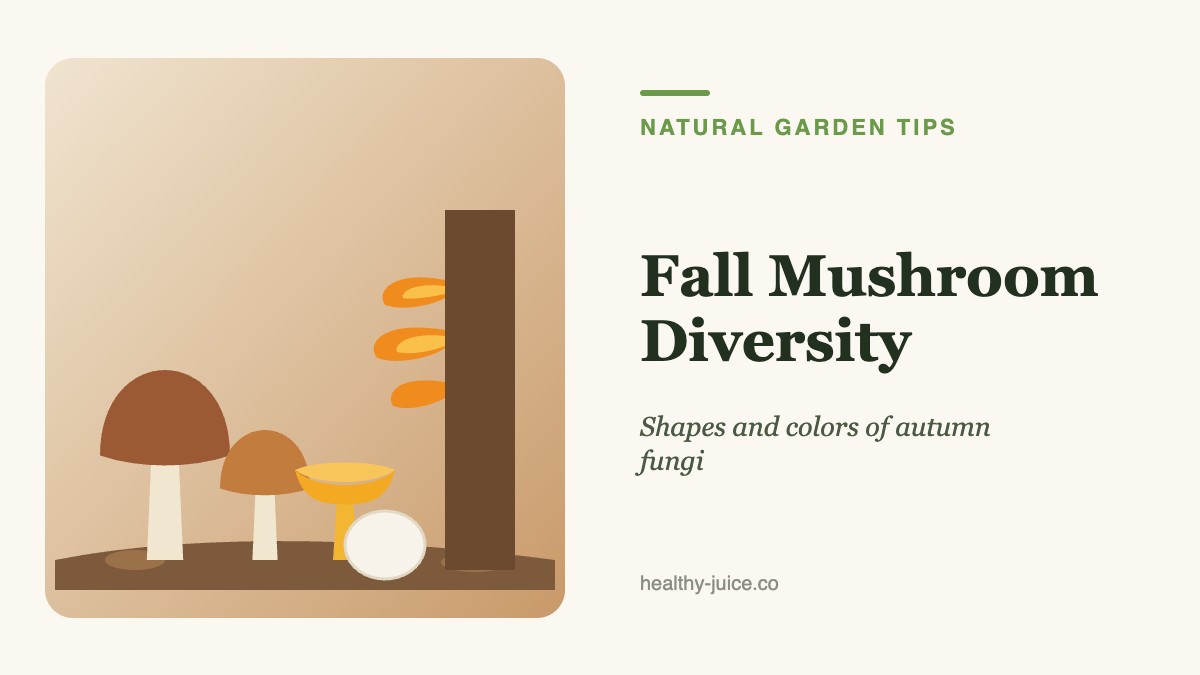
Fall mushrooms can make a woodland feel like a gallery of unfamiliar shapes. Chanterelles flare like little trumpets. Oyster mushrooms overlap in shelves. Giant puffballs can resemble white balls left in the grass, while cauliflower fungi look like tangled ribbons and Chicken of the Woods glows orange against a trunk.
Autumn is one of the best seasons to notice fungi. Cooler temperatures and rain encourage many species to produce mushrooms, transforming forest floors, lawns, and fallen logs. This guide celebrates that seasonal diversity, explains what mushrooms actually are, and shares essential safety guidance for anyone curious about wild fungi.
What Is a Mushroom?
A mushroom is only a small, visible part of a much larger organism. Most of a fungus lives hidden in soil, wood, or leaf litter as a network of fine threads called mycelium. When conditions are right, the mycelium produces mushrooms, the fruiting bodies whose job is to release spores and spread the fungus.
Fungi play several key roles in nature:
- Decomposers break down dead wood, leaves, and other organic matter, recycling nutrients back into the soil.
- Mycorrhizal fungi form partnerships with tree roots, exchanging nutrients and water for sugars from the tree.
- Parasitic fungi live on and draw nutrients from living hosts.
Why Fall Is Mushroom Season
Many fungi respond to a combination of moisture, cooler temperatures, and seasonal changes in their host trees. After a good soaking rain in late summer or fall, mushrooms can appear seemingly overnight. That is why a walk in the woods a day or two after rain can be so rewarding.
A Gallery of Fall Mushroom Shapes
Trumpets and Funnels: Chanterelles
Chanterelles are known for their trumpet- or funnel-like shape and their golden to orange color. Instead of sharp, separate gills, they typically have blunt, forking ridges that run down the stem. They are mycorrhizal, growing in association with trees.
Shelves and Brackets: Oyster Mushrooms
Oyster mushrooms grow in overlapping, shelf-like clusters on dead or dying hardwood trees and logs. They are decomposers and are commonly seen in cooler weather.
Spheres: Giant Puffballs
The Giant Puffball is one of the most surprising fungi you can find. It can grow into a large, smooth, white ball, sometimes resembling a soccer ball left in the grass. As it matures, the interior turns into a mass of spores.
Ribbons and Rosettes: Cauliflower Mushrooms
Cauliflower mushrooms look like a tangled mass of ribbons or a pale, ruffled cauliflower or sponge. They are usually found at the base of conifer trees.
Bright Shelves: Chicken of the Woods
Chicken of the Woods forms brilliant orange and yellow shelves on trunks, stumps, and logs. Its vivid color makes it one of the most eye-catching fungi of the season.
Rosettes on the Ground: Hen of the Woods
Hen of the Woods, also called maitake, forms grayish-brown clusters of overlapping caps, often at the base of oak trees.
Classic Caps and Stems
Many fall mushrooms have the classic umbrella shape: a cap, gills beneath, and a stem. Within this form, there is enormous variety in color, texture, size, and spore color. This group also includes some of the most dangerous mushrooms, such as certain Amanitas.
Safety First: Photos Are Not Enough
That variety is fascinating, but it is also exactly why photographs and social media posts are not enough for identification. Many wild mushrooms have poisonous look-alikes, and a mistake can be fatal.
Some examples of dangerous confusion:
- Jack-o’-lantern mushrooms, which are toxic, can be confused with chanterelles by beginners.
- Young, deadly Amanitas in their egg stage can be mistaken for small puffballs.
- Toxic species can grow right next to edible ones, on the same log or in the same patch of grass.
Essential safety rules:
- Never eat a wild mushroom unless a qualified local expert has positively identified the specimen in person.
- Use multiple regional references and learn every identifying feature, including spore print color, gill attachment, stem features, and habitat.
- Check local collecting rules. Some parks and preserves prohibit harvesting.
- When in doubt, throw it out. Discard anything uncertain.
- Keep wild mushrooms away from children and pets. If you suspect someone has eaten a poisonous mushroom, contact your local poison control center or emergency services immediately.
How to Enjoy Mushrooms Without Eating Them
You do not need to forage to appreciate fungi. Some rewarding ways to enjoy them:
- Photograph them from several angles: the cap from above, the underside, the stem, and the base. Include the habitat.
- Make spore prints by placing a cap on paper overnight to see the color of its spores.
- Keep a nature journal of what appears, where, and when.
- Join a local mycological society for guided walks and expert knowledge.
- Use community science platforms to share observations and learn from others.
Fungi in Your Garden
Mushrooms often appear in gardens, lawns, and mulch beds in fall. In most cases, they are a sign of healthy soil and decomposition at work. They are usually harmless to plants, but if you have children or pets, remove them promptly as a precaution.
Frequently Asked Questions
Why do mushrooms appear suddenly after rain?
The fungus has often been growing underground or in wood for a long time. Rain and cool temperatures trigger it to produce mushrooms, which can expand quickly by absorbing water.
Are mushrooms in my lawn harmful?
Most lawn mushrooms are harmless decomposers and a sign of healthy soil. However, some can be toxic, so remove them if children or pets use the area.
What is a spore print?
A spore print is made by placing a mushroom cap gill-side down on paper overnight. The color of the deposited spores is an important identification feature.
Final Thoughts
This kind of mushroom chart is a celebration of form and seasonal diversity, not a field key. Enjoy noticing what appears after rain, photograph it from several angles, and let careful learning come before the plate. Fall fungi are a reminder that some of the most important work in the forest happens quietly, beneath our feet.