
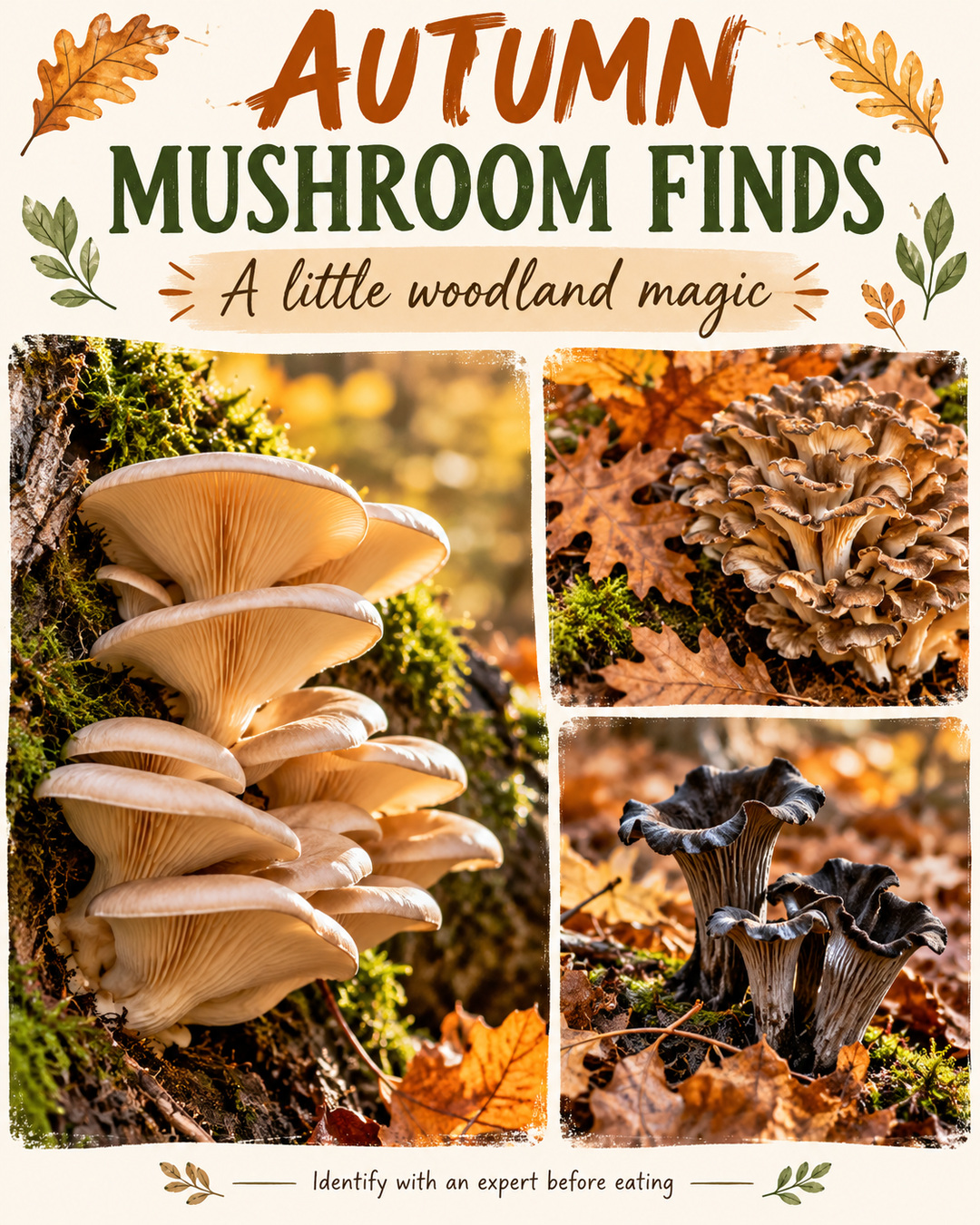
Autumn is the season when woodlands come alive with mushrooms. Cool nights, frequent rain and a thick carpet of fallen leaves create perfect conditions for fungi to fruit. A simple forest walk can reveal pale shelf mushrooms on fallen trunks, ruffled clusters at the base of trees and dark trumpet shapes hiding among the leaves.
This guide celebrates the beauty of autumn mushrooms and explains the most important rule of all: never eat a wild mushroom unless a qualified local expert has confirmed its identity.
Why autumn is mushroom season
Mushrooms are the fruiting bodies of fungi that live hidden in soil, leaf litter and wood all year round. In autumn, moisture and cooler temperatures trigger many species to produce mushrooms and release spores. Fallen leaves and decaying wood provide food for decomposer fungi, which is why forests are so productive at this time of year.
Seasonal woodland finds to observe
- Shelf-shaped mushrooms on wood: pale, fan- or shell-shaped caps growing in overlapping layers on dead or dying trees. Oyster mushrooms are a well-known example, but several other species grow in similar shapes.
- Ruffled brown clusters: large, frilly rosettes at the base of trees, especially hardwoods. They can be striking and quite large.
- Dark trumpet-shaped mushrooms: thin, funnel-shaped mushrooms that blend into dark leaf litter and are easy to miss.
- Bracket fungi: tough, woody shelves that can live for years on the same trunk.
Why identification is so serious
Some of the most dangerous mushrooms in the world look ordinary, and several edible species have toxic look-alikes. Color, shape and habitat can vary with age, weather and region. Photos and apps are helpful for learning, but they are not a safe basis for deciding what to eat.
- Learn from local mycological societies or guided forays.
- Have any mushroom you intend to eat checked in person by a qualified expert.
- When in doubt, leave it out.
- If someone eats a wild mushroom and feels unwell, contact a poison control center or emergency services right away.
Responsible foraging and forest etiquette
- Check local rules. Some parks and reserves prohibit picking anything.
- Take only what you need and leave plenty for wildlife and future growth.
- Use a basket or mesh bag rather than plastic.
- Stay on paths in sensitive areas to protect the soil and the fungal network beneath it.
- Photograph instead of picking when you simply want to remember a find.
Tips for photographing autumn mushrooms
- Get low and shoot at mushroom level for dramatic images.
- Photograph the cap, the underside (gills, pores or ridges) and the stem.
- Note the habitat: what tree, wood or soil the mushroom grows on.
- Overcast days give soft, even light that shows colors and textures well.
Final thoughts
Autumn mushroom season is a wonderful reason to slow down and look closely at the forest floor. Enjoy observing, learning and photographing, and leave the eating decisions to verified expert identification. Save this reminder before your next woodland walk.