
Not all firewood is equal. Two stacks of the same size can deliver very different amounts of heat depending on the wood species, moisture content and how you burn it. Here’s what really determines firewood heat output.
Density: why some woods hold more energy
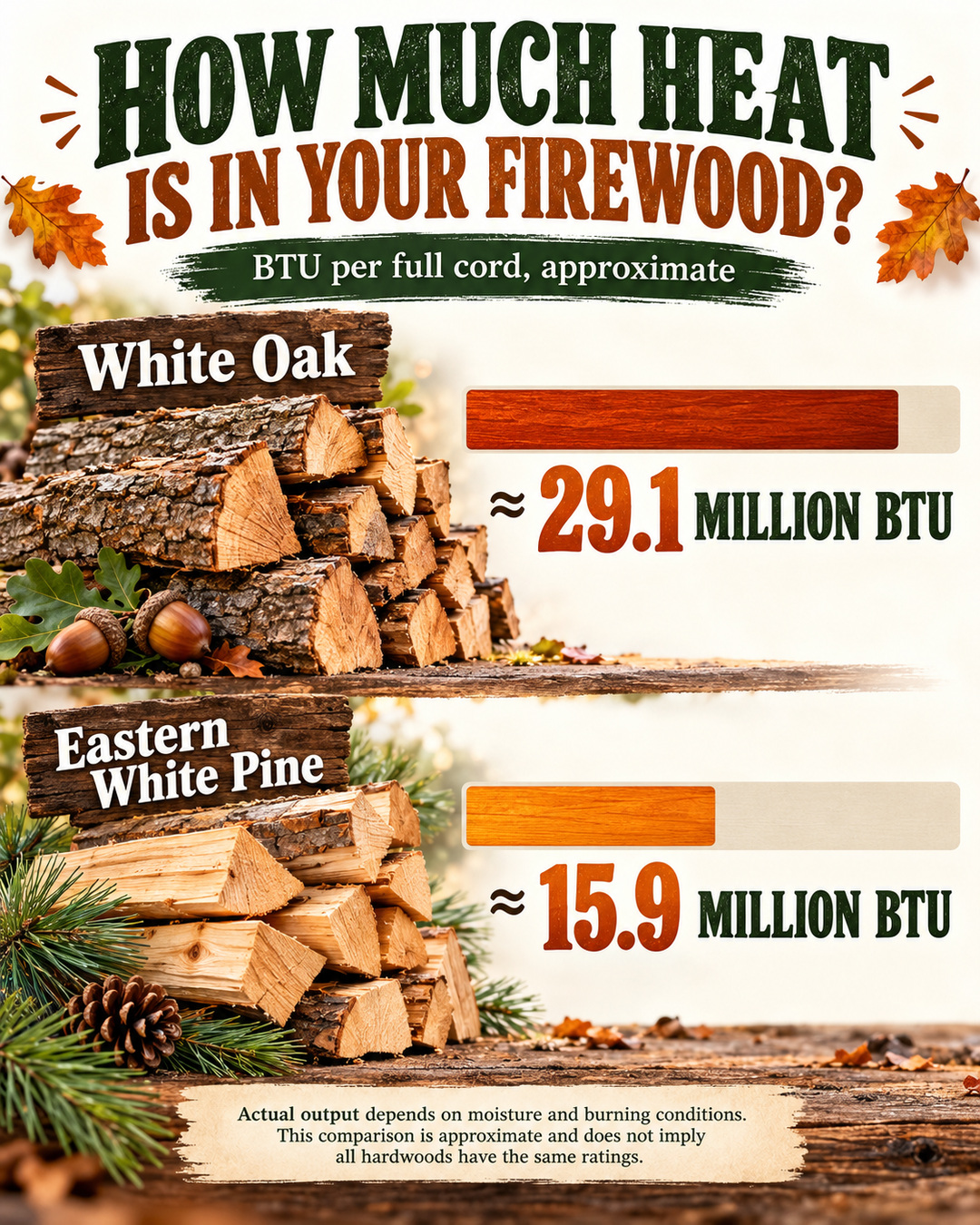
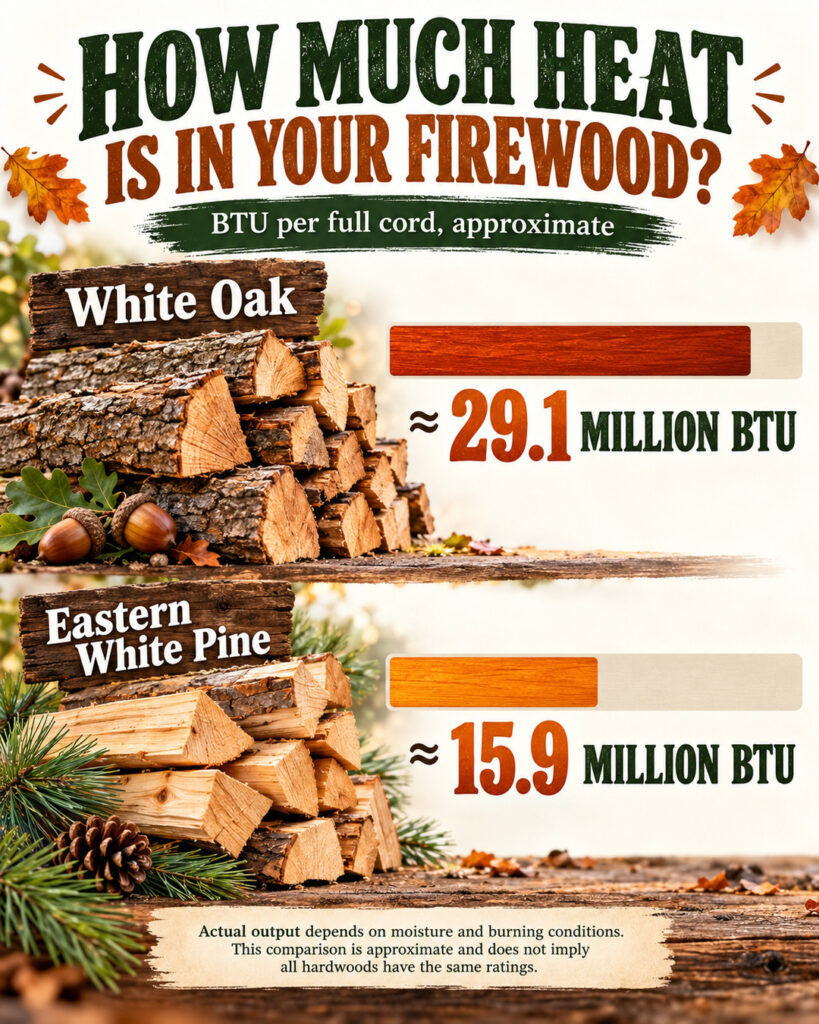
A cord is a measure of volume, not weight. Dense hardwoods pack more wood fiber into that volume, so they generally hold more energy per cord. Approximate published values per full cord:
- White oak: about 29.1 million BTU
- Eastern white pine: about 15.9 million BTU
That means a cord of white oak can contain nearly twice the energy of a cord of white pine. Pound for pound, though, most dry woods hold a similar amount of energy. Density is what makes the difference per cord.
Energy content isn’t heat delivered
BTU-per-cord figures describe the energy stored in the wood. The heat that actually reaches your room depends on:
- Moisture content: water in wood must be boiled off before it burns, which wastes energy.
- Stove efficiency: modern certified stoves convert more of the wood’s energy into useful heat.
- Burning conditions: air supply, fire size and how you load the stove.
- Stacking and volume: a loosely stacked cord contains less wood than a tight one.
Why moisture matters so much
Freshly cut wood can be roughly half water by weight. Burning it means:
- Less heat delivered to the room
- More smoke and creosote in the chimney
- Fires that are hard to start and keep going
Seasoned firewood with a moisture content of roughly 20% or less burns cleaner and hotter. Split wood early, stack it raised and ventilated, and cover the top.
Choosing the right wood for your needs
- Dense hardwoods (oak, hickory, maple, ash): long burns and steady overnight heat.
- Softwoods (pine, spruce, fir): quick lighting and fast heat for shoulder seasons.
- Mixed loads: start with softwood, then add hardwood.
How to get the most heat from your firewood
- Buy or cut wood early to allow time to season.
- Use a moisture meter before burning.
- Store wood raised, ventilated and covered on top.
- Follow your stove manufacturer’s loading and air settings.
- Have your chimney inspected and cleaned regularly.
Final thoughts
Firewood heat output depends on more than the size of your stack. Dense, well-seasoned wood burned efficiently gives you the most warmth for your money. Save this guide when comparing firewood.