
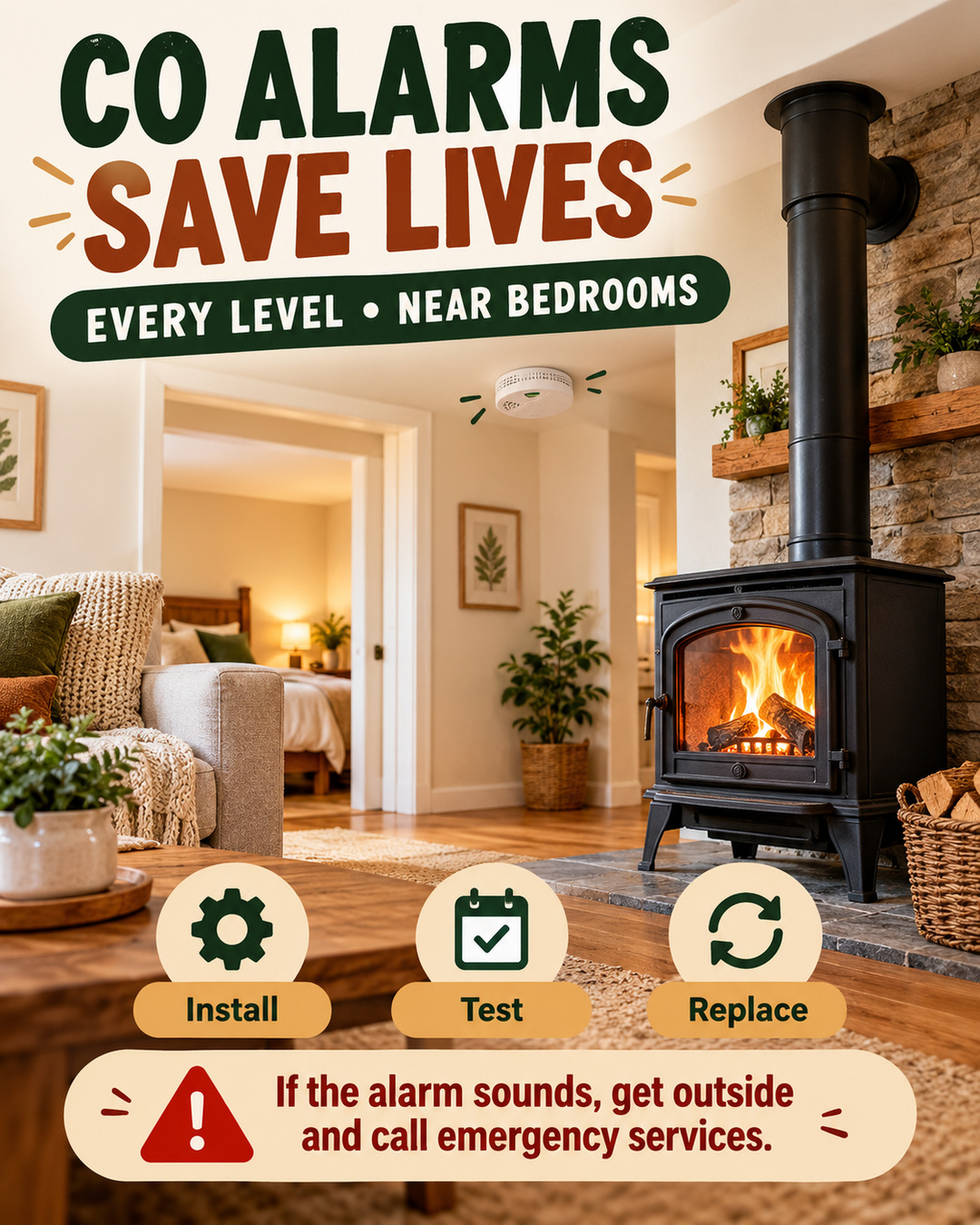
A crackling wood stove is one of winter’s great comforts, but every fuel-burning appliance can produce carbon monoxide (CO), a gas you can’t see, smell or taste. A working CO alarm is one of the simplest and most important safety tools for any home that burns wood.
What is carbon monoxide?
Carbon monoxide is produced when fuel burns incompletely. Wood stoves, fireplaces, gas furnaces, water heaters, generators and car engines can all produce it. In a home, CO can build up because of:
- A blocked or dirty chimney or flue
- A damaged stove, door gasket or stovepipe
- Poor ventilation or backdrafting
- Smoldering fires with too little air
Early symptoms of CO exposure can feel like the flu: headache, dizziness, nausea, weakness and confusion. Because it’s odorless, an alarm is the only reliable way to detect it.
Where to install CO alarms
Always follow local requirements and the alarm manufacturer’s instructions. Common recommendations include:
- On every level of the home, including the basement.
- Near sleeping areas, so the alarm can wake people.
- In or near rooms with fuel-burning appliances, at the distance the manufacturer specifies.
- Away from spots that can cause false alarms or block detection, as described in the manual.
Smoke alarms and CO alarms are not the same
A smoke alarm detects smoke from fire; a CO alarm detects carbon monoxide gas. Some devices combine both, but many don’t. Check the label to know exactly what each alarm in your home detects.
Testing and maintenance
- Test alarms regularly using the test button (monthly is a common recommendation).
- Replace batteries as directed by the manufacturer.
- Replace the whole unit when it reaches its end-of-life date. CO sensors wear out, typically after several years.
- Keep alarms clean and free of dust.
What to do if a CO alarm sounds
- Get everyone outside to fresh air immediately, including pets.
- Call emergency services from outside the home.
- Do not go back inside until emergency responders say it’s safe.
- Have your stove, chimney and appliances inspected by a qualified professional before using them again.
Preventing CO problems with your wood stove
- Have your chimney inspected and cleaned regularly; at least once a year is commonly recommended.
- Burn only dry, seasoned firewood.
- Never burn trash, treated wood or charcoal indoors.
- Check stove door gaskets and stovepipe connections.
- Never use generators or grills indoors or in attached garages.
Final thoughts
Wood heat and safety go hand in hand. Install CO alarms, test them often, replace them on time and know exactly what to do if one goes off. It takes only a few minutes, and it can save lives.