
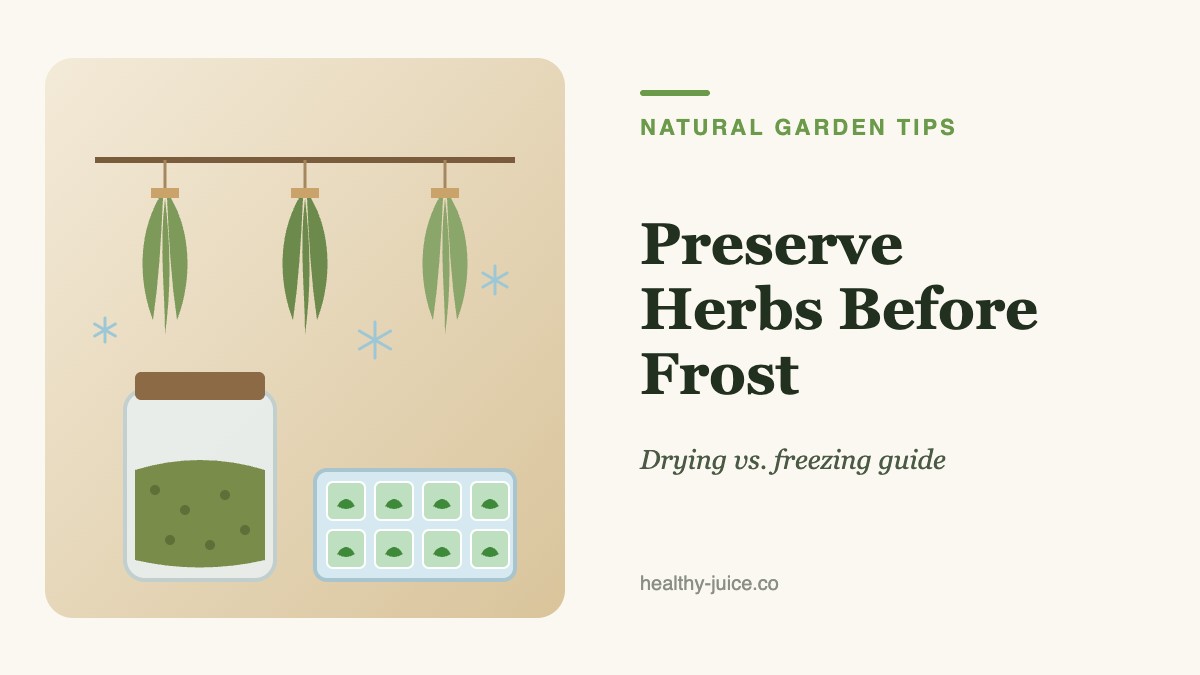
The first frost has a way of turning a carefree herb garden into an urgent little project. One day you are clipping a few leaves for supper. The next, you are standing beside an armful of basil, rosemary, mint, and sage, wondering how to keep summer from disappearing.
The good news: with a little planning, you can enjoy homegrown herbs all winter. The secret is not treating every herb the same. Some herbs hold their flavor beautifully when dried, while others are far better frozen. This guide explains which method suits each herb, how to do it step by step, and how to store your harvest for the best flavor.
When to Harvest Herbs Before Frost
Keep an eye on the forecast as fall progresses. Tender herbs like basil are damaged by cold well before a hard freeze, so harvest them when nights begin dropping toward the low 40s °F (around 5 °C). Hardier herbs such as sage, thyme, oregano, and parsley can tolerate light frosts, giving you a bit more time.
For the best flavor:
- Harvest in the morning after the dew has dried but before the heat of the day.
- Choose healthy, unblemished leaves and stems.
- Rinse only if needed, and dry the herbs thoroughly afterward. Excess moisture leads to mold during drying and ice crystals during freezing.
Herbs That Dry Well
Woody, low-moisture herbs with strong essential oils usually keep their character well when dried:
- Rosemary
- Thyme
- Sage
- Oregano
- Marjoram
- Bay leaves
Mint and lemon balm also dry well, especially for tea.
Air Drying in Bundles
- Gather 5–10 stems into small bundles. Small bundles dry faster and resist mold.
- Tie them with string or a rubber band, which tightens as the stems shrink.
- Hang them upside down in a warm, dry, well-ventilated place out of direct sunlight.
- Optionally, cover each bundle loosely with a paper bag with holes punched in it to keep off dust.
- Herbs are ready when the leaves crumble easily, usually after one to three weeks.
Drying on Screens or Racks
For small-leaved herbs like thyme, or for loose leaves, spread them in a single layer on a screen, mesh rack, or paper towel. Turn them occasionally for even drying.
Using a Dehydrator or Oven
A food dehydrator on a low setting dries herbs in hours rather than weeks. An oven can work too, but only at its lowest temperature, with the door slightly open and close supervision, because high heat drives off the flavorful oils.
Herbs That Freeze Better
Soft, leafy herbs with high moisture content often lose much of their flavor and color when dried. These are usually more useful frozen in small portions:
- Basil
- Parsley
- Chives
- Cilantro
- Dill
- Tarragon (can also be dried, depending on how you plan to use it)
Mint and lemon balm give you options: dry some for tea and freeze some for drinks or cooking.
Freezing Methods
Chopped herbs in bags. Chop herbs, spread them flat in a labeled freezer bag, press out the air, and freeze. Flat bags let you break off just what you need.
Herb ice cubes. Pack chopped herbs into ice cube trays, then top with water or olive oil and freeze. Pop out the cubes and store them in labeled freezer bags. They are perfect for dropping into soups, sauces, and stews.
Herb pastes. Blend herbs with a little oil into a paste, then freeze in small portions. This works especially well for basil, parsley, and cilantro.
Whole sprigs. Some herbs, like dill and chives, can be frozen as whole sprigs on a tray, then transferred to bags.
Food safety note: Mixtures of fresh herbs in oil should be frozen or refrigerated and used promptly. Do not store homemade herb-in-oil mixtures at room temperature.
How to Store Dried Herbs
Once herbs are fully dry, how you store them makes a big difference:
- Strip leaves from stems once dry.
- Keep leaves whole if possible and crush them just before using. This preserves more flavor.
- Use airtight containers, such as glass jars with tight lids.
- Store away from heat and light. A cabinet away from the stove is better than an open shelf next to it.
- Label each jar with the herb name and date.
- Use within about a year. Dried herbs do not spoil quickly, but their flavor fades over time.
If you see any condensation inside a jar after storing, the herbs were not fully dry. Spread them out and dry them longer.
Quick Reference: Dry or Freeze?
| Herb | Best Method |
|---|---|
| Rosemary | Dry |
| Thyme | Dry |
| Sage | Dry |
| Oregano | Dry |
| Basil | Freeze |
| Parsley | Freeze |
| Chives | Freeze |
| Cilantro | Freeze |
| Dill | Freeze |
| Mint | Dry or freeze |
| Lemon balm | Dry or freeze |
| Tarragon | Dry or freeze |
Keep Herbs Growing Indoors
You can also extend the season by bringing some herbs inside. Rosemary, thyme, and chives can be potted and kept on a sunny windowsill. You can also root cuttings of basil or mint in water for a small indoor supply.
Frequently Asked Questions
Can I dry basil?
You can, but dried basil loses much of its aroma. Freezing it, especially as a paste or in ice cubes, keeps far more of its fresh flavor.
How do I know when herbs are completely dry?
Leaves should crumble easily between your fingers and stems should snap rather than bend. If they feel leathery, give them more time.
How long do frozen herbs last?
For best flavor, use frozen herbs within about six months to a year. Press air out of bags to reduce freezer burn.
Final Thoughts
Preserving herbs before frost does not have to be complicated. Dry the sturdy, woody herbs, freeze the soft, leafy ones, and store everything carefully. A little work before frost means the garden can still flavor the kitchen long after the beds have gone quiet.