
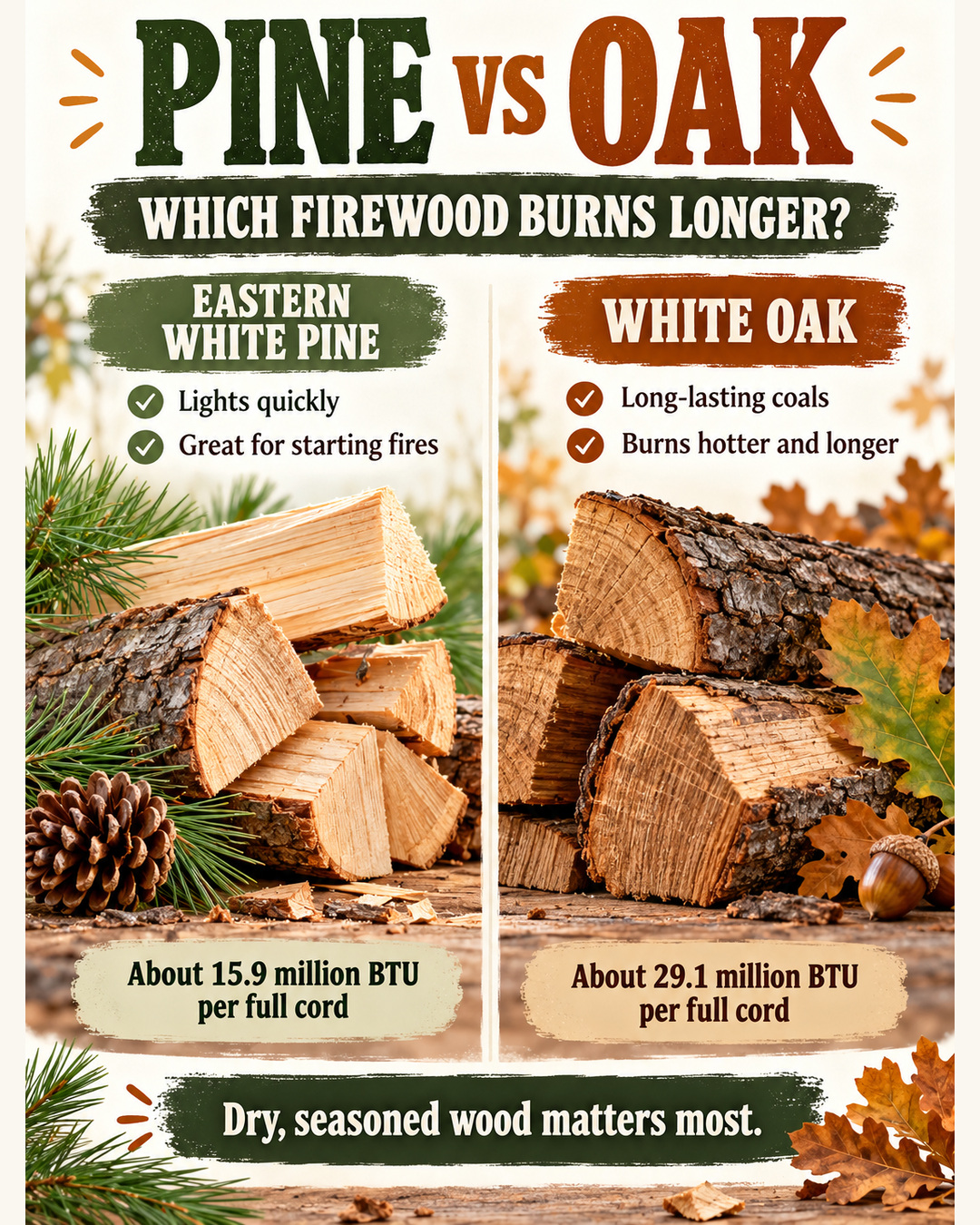
Should you burn pine or oak? It’s one of the most common firewood questions, and the honest answer is that both have a place. Well-seasoned pine is great for getting a fire going, while dense oak provides longer-lasting heat and coals once the fire is established.
Eastern white pine: the fire starter
Eastern white pine is a softwood with low density and resin. When properly dried, it:
- Lights easily and catches quickly.
- Burns hot and fast, which is useful for warming up a cold stove and chimney.
- Dries faster than most hardwoods.
The downside is that it burns down quickly, so you’ll reload more often. Its energy content per cord is much lower than oak: roughly 15.9 million BTU per full cord for Eastern white pine.
White oak: the long burner
White oak is a dense hardwood that is one of the best heating woods available. Once seasoned, it:
- Provides long-lasting heat and a steady burn.
- Produces a deep bed of coals, ideal for overnight fires.
- Holds more energy per cord: roughly 29.1 million BTU per full cord.
The trade-off: oak is harder to light and takes much longer to season, often a year or more.
The myth about pine and creosote
Many people believe pine is dangerous because it causes creosote. In reality, wet wood of any species and smoldering, low-oxygen fires are the main causes of creosote buildup. Properly seasoned pine burned in a hot, well-managed fire is generally fine. Regular chimney inspections and cleaning are important no matter what you burn.
Using pine and oak together
- Start with pine kindling and small splits to get the fire going quickly.
- Add oak once you have a hot bed of flames and coals.
- Keep oak for overnight or long, cold days.
- Use pine for shoulder seasons when you only need a short, quick fire.
What matters more than species
- Moisture content: aim for roughly 20% or less.
- Wood quality: avoid rotten or punky wood.
- Your appliance: follow your stove manufacturer’s recommendations.
- Storage: keep wood raised, covered on top and well ventilated.
Final thoughts
Pine and oak aren’t rivals; they’re teammates. Use well-seasoned pine to start fires and dense oak for long-lasting heat. Save this pine-versus-oak comparison for the winter.
0 thoughts on “Pine vs Oak Firewood: Starting Fires and Longer-Lasting Heat”