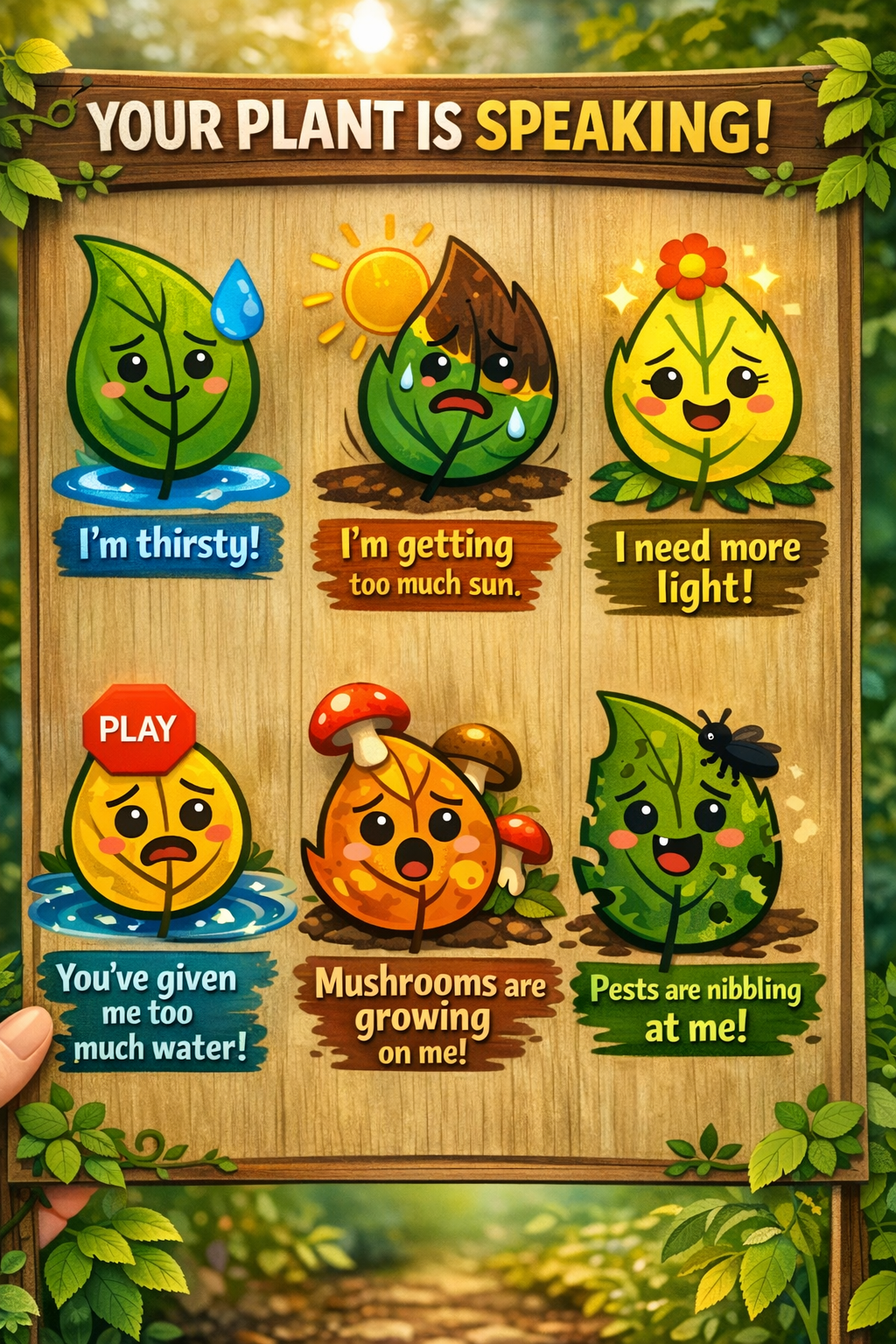
Plants may not speak in words, but they constantly communicate through their leaves, stems, and overall appearance. If you know how to observe closely, you’ll realize your houseplants and garden plants are always telling you what they need. Understanding these visual cues can be the difference between a struggling plant and a thriving one.In this guide, we’ll explore Signs Your Plant Is Talking to You—from droopy leaves and yellowing foliage to brown edges and mysterious holes. By learning to interpret these common plant signals, you’ll be able to respond quickly and keep your plants healthy, vibrant, and stress-free.Why It’s Important to Listen to Your PlantsPlants are living organisms that react to their environment. Light, water, temperature, pests, and airflow all affect their health. When something is off balance, your plant shows symptoms. These symptoms are not random—they are messages.Recognizing the Signs Your Plant Is Talking to You allows you to:Prevent long-term damageImprove plant growth and appearanceReduce plant diseases and pest infestationsBuild confidence as a plant parentLet’s break down the most common plant warning signs and what they mean.Droopy, Soft Leaves: Your Plant Is ThirstyWhat Droopy Leaves Are Telling YouWhen leaves look limp, soft, or lifeless, your plant is often dehydrated. This is one of the clearest signs of water stress. Without enough moisture, plant cells lose pressure, causing leaves to droop.Common CausesInfrequent wateringDry indoor airSoil that drains too quicklyWhat to DoWater your plant moderately and evenly. Make sure water reaches the root zone, not just the soil surface. After watering, droopy leaves often recover within a few hours.Practical TipStick your finger about two inches into the soil. If it feels dry, it’s time to water. Avoid soaking the soil completely unless the plant specifically requires it.Brown or Burnt Edges: Too Much Sun ExposureWhat Brown Leaf Edges MeanBrown or crispy leaf edges often indicate sunburn. While plants need light, too much direct sunlight—especially during hot afternoons—can scorch their leaves.Plants Most at RiskIndoor plants placed near south-facing windowsShade-loving plants exposed to full sunPlants recently moved outdoorsHow to Fix ItMove your plant to a shady or partially shaded spot. Bright, indirect light is ideal for many houseplants.Practical TipIf you’re unsure about light levels, observe shadows. Soft, blurred shadows mean indirect light; sharp shadows indicate strong direct sunlight.Pale Leaves: Not Enough LightUnderstanding Pale or Faded LeavesWhen leaves lose their deep green color and become pale, your plant is struggling to photosynthesize. This usually means it’s not receiving enough light.Why This HappensPlacement too far from windowsShort daylight hours (especially in winter)Obstructions blocking natural lightSolutionMove the plant closer to a bright light source, such as a window or under a grow light.Practical TipRotate your plant every one to two weeks to ensure even light exposure and prevent uneven growth.Yellowing Leaves: Overwatering IssuesWhat Yellow Leaves Are SayingYellow leaves are one of the most misunderstood plant signals. In many cases, they indicate overwatering, not underwatering.Signs Overwatering Is the ProblemSoil remains wet for daysLeaves turn yellow and softRoots may begin to rotWhat to DoReduce watering frequency and allow the soil to dry slightly between waterings. Ensure the pot has proper drainage holes.Practical TipAlways empty excess water from saucers. Standing water suffocates roots and leads to fungal problems.Spots or Mold: Fungus Is PresentRecognizing Fungal ProblemsSpots, fuzzy growth, white powder, or mold on leaves are clear indicators of fungal infections. These issues thrive in moist, stagnant environments.Causes of Fungal GrowthPoor air circulationOvercrowded plantsWet leaves and high humidityHow to Treat ItImprove airflow by spacing plants apart and pruning affected leaves. Treat promptly using an appropriate fungicide or natural remedy like neem oil.Practical TipWater plants at the soil level rather than overhead to keep leaves dry and reduce fungal risk.Holes in Leaves: Pests Are FeedingWhat Leaf Damage Tells YouHoles, chewed edges, or irregular tears in leaves usually mean insects are feeding on your plant. This is one of the most obvious Signs Your Plant Is Talking to You.Common Plant PestsAphidsCaterpillarsSpider mitesSlugs and beetlesWhat to DoInspect the plant carefully, including the undersides of leaves. Use an appropriate control method such as insecticidal soap, neem oil, or manual removal.Practical TipCheck plants regularly, especially during warmer months. Early detection makes pest control much easier.How to Prevent Future Plant ProblemsListening to your plant doesn’t stop once the problem is fixed. Prevention is key to long-term plant health.General Plant Care TipsUse well-draining soilMatch plants to appropriate light conditionsWater based on plant type, not a fixed scheduleKeep leaves clean and dust-freeQuarantine new plants before placing them with othersBy staying observant, you’ll quickly recognize when something changes.Why Observing Your Plant Matters More Than a ScheduleMany plant problems come from following rigid care routines instead of responding to the plant’s actual needs. Plants don’t care about calendars—they respond to conditions.The Signs Your Plant Is Talking to YouDroopy, soft leaves: your plant is thirsty – water it moderately.Brown or burnt edges: too much sun; move it to a shady spot.Pale leaves: not enough light; place it closer to a bright light source.Yellowing leaves: overwatering – reduce the frequency.Spots or mold: fungus is present; improve airflow and treat promptly.Holes in leaves: pests are feeding; inspect and use an appropriate control methodsummarize the most common messages your plants send every day.Learning these signs helps you become a more intuitive and successful plant caretaker.Conclusion: Learn the Language of Your PlantsPlants may be silent, but they are never quiet. Every drooping leaf, yellow patch, or brown edge is a form of communication. Once you understand these signals, plant care becomes less about guesswork and more about connection.By recognizing the Signs Your Plant Is Talking to You, you can act quickly, prevent serious issues, and enjoy healthier, more beautiful plants year-round. Whether you’re caring for houseplants in an apartment or tending a garden outdoors, listening to your plants is the most important skill you can develop.Healthy plants don’t just grow—they respond. All you have to do is pay attention. 🌱