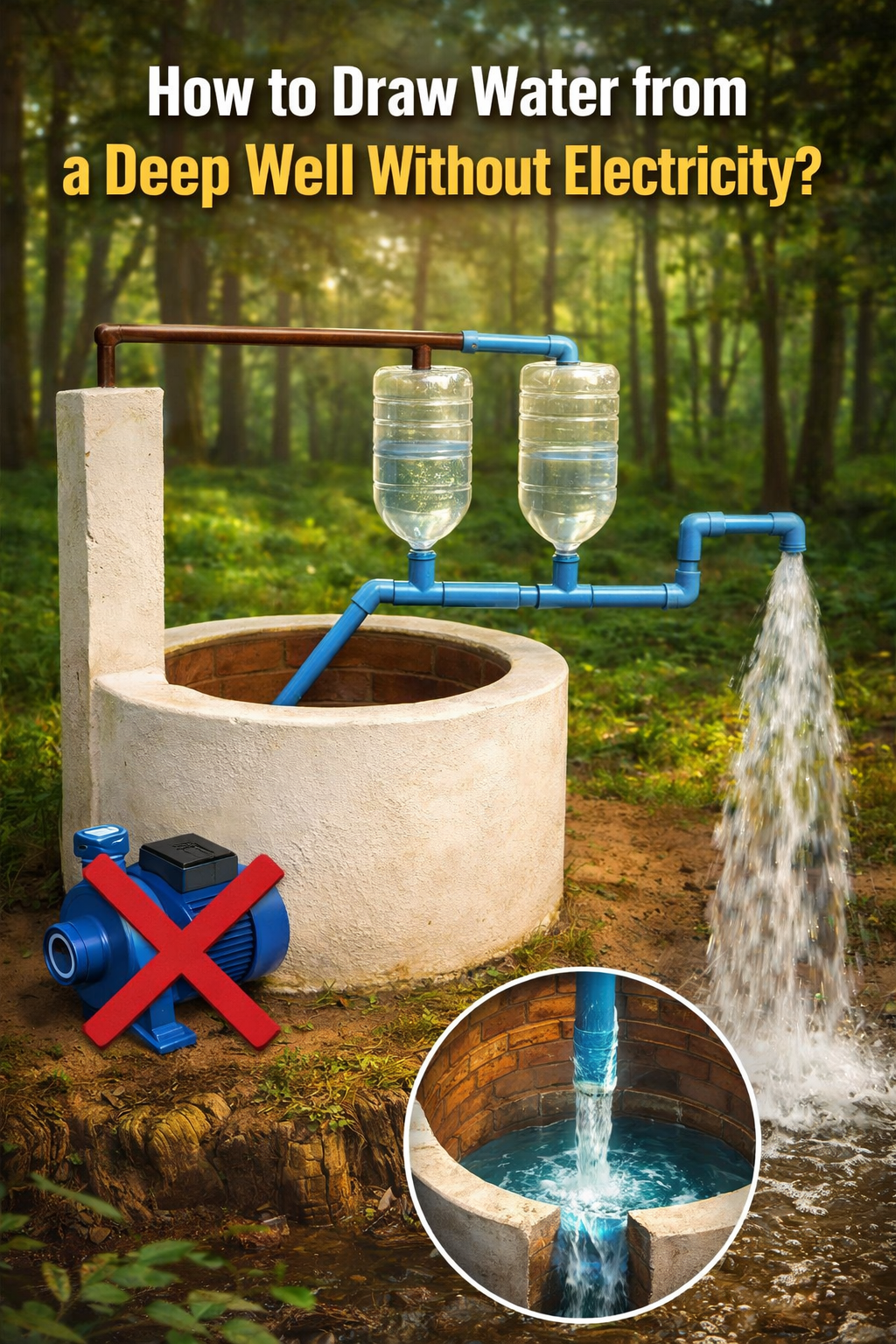
So the power’s out, the grid has betrayed you, and now you’re staring at a deep well like it personally offended you. Good news. Humans pulled water out of holes for thousands of years before electricity showed up and started acting important.Here’s how to draw water from a deep well without electricity, depending on how deep we’re talking and how much upper body strength you’re willing to donate to the cause.—## 1. Hand Pump (Manual Well Pump)If your well already has a casing and drop pipe, a **manual hand pump** is the cleanest solution.### How it worksA lever-operated piston pump creates suction and lifts water to the surface.### Best for:* Wells up to about 25 feet deep for shallow suction pumps* Much deeper wells if using a deep-well hand pump with a downhole cylinder### What you need:* Manual deep-well hand pump* Drop pipe and pump rod* Proper well sealDeep-well manual pumps can pull water from 100–300+ feet, but they require proper installation. Brands designed for off-grid use are common in rural areas across the US, UK countryside properties, and Canadian homesteads.### Pros:* Reliable* Long-term solution* No fuel needed### Cons:* Installation cost* Some elbow grease requiredIf you want a serious backup plan, this is the gold standard.—## 2. Bucket and Rope (Old-School Method)Yes, the medieval method still works. Humans survived castles. You’ll survive Tuesday.### How it works:Lower a narrow bucket or bailer down the well, fill it, pull it back up.### Best for:* Open wells* Wide-diameter wells### Important:This does **not** work with most modern drilled wells that have narrow casings (usually 4–6 inches wide). You’d need a slim well bucket designed specifically for that diameter.### Pros:* Cheap* No installation### Cons:* Physically demanding* Risk of contamination* Easy to drop things into the wellIf you go this route, use a food-safe stainless steel or PVC well bucket, not your random garden pail.—## 3. Well Bailer (For Narrow Wells)A **well bailer** is basically a long, narrow cylinder with a check valve at the bottom.### How it works:* Lower it down the well* It fills automatically* Pull it back upThis works for deep drilled wells where a regular bucket won’t fit.### Pros:* Affordable* No permanent modification### Cons:* Slow process* Labor intensiveYou’ll get a workout. Hydration via upper-body suffering.—## 4. Lever and Pulley SystemIf you have an open well, a pulley reduces effort significantly.### Setup:* Install a sturdy beam across the well* Attach a pulley* Run a rope through itThis reduces strain and gives you mechanical advantage.For deeper wells, some people build tripod frames over the well for stability.—## 5. Wind-Powered PumpIf electricity is unreliable long-term, wind power is a serious option.### How it works:A windmill drives a mechanical pump rod.Common in rural farming areas, especially across North America.### Pros:* Sustainable* Long-term solution### Cons:* Installation cost* Requires consistent wind—## 6. Solar with Manual BackupYou asked for without electricity, but technically solar isn’t grid electricity. A solar-powered pump with a manual override gives you the best of both worlds.In a prolonged outage, this is often the most practical modern solution.—# Important Safety ConsiderationsLet’s not turn this into a survival documentary episode.### 1. Know Your Well Type* Dug well (wide, shallow)* Drilled well (narrow, deep)Your method depends entirely on this.### 2. Prevent ContaminationNever allow:* Dirty rope* Unclean buckets* Surface water runoffto enter the well.### 3. Secure the OpeningOpen wells are fall hazards. Cover them properly after drawing water.### 4. Test Water QualityIf your electric pump hasn’t run in a while, sediment may stir up. Let water settle or filter before drinking.—# Best Option for Deep WellsIf your well is more than 50 feet deep and modern (which most are in the US, UK rural properties, and Canada), your most realistic non-electric solution is:✔ A properly installed deep-well hand pump✔ Or a slim well bucket designed for drilled wellsAnything else becomes a crossfit routine you didn’t sign up for.—# Final ThoughtsPulling water from a deep well without electricity isn’t primitive. It’s resilient. There’s something oddly reassuring about knowing you don’t depend entirely on a switch somewhere miles away.Install a manual pump if you want reliability. Use a well bucket if you need a temporary fix. And maybe appreciate that clean water appearing at the twist of a tap is one of civilization’s quieter miracles.Now go hydrate. The well isn’t going to argue with you, even if your arms might.