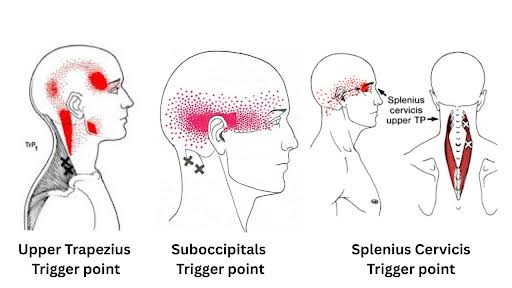
Headaches are one of the most common health complaints across the United States, United Kingdom, and Canada. While most people simply say, “I have a headache,” the reality is that there are many different types — and each one feels different depending on the cause.Understanding where a headache hurts and how it feels can help you identify patterns, manage symptoms more effectively, and know when to seek medical care.Below are 15 common types of headaches, including their typical location and pain characteristics.1. MigraineA migraine is more than just a bad headache.Where it hurts:Usually one side of the headOften around the temple or behind one eyeHow it feels:Throbbing or pulsating painModerate to severe intensityMay worsen with movementOther symptoms:NauseaSensitivity to light and soundVisual disturbances (aura)2. Tension HeadacheThe most common type of headache.Where it hurts:Both sides of the headForehead or back of the headFeels like a tight bandHow it feels:Dull, aching pressureMild to moderateOften linked to stress, poor posture, or screen overuse.3. Cluster HeadacheCluster headaches are intense but less common.Where it hurts:One side of the headTypically behind or around one eyeHow it feels:Sharp, burning, or piercing painExtremely severeOther signs:Red or watery eyeNasal congestionOccurs in clusters over weeks4. Sinus HeadacheOften associated with sinus infections.Where it hurts:ForeheadCheeksAround the nose and eyesHow it feels:Deep pressureWorsens when bending forward5. Rebound (Medication-Overuse) HeadacheWhere it hurts:Diffuse (all over head)How it feels:Persistent daily acheOccurs from frequent use of pain medications.6. Hormonal HeadacheCommon around menstruation, pregnancy, or menopause.Where it hurts:Often one sideHow it feels:Similar to migraineThrobbing7. Caffeine Withdrawal HeadacheWhere it hurts:Front or entire headHow it feels:Dull, heavy pressureDevelops within 24 hours of missing caffeine8. Exertion HeadacheTriggered by intense physical activity.Where it hurts:Both sidesHow it feels:Pulsating during or after exercise9. Ice Pick HeadacheWhere it hurts:One small, specific spotHow it feels:Sudden stabbing painLasts seconds10. Thunderclap Headache⚠️ Medical emergencyWhere it hurts:Entire headHow it feels:Sudden, explosive painPeaks within secondsSeek immediate medical care.11. Cervicogenic HeadacheOriginates from neck problems.Where it hurts:One sideStarts at base of skullHow it feels:Steady acheNeck stiffness12. High Blood Pressure HeadacheOften associated with very elevated blood pressure.Where it hurts:Both sidesHow it feels:Pulsating pressure13. Dehydration HeadacheWhere it hurts:Whole headHow it feels:Dull or throbbingImproves after drinking fluids14. Allergy HeadacheWhere it hurts:Sinus areasHow it feels:Pressure and congestionOften seasonal.15. Post-Traumatic HeadacheOccurs after head injury.Where it hurts:VariesHow it feels:Can mimic tension or migraineAlways consult a healthcare provider after head trauma.When Should You See a Doctor?Seek medical care immediately if your headache:Is sudden and severeComes with confusion or faintingFollows a head injuryIncludes vision loss or weaknessIs the worst headache of your lifeCommon Headache Locations SummaryLocation Likely TypeOne side, throbbing MigraineTight band around head TensionBehind one eye, severe ClusterFace and forehead pressure SinusBase of skull CervicogenicTips to Reduce Headache FrequencyStay hydratedMaintain regular sleep patternsManage stressLimit caffeine swingsMaintain good postureTrack headache triggersKeeping a headache journal can help identify patterns.Final ThoughtsNot all headaches are the same. Knowing where your headache hurts and how it feels can provide important clues about its cause.While many headaches are harmless and manageable with lifestyle changes, some require medical attention. If headaches are frequent, severe, or changing in pattern, consult a healthcare professional.