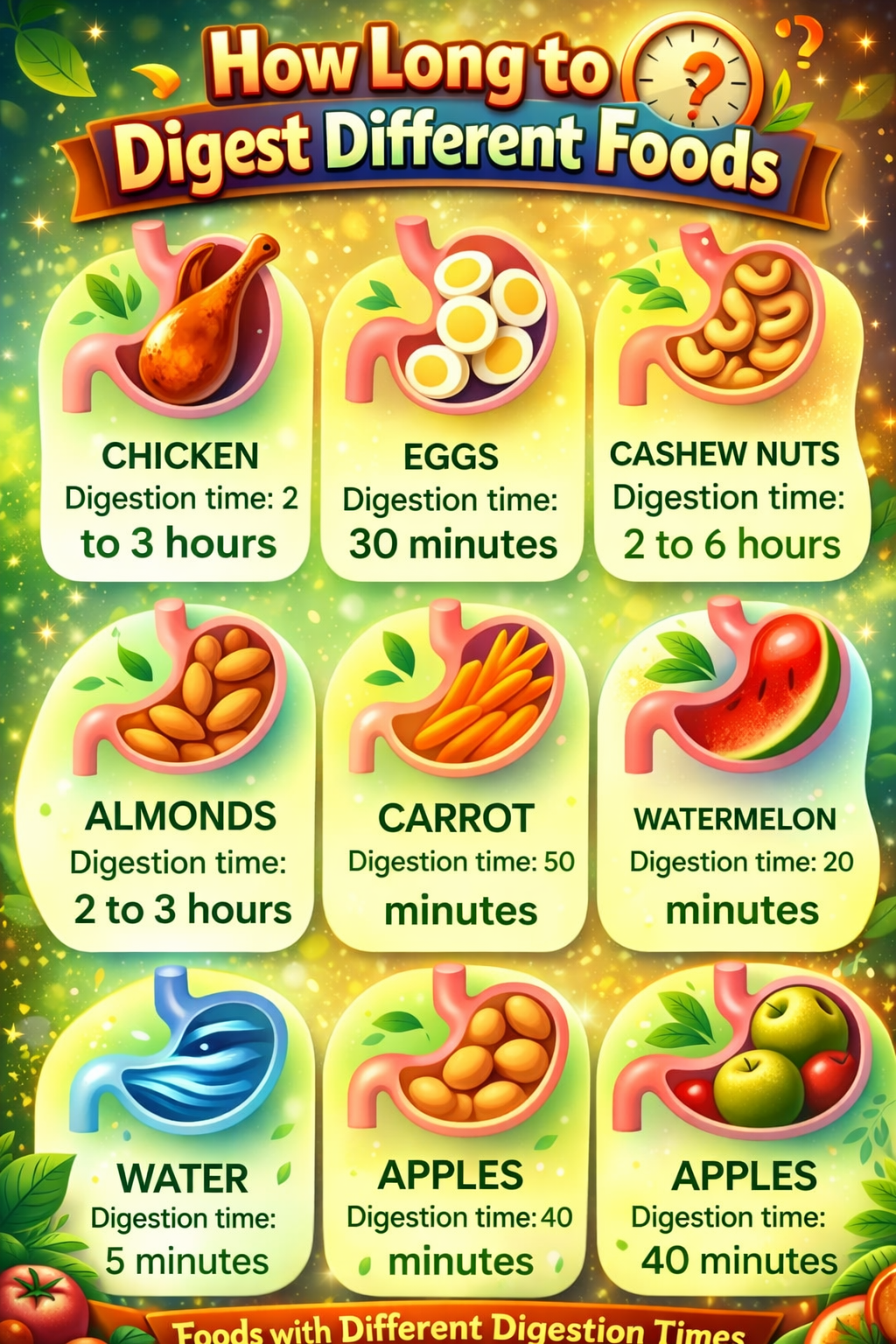
Have you ever wondered why some meals leave you feeling light and energized, while others make you sluggish or bloated for hours? The answer often lies in food digestion times — how long different foods stay in your stomach and digestive tract before being absorbed.Understanding digestion timing can help you make smarter food choices, improve gut comfort, and optimize energy levels throughout the day. Whether you’re living a fast-paced lifestyle in the United States, balancing work and family in the United Kingdom, or staying active in Canada, knowing how your body processes food can make a meaningful difference.Let’s explore what really happens after you eat — and what your stomach doesn’t always tell you.How Digestion Works (In Simple Terms)Digestion begins the moment you take a bite.Mouth – Chewing and saliva start breaking down carbohydrates.Stomach – Acid and enzymes break down proteins and fats.Small intestine – Nutrients are absorbed into the bloodstream.Large intestine – Water is absorbed and waste is formed.On average, food stays in the stomach for 2–4 hours, but full digestion through the intestines can take 24–72 hours depending on the type of food.⏱️ Average Food Digestion Times by CategoryBelow are general digestion time estimates. Keep in mind: individual metabolism, hydration, age, and health all play a role.🍉 1. Fruits (Fastest to Digest)Average time: 20–60 minutesMost fruits digest quickly because they contain simple sugars and high water content.Watermelon: ~20–30 minutesOranges: ~30 minutesApples: ~40 minutesBananas: ~45 minutes💡 Tip: Eating fruit alone or before meals may reduce bloating.🥗 2. Vegetables (Light and Moderate)Average time: 30–60 minutesLeafy greens: ~30 minutesCooked vegetables: ~40 minutesRoot vegetables: ~50–60 minutesCooking vegetables makes them easier to digest.🍚 3. Grains and CarbohydratesAverage time: 1.5–2 hoursWhite rice: ~1.5 hoursOats: ~2 hoursWhole grains: ~2–3 hoursRefined grains digest faster than whole grains because they contain less fiber.🥚 4. Protein FoodsAverage time: 2–4 hoursEggs: ~2 hoursFish: ~2–3 hoursChicken: ~3–4 hoursRed meat: ~4–6 hoursProteins take longer because stomach acid must break down complex amino acids.🧀 5. Fats and Heavy Meals (Slowest to Digest)Average time: 4–6+ hoursHigh-fat foods slow stomach emptying.Examples:Fried foodsCreamy saucesFast food mealsLarge portions of red meatThis is why heavy meals often leave you feeling full for hours.Why Digestion Time MattersUnderstanding food digestion times can help you:Avoid bloatingPlan pre-workout mealsImprove sleep qualitySupport gut healthMaintain steady energyFor example:Eat light, fast-digesting foods before exercise.Avoid heavy, fatty meals before bedtime.Factors That Affect Digestion SpeedDigestion isn’t one-size-fits-all. Several factors influence how quickly food moves through your system:1. HydrationWater supports enzyme activity and bowel movement.2. Fiber IntakeFiber slows digestion but improves gut health long-term.3. Stress LevelsStress activates the “fight or flight” response, which can slow digestion.4. AgeMetabolism often slows slightly with age.5. Gut HealthA balanced microbiome improves digestion efficiency.Signs Your Digestion May Be SluggishWhile occasional discomfort is normal, frequent symptoms may include:BloatingConstipationHeartburnFeeling overly full for long periodsLow energy after mealsIf symptoms persist, consult a healthcare professional.Practical Tips to Improve Digestion Naturally 🌿✔️ Chew SlowlyDigestion begins in the mouth.✔️ Don’t OvereatLarge meals take longer to process.✔️ Walk After MealsA short 10–15 minute walk can support digestion.✔️ Stay HydratedAim for consistent water intake throughout the day.✔️ Manage StressDeep breathing supports the “rest and digest” system.Sample Balanced Digestion-Friendly DayBreakfast: Oatmeal with berries (moderate digestion)Lunch: Grilled chicken salad (balanced protein + fiber)Snack: Apple or yogurtDinner: Baked salmon with steamed vegetablesThis combination supports steady digestion and energy levels.Common Myths About Digestion❌ “Food digests in exact hours for everyone.”Digestion time varies per individual.❌ “Drinking water during meals stops digestion.”Water actually supports digestion when consumed moderately.❌ “Fruit always causes bloating.”Usually depends on portion size and timing.Final ThoughtsYour body is constantly working behind the scenes to digest, absorb, and fuel your daily activities. Understanding food digestion times helps you make better choices for energy, comfort, and overall wellness.While these time estimates are general guidelines, listening to your body is key. Pay attention to how different meals make you feel — that awareness can be more powerful than any chart.By choosing balanced meals, managing stress, and supporting your gut naturally, you can help your digestive system run smoothly — even when your stomach doesn’t say a word. 🌿⏱️✨