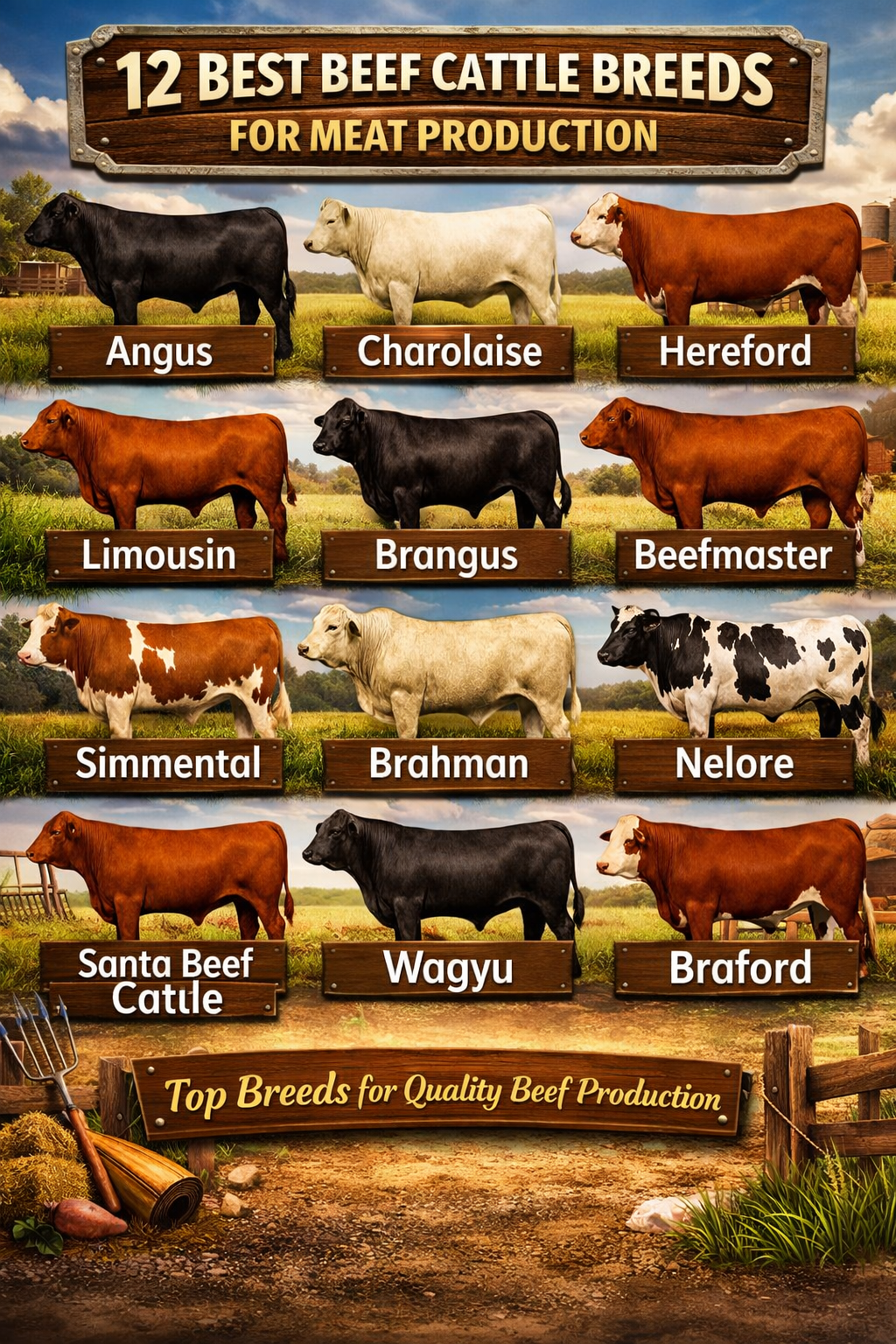
Whether you’re a small-scale farmer, homesteader, rancher, or simply curious about beef production, understanding beef cattle breeds is essential. Different breeds excel in different climates, production systems, and market goals. This practical guide breaks down the main beef cattle breeds, their key traits, and how to choose the right one for your needs.🥩 What Makes a Good Beef Cattle Breed?Beef cattle are bred primarily for meat quality and efficiency, not milk production. The best beef breeds typically offer:Fast growth and good feed conversionHigh-quality muscle (marbling, tenderness)Strong disease resistanceAdaptability to climateGood temperament and calving easeNo single breed is perfect for every situation—success depends on matching the breed to your environment and goals.🐄 Angus (Black & Red Angus)Origin: ScotlandBest for: High-quality beef, grass-fed systemsKey TraitsExcellent marbling and tendernessNaturally polled (no horns)Hardy and adaptableStrong maternal instinctsPros✔ Premium beef quality✔ Easy calving✔ Popular in the U.S., Canada, and UKCons✖ Dark coats absorb heat in very hot climates👉 Angus is one of the most popular beef cattle breeds worldwide, especially for commercial beef operations.🐄 HerefordOrigin: EnglandBest for: Grazing systems, beginnersKey TraitsRed body with white faceCalm temperamentExcellent forage efficiencyPros✔ Easy to manage✔ Good fertility and longevity✔ Thrives on pastureCons✖ Less marbling than Angus👉 Ideal for low-input and pasture-based systems.🐄 CharolaisOrigin: FranceBest for: Meat yield and crossbreedingKey TraitsLarge, white or cream-colored cattleRapid growth ratesHigh muscle massPros✔ Excellent carcass yield✔ Strong hybrid vigor in crossesCons✖ Can have larger calves (calving assistance may be needed)👉 Commonly used in crossbreeding programs to increase size and weight gain.🐄 LimousinOrigin: FranceBest for: Lean beef productionKey TraitsGolden-red or black coatHigh muscle-to-bone ratioEfficient feed conversionPros✔ Lean, high-yield meat✔ Strong and hardyCons✖ Leaner meat may have less marbling👉 Popular in Europe and North America for lean beef markets.🐄 SimmentalOrigin: SwitzerlandBest for: Dual-purpose and crossbreedingKey TraitsRed-and-white or blackLarge frameStrong milk production for calvesPros✔ Fast growth✔ Excellent maternal traits✔ VersatileCons✖ Larger size requires more feed👉 A great choice if you want fast-growing calves with good weaning weights.🐄 BrahmanOrigin: United States (from Indian Zebu cattle)Best for: Hot and humid climatesKey TraitsDistinct hump and loose skinHeat and insect resistanceLong lifespanPros✔ Thrives in extreme heat✔ Disease-resistant✔ Excellent for tropical regionsCons✖ Meat can be less tender if not crossbred👉 Widely used in southern U.S., Australia, and tropical regions.🐄 Brangus (Brahman × Angus)Origin: United StatesBest for: Heat-tolerant premium beefKey TraitsCombines Angus quality with Brahman hardinessPolled and heat resistantPros✔ Good marbling✔ Heat and parasite tolerance✔ Strong maternal traitsCons✖ Slightly higher management needs than pure Angus👉 A top choice for warm climates wanting quality beef.🐄 WagyuOrigin: JapanBest for: Premium and specialty marketsKey TraitsExceptional marblingSlow growthHigh-value beefPros✔ Extremely tender meat✔ High market pricesCons✖ Expensive✖ Requires careful feeding and management👉 Ideal for niche and luxury beef markets.🌎 Choosing the Right Beef Cattle BreedBefore selecting a breed, consider:✅ ClimateHot climates → Brahman, BrangusCold climates → Angus, Hereford✅ Production GoalPremium beef → Angus, WagyuLean beef → LimousinFast growth → Charolais, Simmental✅ Management LevelBeginners → Hereford, AngusExperienced producers → Wagyu, Charolais✅ Feed AvailabilityGrass-based → Angus, HerefordHigh-energy feed → Wagyu, Charolais🔄 Crossbreeding: A Practical StrategyMany producers use crossbreeding to combine strengths:Angus × Hereford → Black BaldyAngus × Brahman → BrangusCharolais × Angus → Heavy, fast-growing calvesCrossbreeding often improves:✔ Fertility✔ Growth rates✔ Disease resistance🧠 Practical Tips for SuccessStart with healthy breeding stockFocus on good pasture managementKeep accurate records (birth, weight, health)Select bulls carefully—they influence the entire herdMatch breed to local market demand🏁 ConclusionUnderstanding the main beef cattle breeds helps you make smarter, more profitable decisions. From the high-quality marbling of Angus to the heat tolerance of Brahman and the premium appeal of Wagyu, each breed offers unique advantages.The best breed isn’t “the best overall”—it’s the one that fits your climate, goals, and management style. With the right choice and proper care, beef cattle can be a rewarding and sustainable livestock investment 🐂🥩.