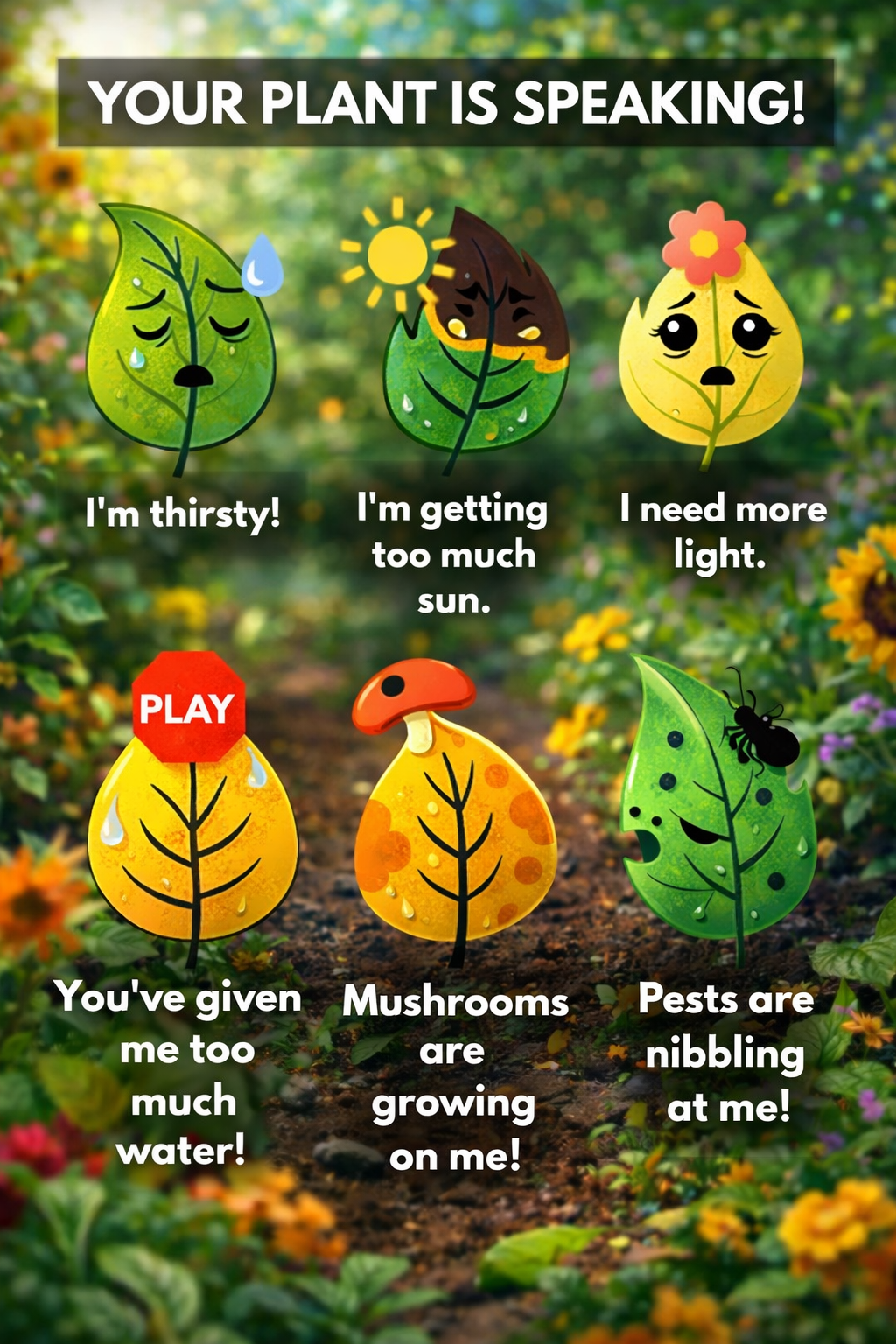
Plants may not speak in words, but they are constantly communicating. From drooping leaves to vibrant new growth, your houseplants and garden favorites are always sending signals about their health and needs. Learning to recognize these cues can transform you from a reactive plant owner into a confident, intuitive plant parent.In this guide, we’ll explore 🌿✨ Signs Your Plant Is Talking to You ✨🌿, what those signals mean, and how to respond effectively—whether you’re caring for indoor plants in the United States, tending a greenhouse in the United Kingdom, or growing a backyard garden in Canada.Why Plants “Talk” 🌱Plants respond to their environment—light, water, temperature, nutrients, and pests. When something isn’t right (or when conditions are perfect), they show visible changes.Understanding 🌿✨ Signs Your Plant Is Talking to You ✨🌿 helps you:Prevent plant diseasesAvoid overwateringImprove growthBoost flowering and fruitingSave struggling plants earlyLet’s decode the most common signals.1️⃣ Yellowing Leaves – A Cry for BalanceYellow leaves are one of the most common plant signals.What It Means:OverwateringPoor drainageNutrient deficiency (often nitrogen)Natural aging (lower leaves)What To Do:Check soil moisture before wateringEnsure pots have drainage holesConsider feeding with balanced fertilizerIf yellowing spreads rapidly, it’s one of the clearest 🌿✨ Signs Your Plant Is Talking to You ✨🌿 that watering habits need adjustment.2️⃣ Wilting – Thirst or Drowning?Wilting doesn’t always mean your plant is dry.Possible Causes:UnderwateringOverwatering (roots suffocating)Extreme heatRoot damageHow to Check:Insert your finger 1–2 inches into the soil.Dry? Water thoroughly.Soggy? Let soil dry out before watering again.Wilting is your plant’s dramatic way of saying, “Something isn’t right!”3️⃣ Brown, Crispy Edges – Air & Humidity IssuesEspecially common in indoor plants during winter heating season in the U.S., U.K., and Canada.Causes:Low humiditySalt buildup from fertilizerInconsistent wateringSolutions:Increase humidity with a pebble trayMist lightly (if appropriate for plant type)Flush soil occasionally with distilled waterDry leaf tips are subtle but important 🌿✨ Signs Your Plant Is Talking to You ✨🌿.4️⃣ Pale or Leggy Growth – Not Enough Light ☀️When stems stretch and leaves become smaller or pale:It Usually Means:Insufficient sunlightPlants stretch toward light sources—a behavior called phototropism.Fix It:Move closer to a bright windowRotate plant weeklyUse grow lights during darker monthsLeggy growth is your plant asking for brighter conditions.5️⃣ Leaves Dropping Suddenly – Stress ResponseIf leaves drop unexpectedly, consider:Temperature shockDraftsOverwateringRelocation stressMany tropical plants are sensitive to cold drafts common in winter climates.This is one of the more dramatic 🌿✨ Signs Your Plant Is Talking to You ✨🌿—they’re reacting to sudden environmental change.6️⃣ Sticky Residue – Pest Warning 🐛If leaves feel sticky or shiny:Likely Cause:AphidsMealybugsScale insectsThese pests produce honeydew (sticky substance).Action Steps:Inspect underside of leavesWipe gently with damp clothUse insecticidal soap if neededEarly detection prevents infestation.7️⃣ Curling Leaves – Environmental StressLeaf curling may indicate:Heat stressLow humidityPestsOverfertilizingCurling is your plant trying to conserve moisture.Check light exposure and watering schedule first.8️⃣ Mushy Stems – Root Rot Alert 🚨Soft, dark, mushy stems are serious warning signs.Usually Caused By:OverwateringPoor drainageFungal infectionImmediate action is required:Remove plant from potTrim affected rootsRepot in fresh, well-draining soilThis is one of the most urgent 🌿✨ Signs Your Plant Is Talking to You ✨🌿.9️⃣ Slow Growth – Seasonal or Nutrient Related?Not all slow growth is bad.Consider:Is it winter? Many plants rest seasonally.Does it need fertilizer?Has it outgrown its pot?Repotting and feeding in spring often revives growth.🔟 New Growth & Flowering – A Happy Message 🌸Not all signals are negative!Healthy signs include:Bright green leavesSteady new growthFlower budsStrong stemsWhen your plant thrives, it’s saying: “Keep doing what you’re doing!”How to Respond to 🌿✨ Signs Your Plant Is Talking to You ✨🌿✔ Observe RegularlyCheck leaves (top and underside), stems, and soil weekly.✔ Water SmartlyAvoid strict schedules—water based on soil dryness.✔ Provide Proper LightKnow whether your plant prefers direct, indirect, or low light.✔ Adjust SeasonallyPlants need less water in winter and more in summer.✔ Use Quality SoilWell-draining potting mix prevents many issues.Indoor vs. Outdoor CommunicationIndoor plants often show stress due to:Artificial heatingLow humidityLimited sunlightOutdoor plants may signal:Frost damageExcess rainPest invasionsSoil nutrient depletionClimate matters—especially in regions with strong seasonal shifts like Canada and the UK.Common Beginner MistakesUnderstanding 🌿✨ Signs Your Plant Is Talking to You ✨🌿 helps you avoid:Overwatering (most common issue)Ignoring light requirementsRepotting too frequentlyOverfertilizingPanicking at normal seasonal leaf dropPatience and observation are key.Quick Plant Communication ChecklistAsk yourself:Is the soil too wet or too dry?Has lighting changed recently?Is temperature stable?Are there signs of pests?Has it been fertilized recently?Most plant issues trace back to these basics.Final Thoughts 🌿✨Plants may be silent, but they are never quiet. Every yellow leaf, new bud, or curling edge is part of their language. Once you learn to recognize 🌿✨ Signs Your Plant Is Talking to You ✨🌿, you’ll develop a stronger connection with your greenery.By observing closely, adjusting care routines, and responding calmly to changes, you can create an environment where your plants not only survive—but thrive.Healthy plants don’t happen by accident. They happen when we learn to listen. 🌿💚