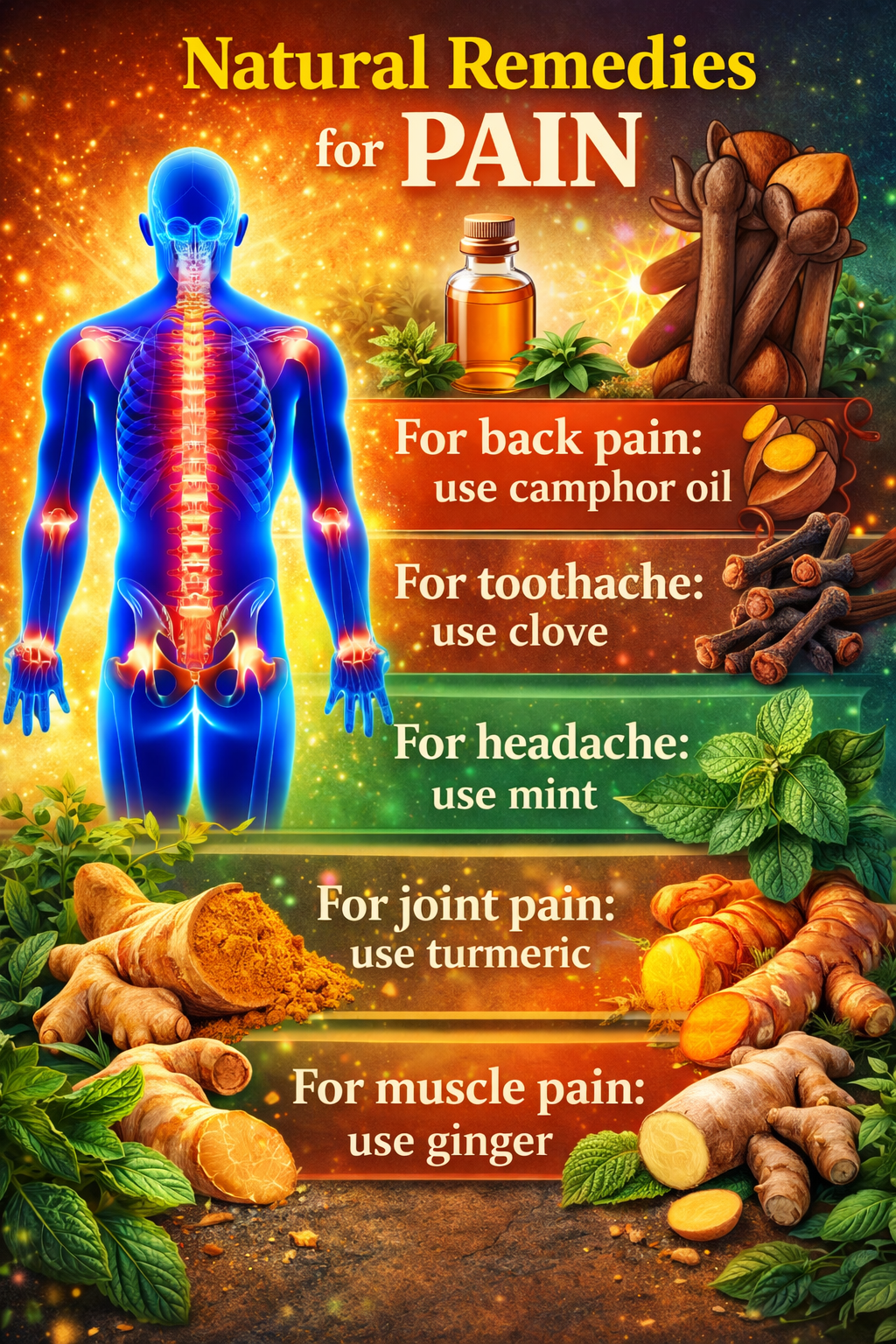
Everyday aches and pains are part of life. Whether it’s a tension headache after a long workday, sore muscles from exercise, menstrual cramps, or joint stiffness, discomfort can interrupt your routine and lower your quality of life. While over-the-counter medications are helpful, many people in the United States, United Kingdom, and Canada are increasingly turning to 🌿 Natural remedies for common pains 🌿 as complementary or alternative options.Natural approaches often focus on supporting the body’s own healing processes through herbs, nutrition, movement, and lifestyle adjustments. In this guide, we’ll explore evidence-informed, practical, and accessible remedies for common types of pain—plus tips on how to use them safely.⚠️ Important: Severe, persistent, or worsening pain should always be evaluated by a healthcare professional.🌿 Why Choose Natural Remedies?People explore 🌿 Natural remedies for common pains 🌿 for several reasons:Fewer side effects (when used correctly)Holistic support for overall wellnessAccessibility and affordabilityLong-term lifestyle benefitsNatural remedies often work best when combined with healthy habits such as balanced nutrition, hydration, good sleep, and stress management.H2: Natural Remedies for HeadachesHeadaches are among the most common complaints worldwide.H3: 1. Peppermint OilPeppermint oil contains menthol, which may help relax muscles and improve blood flow when applied to the temples or neck (diluted with a carrier oil).How to use:Mix 2–3 drops with a teaspoon of coconut or almond oilGently massage onto templesH3: 2. Magnesium-Rich FoodsMagnesium deficiency is linked to migraines and tension headaches. Increase intake through:SpinachPumpkin seedsAlmondsDark chocolateH3: 3. HydrationDehydration is a major trigger. Aim for consistent water intake throughout the day, especially in warmer climates.H2: Natural Remedies for Muscle PainSore muscles can result from exercise, stress, or prolonged sitting.H3: 1. Epsom Salt BathsEpsom salt contains magnesium sulfate, which may help relax muscles.How to use:Add 1–2 cups to a warm bathSoak for 15–20 minutesH3: 2. TurmericTurmeric contains curcumin, known for its anti-inflammatory properties.Ways to use:Add to soups or smoothiesDrink golden milk (turmeric + warm milk + black pepper)H3: 3. Gentle StretchingLight stretching improves circulation and reduces stiffness. Even 10–15 minutes can make a difference.H2: Natural Remedies for Joint PainJoint discomfort often increases with age or inflammation.H3: 1. Omega-3 Fatty AcidsFound in:SalmonFlaxseedChia seedsWalnutsOmega-3s may reduce inflammation and joint stiffness.H3: 2. GingerGinger has natural anti-inflammatory properties. Try:Fresh ginger teaAdding grated ginger to mealsH3: 3. Heat TherapyApplying a warm compress increases blood flow and relaxes stiff joints.H2: Natural Remedies for Menstrual CrampsMenstrual discomfort is common but manageable with natural support.H3: 1. Heat ApplicationHeating pads or warm baths can relax uterine muscles and ease cramping.H3: 2. Chamomile TeaChamomile may help reduce muscle spasms and promote relaxation.H3: 3. Light MovementGentle walking or yoga improves circulation and reduces cramp intensity.H2: Natural Remedies for Back PainBack pain is especially common among office workers and those with sedentary lifestyles.H3: 1. Posture CorrectionImproving posture reduces strain on spinal muscles.H3: 2. Core StrengtheningStrong abdominal muscles support the lower back.H3: 3. Topical ArnicaArnica gel is commonly used for muscle soreness and mild back pain.H2: Natural Remedies for Stress-Related PainStress can manifest physically as tension in the neck, shoulders, and jaw.H3: 1. Deep BreathingSlow, controlled breathing lowers cortisol levels and relaxes muscles.H3: 2. Lavender Essential OilLavender is associated with relaxation and improved sleep quality.H3: 3. Mindfulness & MeditationRegular mindfulness practice reduces perceived pain intensity and stress levels.H2: Anti-Inflammatory Foods That HelpChronic inflammation contributes to many types of pain. Incorporating anti-inflammatory foods may support relief.Include More Of:BerriesLeafy greensOlive oilFatty fishNuts and seedsLimit:Processed foodsExcess sugarRefined carbohydratesNutrition plays a foundational role in supporting natural pain relief.H2: Practical Tips for Using 🌿 Natural Remedies for Common Pains 🌿To maximize results:1. Be ConsistentNatural remedies often work gradually.2. Combine ApproachesFor example, combine turmeric, stretching, and heat therapy for muscle pain.3. Track TriggersKeep a journal to identify patterns in pain episodes.4. Prioritize SleepQuality sleep supports recovery and reduces inflammation.5. Stay ActiveRegular low-impact movement prevents stiffness and improves circulation.H2: When to See a DoctorWhile 🌿 Natural remedies for common pains 🌿 can be helpful, seek medical care if:Pain is severe or suddenSymptoms persist beyond a few daysThere is swelling, fever, or injuryPain interferes with daily activitiesNatural support should complement—not replace—professional medical care when needed.ConclusionExploring 🌿 Natural remedies for common pains 🌿 empowers you to take a proactive approach to everyday discomfort. From peppermint oil for headaches to turmeric for inflammation and gentle stretching for muscle tension, simple lifestyle changes can make a meaningful difference.The key is consistency, balance, and listening to your body. While natural remedies may not eliminate every ache instantly, they can support long-term wellness and reduce reliance on medications for mild, common pains.By combining nutrition, movement, relaxation, and mindful self-care, you create a strong foundation for comfort and resilience—naturally. 🌿