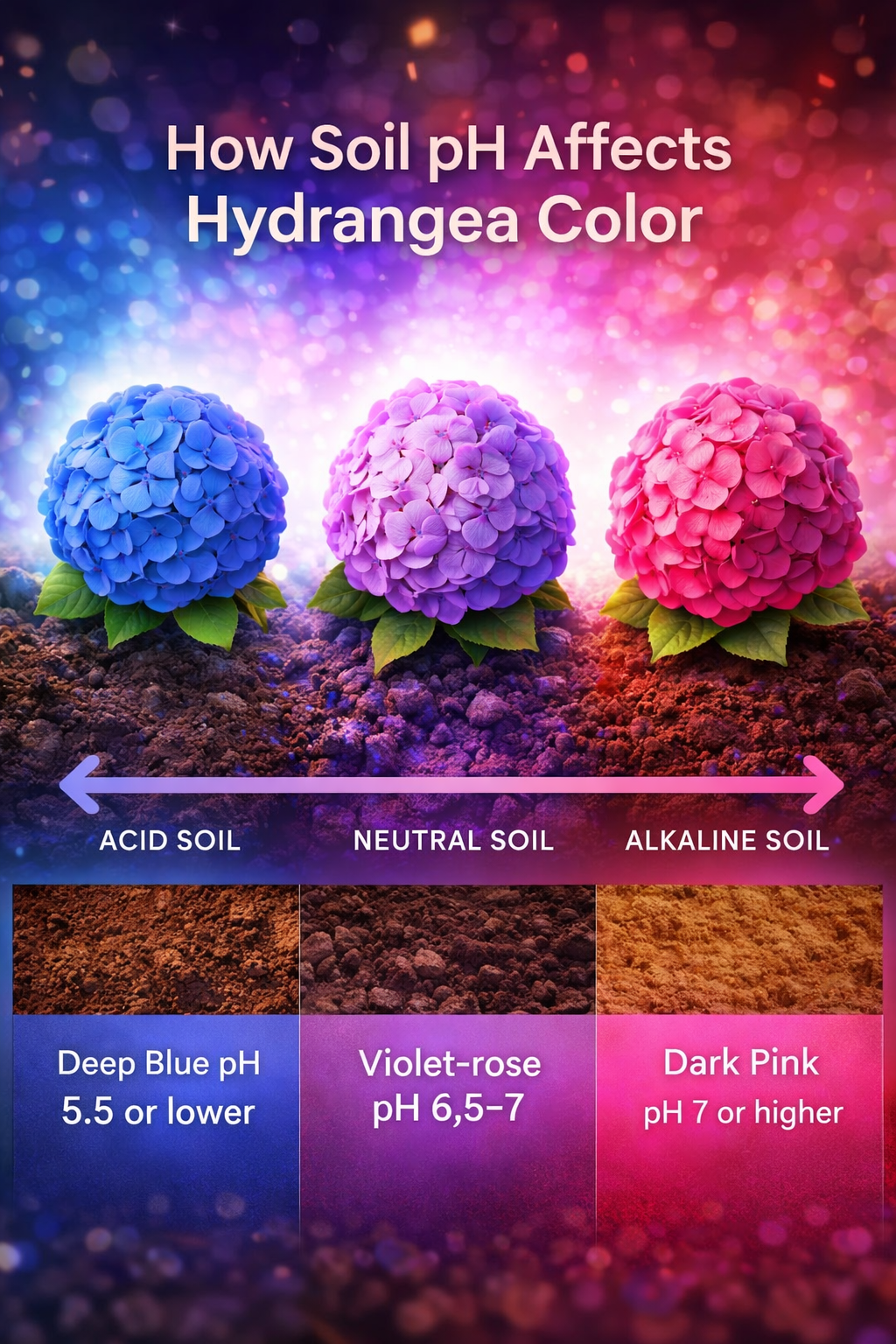
One of the most fascinating sights in the garden is a hydrangea bush changing color from season to season. Blue one year, pink the next—almost like magic. But here’s the secret: hydrangea color magic comes from the soil, not from the plant itself.Unlike most flowering plants, certain hydrangeas respond dramatically to soil chemistry. With a little science and some smart gardening techniques, you can influence whether your blooms turn blue, pink, or purple. This makes hydrangeas especially exciting for gardeners across the United States, United Kingdom, and Canada, where soil conditions can vary widely.In this guide, we’ll break down the science behind hydrangea color change, explain how soil pH works, and share practical, safe ways to adjust your soil to get the color you want—no lab coat required.Which Hydrangeas Change Color?Before diving into soil chemistry, it’s important to know that not all hydrangeas change color.Hydrangeas That Respond to Soil pHThese varieties can shift color:Bigleaf hydrangeas (Hydrangea macrophylla)Mountain hydrangeas (Hydrangea serrata)These are the classic mophead and lacecap hydrangeas commonly grown in home gardens.Hydrangeas That Do NOT Change ColorThese varieties keep their natural color regardless of soil:Hydrangea paniculata (cone-shaped flowers)Hydrangea arborescens (including ‘Annabelle’)Hydrangea quercifolia (oakleaf hydrangea)If your hydrangea never changes color, soil chemistry isn’t the issue—it’s genetics.The Science Behind Hydrangea Color MagicSo how does this color transformation actually work?The Role of Soil pHSoil pH measures how acidic or alkaline your soil is. Hydrangeas respond to this because soil pH controls the availability of aluminum ions, which affect flower color.Acidic soil (low pH) → blue flowersAlkaline soil (high pH) → pink flowersNeutral soil → purple or mixed tonesAluminum: The Hidden KeyHydrangea pigments react with aluminum in the soil:In acidic soil, aluminum is available and absorbed → blue bloomsIn alkaline soil, aluminum is locked away → pink bloomsSo the color shift isn’t paint—it’s chemistry happening inside the plant.How to Test Your SoilBefore trying to change anything, you need to know what you’re working with.Soil Testing OptionsHome soil test kits (quick and affordable)Garden center testing servicesLocal extension offices (especially helpful in the US and Canada)Ideal pH ranges:Blue hydrangeas: pH 5.0–5.5Purple hydrangeas: pH 5.6–6.5Pink hydrangeas: pH 6.6–7.5How to Turn Hydrangeas Blue NaturallyIf you’re dreaming of vibrant blue blooms, the goal is acidic soil with available aluminum.Best Methods to Acidify Soil1. Aluminum SulfateFastest and most reliable methodLowers pH and adds aluminumApply according to package directions2. Organic AcidifiersCoffee groundsPine needlesOak leaf compostThese work slowly but improve soil health long-term.3. Acidic FertilizersLook for fertilizers formulated for azaleas or rhododendronsAvoid high-phosphorus blends (phosphorus blocks aluminum uptake)⏳ Tip: Color changes can take several months—sometimes a full growing season.How to Turn Hydrangeas PinkTo get rosy pink blooms, you’ll want to raise soil pH and reduce aluminum availability.Best Methods to Increase Alkalinity1. Garden LimeRaises soil pH graduallyApply in fall or early springWater well after application2. Dolomitic LimeAdds magnesium as well as calciumUseful if soil is magnesium-deficient3. Avoid Aluminum AdditivesSkip aluminum sulfateAvoid acidic fertilizers🌸 Result: Clear pink or rose-colored blooms in the following season.How Purple Hydrangeas HappenPurple hydrangeas occur when soil pH sits right in the middle.How to Encourage Purple ShadesMaintain pH around 5.8–6.2Avoid aggressive soil amendmentsLet natural conditions do the workPurple blooms are often more common in regions with balanced, loamy soil—parts of the UK and Pacific Northwest are especially lucky.Practical Tips for Long-Term SuccessChange Soil SlowlySudden pH changes can stress plants. Always adjust soil gradually over time.Water MattersTap water can be alkaline in some regions. If possible:Use rainwater for blue hydrangeasAvoid hard water buildupContainer Hydrangeas Are EasierPotted hydrangeas are much easier to control because:Soil volume is limitedAmendments work fasterResults are more predictableCommon Mistakes to Avoid🚫 Expecting instant color change🚫 Treating non-color-changing varieties🚫 Overapplying soil amendments🚫 Ignoring soil test resultsHydrangea color magic comes from patience as much as chemistry.Regional Notes (US, UK, Canada)United States: Soil varies widely—acidic in the Southeast, alkaline in the MidwestUnited Kingdom: Naturally acidic soils often favor blue hydrangeasCanada: Cold climates slow soil reactions—changes may take longerUnderstanding your local conditions makes success far more likely.Conclusion🌺🧪 Hydrangea color magic truly comes from the soil—and once you understand the science, you gain creative control over one of the most beautiful flowering shrubs in the garden.By managing soil pH, aluminum availability, and watering practices, you can guide your hydrangeas toward blue, pink, or purple blooms naturally and safely. Whether you’re a beginner gardener or a seasoned plant lover, hydrangeas offer a rare blend of beauty and science that makes gardening feel like a living experiment.So grab a soil test, embrace the process, and let your garden bloom in the colors you choose. 🌸💙💗