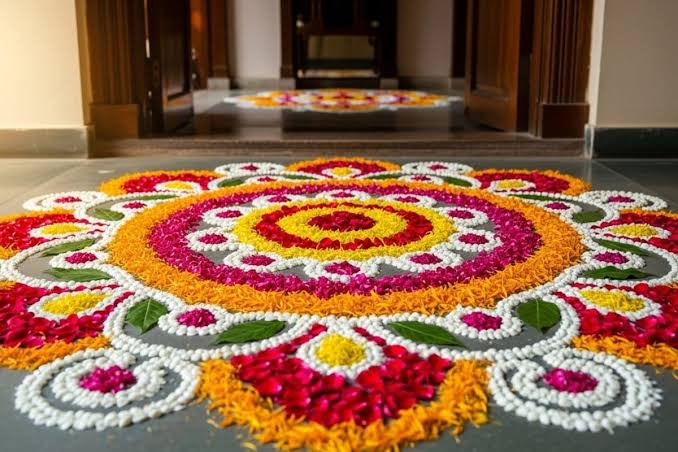
Rangoli with flowers (also called floral rangoli and similar to pookalam in South India) is a beautiful way to decorate your home, create a festive vibe, or celebrate special days. Instead of colored powders, you use real petals, leaves, and sometimes whole flowers to make patterns on the floor—usually near the entrance, in the living room, or around a prayer/celebration area.The best part? You don’t need to be an artist. With a little planning, some simple shapes, and a few handfuls of petals, you can create something that looks really impressive.This guide will cover:What you needHow to plan your designStep-by-step methodsDesign ideas (from super easy to more advanced)Tips to keep your flower rangoli fresh and neat🌼 What Is Rangoli with Flowers, Exactly?Traditional rangoli is a pattern made on the ground using materials like colored powders, rice, sand, or flower petals. When you make Rangoli with flowers, you’re swapping the powders for natural elements such as:Marigold petalsRose petalsChrysanthemum petalsJasmine or other small fragrant flowersGreen leaves (for outlines and contrast)It’s often created:For festivals and celebrationsTo welcome guestsAs a symbol of joy, prosperity, and beautyAnd yes, you can absolutely make it just for fun or as a creative project.🧺 What You Need to Get StartedYou don’t need a ton of stuff. For your first Rangoli with flowers, gather:Basic MaterialsFlowers or petals in a few different colorsGreen leaves or ferns for borders and detailsChalk or a light pencil (to sketch outlines on the floor)A clean, flat surface (tile, marble, cement, or wooden floor)Optional ExtrasA big plate or tray if you don’t want to decorate directly on the floorTea lights or small candles (with adult supervision, and fire safety in mind)Colored rice or colored sand for adding fine detailsA small cup or bowl to help you place petals in neat circles✏️ Planning Your Flower Rangoli DesignBefore you start dropping petals everywhere, it helps to plan.1. Choose the SizeAsk yourself:Where will it go? (Entrance? Corner? Center of the room?)How much space do you actually have?How many flowers do you have?As a rough guide:Small rangoli (1–2 feet wide): good for doorsteps or small spacesMedium (2–3 feet): good for living roomsLarge (3+ feet): better for open areas or outdoors2. Pick a ShapeFor beginners, stick with simple shapes:CircleSquareDiamondStarFlower-like shape (a circle with petals around it)You can always add more layers and details once you’re comfortable.3. Decide Your Color SchemeRangoli with flowers looks best when you use contrast:Yellow + orange + redWhite + green + pinkDeep red + gold/yellow + whiteYou don’t need a huge variety of flowers—3 or 4 colors is enough to create a strong design.🌺 Step-by-Step: How to Make a Simple Flower RangoliLet’s walk through a basic circular design—perfect for your first attempt.Step 1: Prepare the SpaceSweep or wipe the floor so it’s clean and dry.If the floor is very smooth, you can lightly chalk the outline so the petals stay in place better.Step 2: Draw the OutlineUse chalk or a light, erasable pencil to:Draw a big circleAdd smaller circles or shapes inside it (like rings or petals)Think of it like a coloring book: you’re going to “fill in” each section with petals instead of crayons.Step 3: Separate Your PetalsGently pluck petals from the flowers.Keep each color in its own small bowl.If using leaves, cut them into similar-sized pieces.This makes it much easier to fill in your design.Step 4: Fill from the Center OutwardsStart with the center:Put a small round patch of one color (like yellow).Make a ring around it with another color (like red).Add another ring with a third color (like orange or white).Continue building outward, following your outline. Use your fingers to gently press petals so they stay in place.Step 5: Add Details and BordersUse green leaves to outline shapes.Add tiny clusters of white flowers or buds for highlights.If you want, place a tiny candle or diya in the center (only with safe supervision and away from loose petals).🎨 Design Ideas: From Easy to “Wow”Easy Designs (Beginner-Friendly)Simple Ringed CircleCenter: one solid color (yellow)Outer ring: another color (red)Outer border: green leavesFlower ShapeDraw a small circle in the middle, fill with one color.Draw 6–8 petals around it and fill each petal in an alternating color (like red and orange).Corner RangoliUse a quarter circle in a corner of a room.Fill with layers of petals and a leafy border.Intermediate DesignsTwo-Layer MandalaStart with a circle in the center.Add symmetrical shapes (petals, diamonds, or teardrops) radiating out.Alternate colors to create a pattern.Half-and-Half DesignDivide your circle or square in half.One side: warm tones (yellow, orange, red).Other side: cool or lighter tones (white, light pink, green).Advanced IdeasPeacock-Inspired RangoliUse curved shapes to suggest feathers.Blues and greens (if you can find blue flowers or use colored rice) for the body, brighter colors for tail.Geometric PatternsSquares inside squares, or circles inside diamonds.Repeat shapes to create a very structured, “mandala-like” rangoli.You don’t have to jump to advanced designs. Even a simple, neat Rangoli with flowers looks beautiful.🧠 Practical Tips to Make Your Flower Rangoli Look Better (and Last Longer)1. Choose Fresher FlowersThe fresher the flowers, the brighter and more alive your design will look.Avoid petals that are already browning or wilting.Store flowers in water until you’re ready to use them.2. Work Close to the GroundSit or kneel as you work so you can place petals precisely without dropping them all over. Move slowly; this is almost like a meditation.3. Use SymmetryMost rangoli designs look more beautiful when they’re symmetrical:If you place a pattern on the left side, mirror it on the right.Use your outline as a guide and check from above as you go.4. Protect from Wind and FeetIf your rangoli is outdoors:Try to place it in a less windy spot.Remind people to walk around it, not through it.Indoors, pick an area that isn’t in the middle of heavy foot traffic.5. Refresh as NeededFlower petals will eventually dry and fade. To keep your Rangoli with flowers looking good:Gently remove wilted petals and replace them with fresh ones.If you can’t replace, take a photo while it’s fresh so you remember your design.🔐 Safety and Clean-Up TipsBecause you’re working with natural materials, cleanup is simple—but still important:Candles/Diya Safety: If you’re using flames, always have an adult supervise, keep them away from curtains and flammable items, and never leave them unattended.Allergies: If anyone around you has pollen allergies, use flowers with less fragrance or stick to petals instead of whole blossom heads.Cleaning: When you’re done, gather petals into a bag or compost bin. You can wipe remaining dust or stains with a damp cloth.🌷 Conclusion: Express Yourself with Rangoli with FlowersCreating Rangoli with flowers is more than just decoration. It’s:A way to express creativityA form of mindfulness and focusA beautiful tradition you can adapt to your own styleA gentle, natural way to make any space feel specialYou don’t need to be perfect or experienced to start. All you need is a few flowers, some curiosity, and a little bit of time. Begin with a simple circle, play with colors, and slowly try more detailed designs as you grow confident.