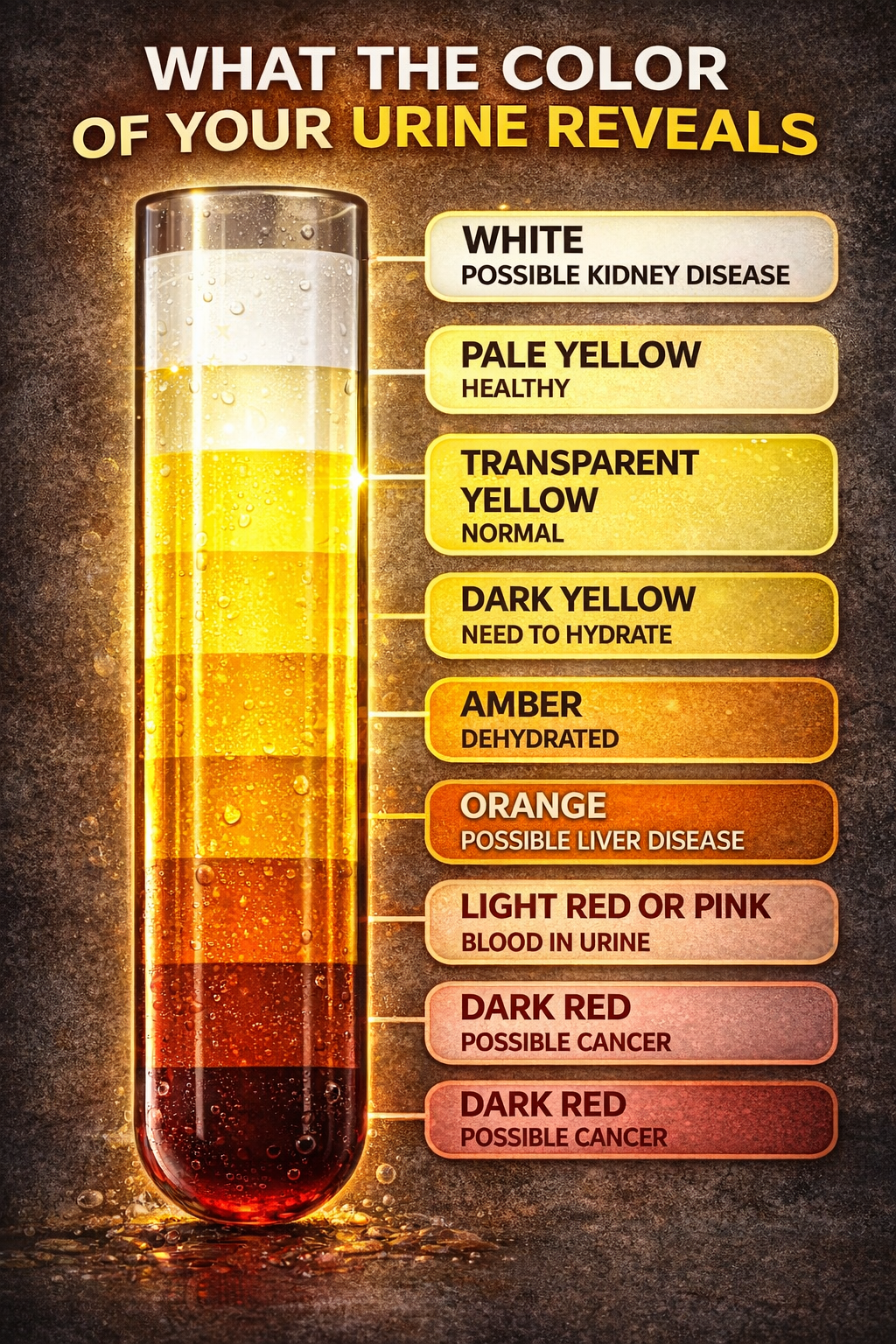
Your body has many subtle ways of signaling what’s happening inside — and one of the simplest indicators is the color of your urine. While it might not be the most glamorous topic, paying attention to urine color can provide valuable clues about hydration levels, diet, medications, and even potential health conditions.In this guide, we’ll break down what different urine colors may mean, when to relax, and when to consult a healthcare professional.💛 What’s Considered “Normal” Urine Color?Healthy urine typically ranges from pale straw yellow to transparent light yellow.This yellow color comes from a pigment called urochrome, produced when your body breaks down hemoglobin from red blood cells. The concentration of urine — largely influenced by how much water you drink — determines how light or dark the shade appears.Light yellow or clear: Well hydratedDark yellow: Mild dehydration🚰 Clear UrineWhat it may mean:You’re very well hydratedYou may be drinking more water than necessaryWhile staying hydrated is great, constantly clear urine could mean you’re overhydrating, which can dilute electrolytes in rare cases. Aim for pale yellow as the sweet spot.🌕 Pale Yellow to Light GoldWhat it may mean:Ideal hydrationNormal kidney functionThis is generally the healthiest and most desirable urine color.🟡 Bright YellowWhat it may mean:Vitamin supplements (especially B vitamins)Mild dehydrationB-complex vitamins can turn urine neon yellow — this is harmless and simply indicates excess vitamins are being excreted.🟠 Orange UrinePossible causes:DehydrationCertain medicationsFoods rich in beta-caroteneLiver or bile duct issues (in rare cases)If orange urine is accompanied by light-colored stools or yellowing of the skin (jaundice), seek medical attention.🔴 Pink or Red UrineThis can be alarming, but not all causes are serious.Possible reasons:Eating beets, blackberries, or rhubarbBlood in the urine (hematuria)Urinary tract infections (UTIs)Kidney stonesProstate issuesIf red urine appears without dietary explanation, consult a doctor promptly.🟤 Brown or Tea-Colored UrinePossible causes:Severe dehydrationLiver disordersMuscle injury (rhabdomyolysis)Certain medicationsDark brown urine that persists should always be evaluated by a healthcare professional.🟢 Green or Blue UrineRare but possible.Potential causes:Certain medicationsFood dyesBacterial infectionsWhile unusual, this color is often medication-related and not dangerous.⚪ Cloudy or Milky UrineWhat it could indicate:Urinary tract infectionKidney stonesExcess protein in urinePhosphate crystalsCloudy urine accompanied by pain, burning, or strong odor should be checked by a healthcare provider.🧪 When to See a DoctorSeek medical advice if you experience:Persistent red or brown urinePain during urinationFever with discolored urineStrong foul smellFoamy urine (may indicate excess protein)Sudden color changes with no dietary explanation💧 How Hydration Affects Urine ColorWater intake directly impacts urine shade:Hydration Level Urine ColorWell hydrated Pale yellowMild dehydration Dark yellowSevere dehydration Amber to brownA simple rule: If your urine looks like lemonade, you’re likely hydrated. If it looks like apple juice, drink more water.🥗 Foods That Can Change Urine ColorCertain foods naturally alter urine color:Beets → Pink/redCarrots → OrangeAsparagus → Strong odorFood dyes → Blue/greenThese changes are usually temporary and harmless.💊 Medications & Supplements That Affect UrineSome medications can cause noticeable color changes:B vitamins → Bright yellowCertain antibiotics → Orange or redLaxatives → BrownChemotherapy drugs → Various colorsIf unsure, check medication labels or consult your pharmacist.🧠 Quick Urine Color Cheat Sheet🟡 Pale yellow = Healthy🌕 Dark yellow = Drink more water🟠 Orange = Dehydration or medication🔴 Red = Food or possible blood🟤 Brown = Severe dehydration or liver issue🟢 Green/blue = Rare, usually medication-related⚪ Cloudy = Possible infection🌿 Practical Tips for Healthy Urine Color✔ Drink water consistently throughout the day✔ Limit excessive caffeine and alcohol✔ Eat a balanced diet✔ Don’t ignore persistent color changes✔ Get regular health checkups🏁 Final ThoughtsYour urine color can reveal surprising insights about your health. While many changes are harmless and temporary, persistent or unusual colors may signal underlying issues that deserve attention.The next time you visit the restroom, take a quick glance — your body might be sending you a helpful message.If you notice significant changes or symptoms alongside unusual urine color, always consult a qualified healthcare professional for proper evaluation.Staying hydrated and aware is one of the simplest steps toward better health. 💧