
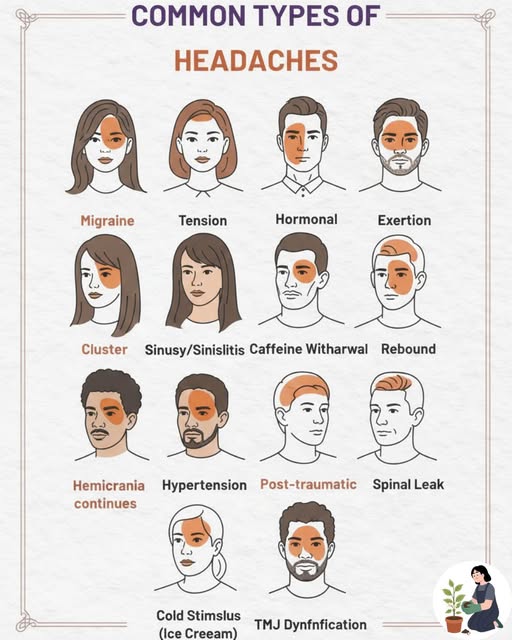
Headaches are one of the most common discomforts people experience, and understanding the different types can help you recognize what your body is trying to tell you. Each type has distinct features that make it easier to identify and manage.
Materials or Tools Needed:
Notebook for tracking symptoms
Pen or digital notes
Optional: cold or warm compress
Alternative: a simple headache diary app for easy monitoring
Step-by-Step Method:
Start by noting when the headache begins, its intensity, and what you were doing beforehand.
Identify the location of the pain—front, sides, back of the head, or around the eyes.
Observe the type of sensation, such as pressure, throbbing, or tightness.
Compare your symptoms to common types:
Tension headaches: dull, band-like pressure around the head.
Migraines: throbbing pain often on one side, may include nausea or light sensitivity.
Cluster headaches: intense sharp pain around one eye, typically in cycles.
Sinus headaches: pressure in the forehead or cheeks, often with nasal congestion.
Track how long each episode lasts to notice patterns or triggers.
Use your notes to identify lifestyle factors—like stress, dehydration, or screen time—that may contribute.
Additional Tips:
Stay hydrated and take regular breaks from screens to reduce headache frequency.
Resting in a quiet, dim space can help ease intense discomfort.
If headaches become frequent or severe, consider speaking with a healthcare professional for proper guidance.