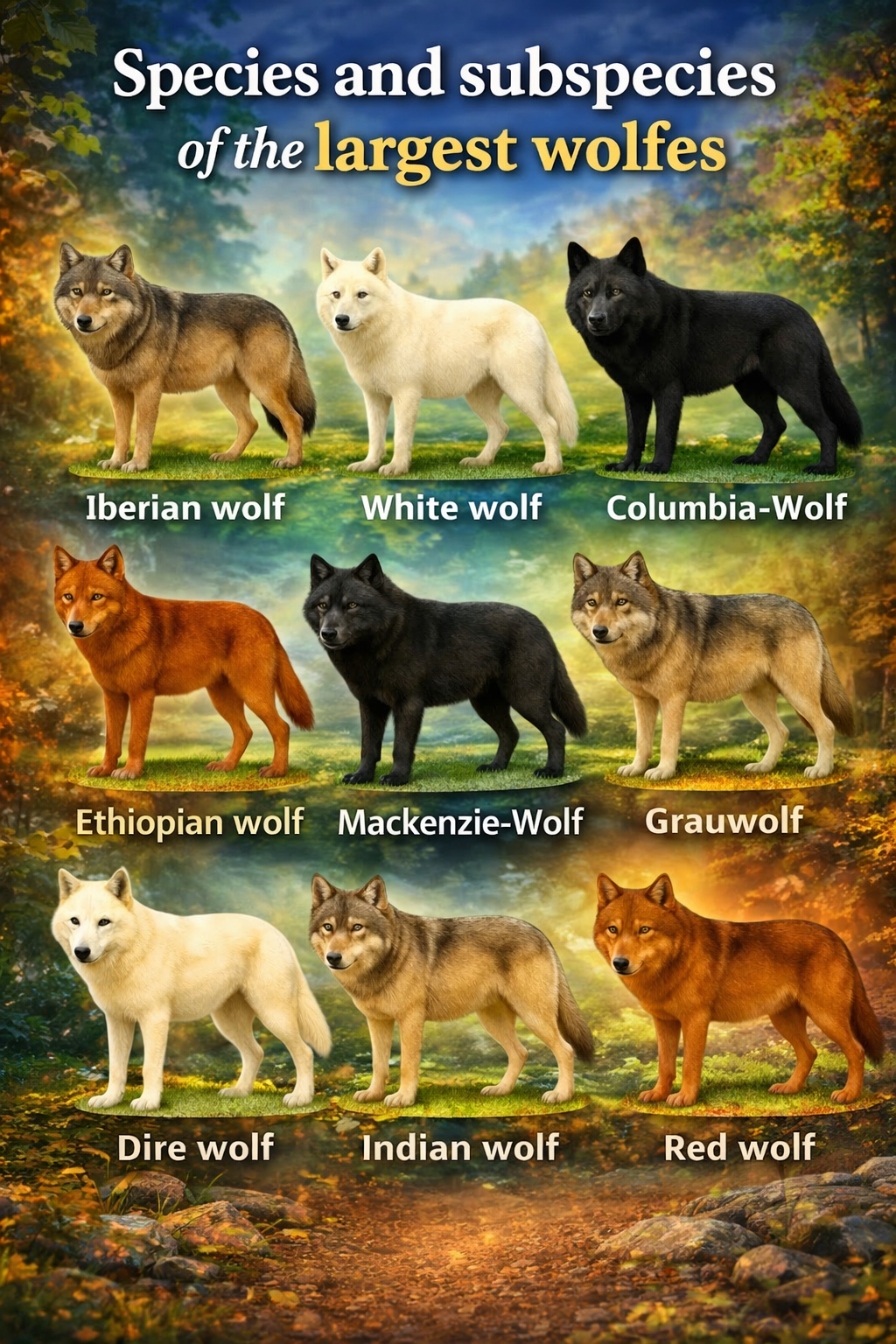
Wolves are among the most fascinating and powerful predators on Earth. The species most people think of is the gray wolf, scientifically known as Canis lupus. These intelligent, social carnivores once roamed across most of the Northern Hemisphere and today still inhabit parts of North America, Europe, and Asia.While all gray wolves belong to the same species, they are divided into numerous subspecies. Some are especially remarkable for their impressive size and strength. In this article, we’ll explore the types and subspecies of wolves, focusing particularly on the largest representatives.🌎 The Gray Wolf (Canis lupus)The gray wolf is the largest wild member of the dog family (Canidae). Adults typically weigh between 30–80 kg (66–176 lbs), but certain subspecies exceed even that range.Gray wolves are highly adaptable and can survive in forests, tundra, grasslands, mountains, and even semi-desert regions. Their size, coat color, and behavior vary depending on climate and geography.🐺 The Largest Wolf SubspeciesBelow are some of the biggest and most impressive wolf subspecies in the world.🏔 1. Northwestern Wolf (Mackenzie Valley Wolf)Scientific name: Canis lupus occidentalisThe Northwestern wolf is widely considered the largest wolf subspecies in the world.📍 Habitat:AlaskaWestern Canada📏 Size:Weight: 45–80 kg (100–175 lbs)Length: Up to 2 meters (6.5 feet) including tailThese wolves thrive in cold climates and often prey on elk, moose, and caribou. Their thick fur and powerful build help them survive harsh northern winters.❄ 2. Eurasian WolfScientific name: Canis lupus lupusThe Eurasian wolf is one of the most widespread subspecies.📍 Habitat:EuropeRussiaParts of Asia📏 Size:Weight: 30–70 kg (66–154 lbs)Although slightly smaller on average than the Northwestern wolf, some individuals in Russia can grow exceptionally large.🌲 3. Eastern WolfScientific name: Canis lycaonThe Eastern wolf is found mainly in Canada.📍 Habitat:OntarioQuebec📏 Size:Weight: 25–40 kg (55–88 lbs)While not the largest, it plays an important ecological role and is genetically distinct from some gray wolf populations.🌨 4. Arctic WolfScientific name: Canis lupus arctosThe Arctic wolf is perfectly adapted to extreme cold.📍 Habitat:Arctic regions of Canada and Greenland📏 Size:Weight: 32–70 kg (70–155 lbs)Though slightly smaller than the Northwestern wolf, its thick white coat and compact body make it one of the most iconic wolf types.🏜 5. Steppe WolfScientific name: Canis lupus campestris📍 Habitat:Central AsiaEastern Europe📏 Size:Weight: 35–50 kg (77–110 lbs)The Steppe wolf is lean and adapted to open plains and semi-arid landscapes.🐾 Honorable Mentions🔹 Interior Alaskan WolfA population closely related to the Northwestern wolf, known for large body size.🔹 Tibetan WolfAdapted to high-altitude environments.📊 What Determines Wolf Size?Several factors influence how large a wolf grows:🌡 ClimateWolves in colder regions tend to be larger (Bergmann’s Rule). Larger bodies conserve heat better.🍖 Food AvailabilityAbundant large prey supports larger wolves.🧬 GeneticsDifferent subspecies carry unique genetic traits influencing body size.🐺 How Big Can the Largest Wolves Get?The largest recorded gray wolves (usually Northwestern wolves) have weighed over:80 kg (175+ lbs)Nearly 7 feet from nose to tailThese massive individuals are rare but demonstrate the incredible physical power of the species.🌍 Why Wolves MatterWolves are apex predators, meaning they sit at the top of the food chain. They help:Control deer and elk populationsMaintain ecosystem balanceSupport biodiversityA famous example is the reintroduction of wolves to Yellowstone National Park, which dramatically restored ecological balance by regulating herbivore populations and allowing vegetation to recover.🐺 Wolves vs. Dogs: Size ComparisonWhile some large dog breeds rival wolves in height, most wolves are:LeanerLonger-leggedMore muscularBuilt for enduranceWolves can travel up to 30–50 miles per day in search of prey.🧠 Intelligence and Social StructureWolves live in structured family packs:Alpha breeding pairSubordinate adultsPupsTheir communication includes howling, body language, scent marking, and facial expressions. This social structure contributes to their hunting success and survival.⚠ Conservation StatusWolves have faced:Habitat lossHunting and persecutionConflict with livestockToday, conservation efforts vary by region. Some populations are stable, while others remain vulnerable.🌟 Final ThoughtsThe world of wolves is diverse and powerful. Among them, the Northwestern wolf stands out as the largest representative, but every subspecies plays a crucial role in its ecosystem.From the icy Arctic to the forests of Europe and the mountains of North America, wolves continue to symbolize wilderness, strength, and ecological balance.Understanding the types and subspecies of wolves not only highlights their impressive size but also reminds us of the importance of protecting these magnificent animals for future generations. 🐺🌍