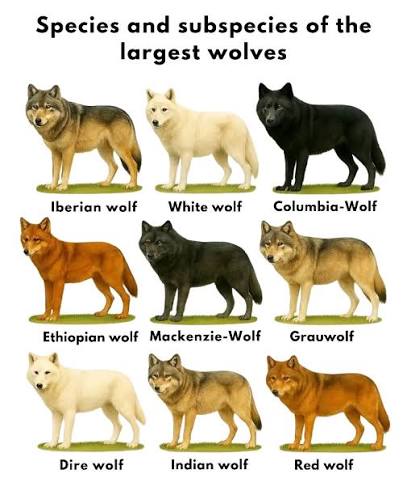
Wolves are among the most iconic predators on Earth, admired for their intelligence, social behavior, and incredible adaptability. While all modern wolves belong mainly to the gray wolf species (Canis lupus), several subspecies stand out for their impressive size, strength, and geographic range. Let’s explore some of the largest wolf types and subspecies found across the world.🐺 Gray Wolf (Canis lupus) – The Widespread GiantThe gray wolf is the largest member of the canine family still roaming wild ecosystems today. It inhabits North America, Europe, and Asia, thriving in forests, tundra, mountains, and grasslands.Size & Features:Weight: 70–120 lbs (32–54 kg) on averageLength: up to 6.5 feet (2 m) including tailThick fur varies from gray and brown to black or whiteWhy It’s Notable:Highly adaptable and intelligentLives in cooperative packsFoundation species for many subspecies❄️ Arctic Wolf (Canis lupus arctos) – The Snow SpecialistNative to the Arctic regions of Canada and Greenland, the Arctic wolf is a striking white subspecies perfectly adapted to icy conditions.Size & Features:Weight: 70–125 lbs (32–57 kg)Thick white fur for camouflage and insulationShort ears and muzzle to conserve body heatUnique Traits:Survives extreme cold and long wintersOften hunts musk oxen and Arctic haresLives in remote regions with minimal human contact🌲 Northwestern Wolf (Canis lupus occidentalis) – The Heavyweight ChampionAlso called the Mackenzie Valley wolf, this is considered one of the largest wolf subspecies in the world. It inhabits Alaska and western Canada.Size & Features:Weight: 100–150+ lbs (45–68+ kg)Long legs and powerful buildThick multi-layered furWhy It Stands Out:Often preys on moose, elk, and bisonKnown for exceptional strength and enduranceFrequently cited as the largest modern wolf🌾 Eurasian Wolf (Canis lupus lupus) – The Continental GiantThe Eurasian wolf is one of the largest wolves found across Europe and Asia.Size & Features:Weight: 70–130 lbs (32–59 kg)Long legs and robust frameThick coat adapted to cold climatesHighlights:Highly adaptable to varied ecosystemsPlays a key ecological role in controlling herbivore populationsOne of the most historically widespread wolves🏔️ Tundra Wolf (Canis lupus albus) – The Northern PowerhouseFound in northern Russia and Siberia, the tundra wolf is another large subspecies adapted to harsh northern landscapes.Size & Features:Weight: 80–140 lbs (36–64 kg)Pale or light gray fur for snowy environmentsPowerful stamina for long-distance huntingSpecial Adaptations:Migrates with prey across vast tundra regionsThick fur protects against extreme cold📊 Factors That Influence Wolf SizeClimate: Cold climates often produce larger wolves (Bergmann’s rule).Prey Availability: Larger prey encourages stronger, bigger wolves.Genetics: Regional adaptations lead to differences in size and appearance.Habitat: Dense forests vs. open tundra shape hunting strategies and body structure.🌟 ConclusionThe largest types and subspecies of wolves showcase nature’s incredible diversity—from the powerful Northwestern wolf to the resilient Arctic wolf. These majestic animals have adapted to some of the harshest environments on Earth while maintaining complex social structures and ecological importance. Understanding the diversity among wolves not only deepens appreciation for these predators but also highlights the importance of conservation efforts worldwide 🐺🌍.