
We all know that a good night’s sleep is essential for feeling energized and ready to take on the day. But did you know that the way you sleep—specifically your posture—can have a major impact on your overall health and well-being? Poor sleeping posture can lead to neck, back, and joint pain, and can even affect your breathing and circulation. On the other hand, sleeping smart by fixing your posture while you rest can help prevent discomfort and ensure you wake up feeling refreshed.
In this article, we’ll dive into the importance of sleep posture, how poor posture can affect your body, and offer practical tips on how to sleep smart and improve your posture while you rest.
Why Sleep Posture Matters
Your posture while you sleep is just as important as your posture when you’re awake. When you sleep in an improper position, it can misalign your spine and lead to various physical issues. Over time, poor sleeping posture can contribute to:
- Neck and back pain: Sleeping in positions that strain your neck or spine can lead to stiffness, soreness, or chronic pain.
- Joint issues: Pressure on certain joints, like the shoulders and hips, can cause discomfort and tightness.
- Breathing problems: Poor posture can limit your diaphragm’s ability to expand fully, leading to shallow breathing or snoring.
- Reduced circulation: Sleeping in certain positions can restrict blood flow to your limbs, causing numbness or tingling.
By fixing your posture while you rest, you can avoid these issues and improve your overall health. A restful sleep isn’t just about how long you sleep; it’s also about how well you sleep.
Common Sleeping Positions and Their Effects on Your Body
There are three main sleeping positions: back, side, and stomach. Each position has its benefits and drawbacks when it comes to posture. Let’s explore them in more detail:
1. Sleeping on Your Back (Supine Position)
Best For: Maintaining a neutral spine position and preventing neck and back pain.
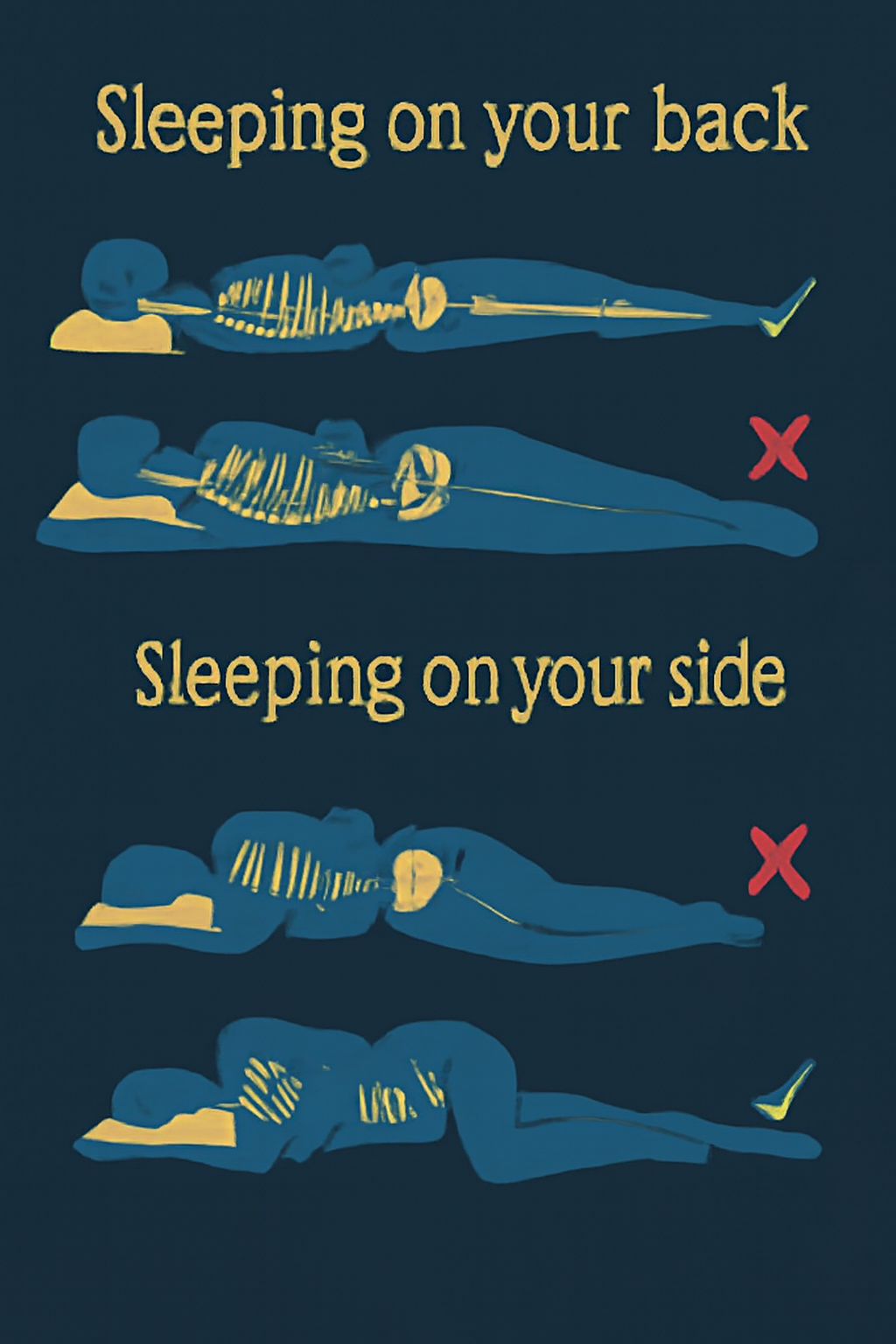
Sleeping on your back is often considered the best position for spinal alignment because it allows your head, neck, and spine to rest in a neutral position. However, not everyone finds it comfortable, and some people may experience snoring or sleep apnea in this position.
Benefits of Sleeping on Your Back:
- Spinal alignment: This position keeps your spine straight, reducing the risk of neck and back pain.
- Prevents acid reflux: Lying on your back with your head slightly elevated can help prevent stomach acid from flowing into the esophagus, reducing the risk of acid reflux or heartburn.
Tips to Improve Posture:
- Use a pillow with the right height: Ensure your pillow isn’t too high or too flat. A medium-loft pillow will keep your head aligned with your spine.
- Add a small pillow under your knees: This helps maintain the natural curve of your lower back and reduces pressure on your spine.
2. Sleeping on Your Side (Lateral Position)
Best For: Reducing snoring, sleep apnea, and improving circulation.
Side sleeping is one of the most popular positions, and it can be beneficial for certain health issues. Sleeping on your left side is often recommended for improving digestion and circulation. However, side sleeping can also cause shoulder and hip pain if not properly supported.
Benefits of Sleeping on Your Side:
- Reduces snoring and sleep apnea: Side sleeping prevents the airway from collapsing, reducing snoring and improving breathing during sleep.
- Relieves pressure on the spine: When done correctly, side sleeping can help align the spine and reduce pressure on the lower back.
- Promotes digestion: Left-side sleeping can improve the flow of digestive juices, which is especially helpful for people with acid reflux.
Tips to Improve Posture:
- Use a supportive pillow: Choose a pillow that supports the natural curve of your neck. A pillow that fills the gap between your neck and the mattress will help keep your spine aligned.
- Place a pillow between your knees: This can help keep your hips aligned and reduce strain on your lower back and hips.
- Sleep on your left side: If you’re prone to acid reflux or heartburn, sleeping on your left side can improve digestion and prevent discomfort.
3. Sleeping on Your Stomach (Prone Position)
Best For: Some people find this position comfortable, but it’s generally the least recommended for spinal health.
Stomach sleeping is the most controversial position when it comes to posture. While it can reduce snoring, it often leads to neck and back pain due to the unnatural alignment of the spine and the strain on the neck.
Drawbacks of Sleeping on Your Stomach:
- Neck and spine misalignment: Sleeping with your head turned to one side for long periods can strain your neck and lead to stiffness and discomfort.
- Increased pressure on joints: Stomach sleeping can put pressure on your hips and lower back, leading to discomfort and potential long-term pain.
Tips to Improve Posture:
- Use a thin pillow or no pillow at all: This can help keep your spine in a more neutral position by reducing the strain on your neck.
- Avoid twisting your neck: If you must sleep on your stomach, try to sleep with your head facing straight down rather than turning it to one side.
- Consider transitioning to side sleeping: If you’re used to sleeping on your stomach, it may be beneficial to gradually transition to a side sleeping position for better spinal alignment.
How to Sleep Smart: Additional Tips for Better Posture
In addition to choosing the best sleeping position for your body, there are other strategies to improve your posture while you sleep.
1. Invest in the Right Mattress
Your mattress plays a crucial role in supporting your body while you sleep. A mattress that’s too soft may cause your body to sink, leading to poor alignment. A mattress that’s too firm can create pressure points and make sleeping uncomfortable. Look for a mattress that provides adequate support for your spine while allowing some contouring to keep your body in a neutral position.
Mattress Tips:
- Medium-firm mattresses are often the best for supporting spinal alignment.
- Memory foam can provide extra support for the body’s natural curves.
2. Choose the Right Pillow
Your pillow should support your neck and head while keeping them aligned with the spine. The right pillow depends on your sleeping position:
- Back sleepers: Use a medium-loft pillow that supports your neck while allowing your head to rest in a neutral position.
- Side sleepers: Opt for a thicker pillow that fills the gap between your neck and the mattress.
- Stomach sleepers: Use a thin pillow or no pillow at all to prevent neck strain.
3. Maintain a Consistent Sleep Schedule
Getting enough sleep is essential for your body to recover and repair itself. A consistent sleep schedule helps improve the quality of your rest, which can prevent issues related to poor posture during sleep.
Conclusion: Sleep Smart, Feel Better
Fixing your posture while you rest is key to avoiding pain and discomfort, and it can lead to better overall health. Whether you sleep on your back, side, or stomach, taking steps to improve your posture can help prevent neck, back, and joint pain, improve circulation, and promote better breathing during sleep. By using the right pillow, choosing a supportive mattress, and adopting healthy sleep habits, you can sleep smart and wake up feeling refreshed and ready to face the day.
So, take the time to assess your sleep posture and make small changes to ensure you’re getting the best rest possible. Your body will thank you!