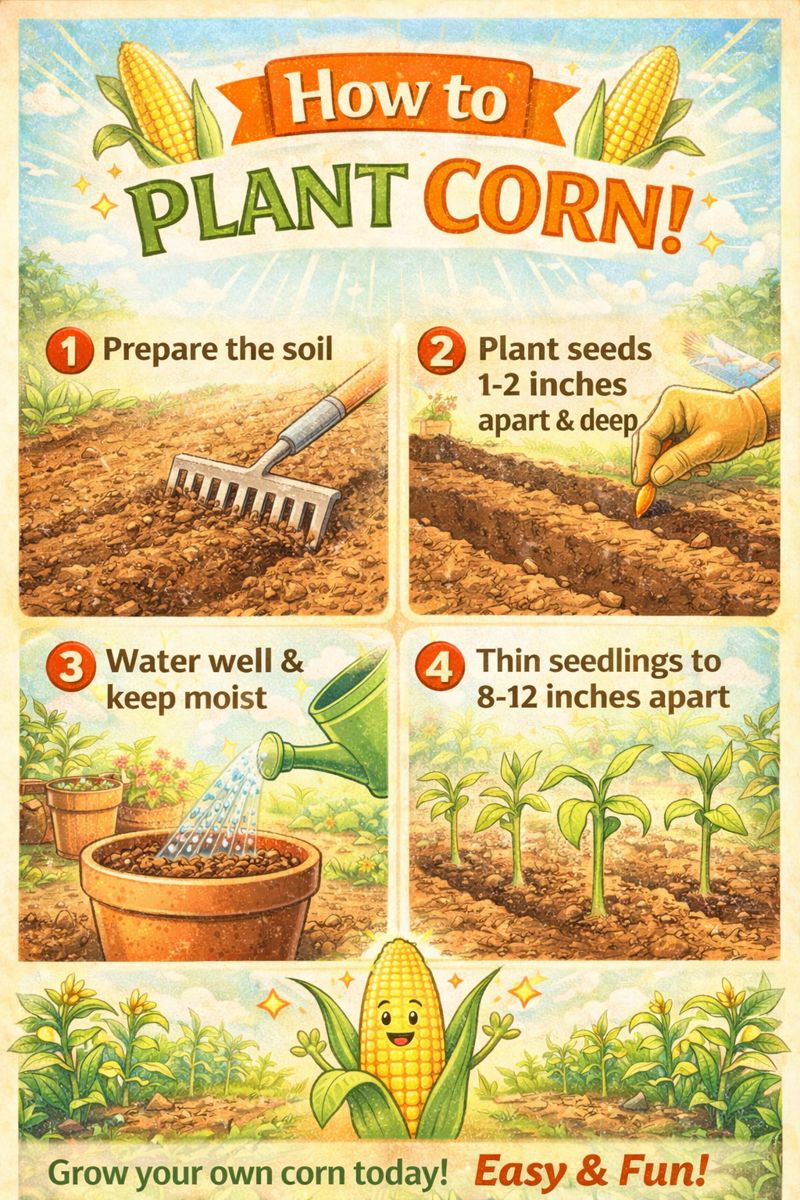
Corn is one of the most rewarding crops to grow at home. Whether you dream of sweet corn on the cob at summer barbecues or want to explore home gardening basics, corn is a fantastic choice. While it may seem like a crop best left to large farms, planting corn in your own garden is simpler than many people think.This guide, “Make it easy: How to plant corn!”, is designed to break the process down into clear, manageable steps. From choosing the right variety to planting, caring for, and harvesting your corn, you’ll learn everything you need to succeed. The advice in this article is suitable for gardeners in the United States, United Kingdom, and Canada, whether you’re a beginner or looking to improve your harvest.Why Grow Corn at Home?Growing corn at home offers both practical and personal benefits.Fresh Flavor You Can’t BeatHomegrown corn is sweeter and more flavorful than store-bought varieties because it’s eaten shortly after harvest, when sugars are at their peak.Cost-Effective and RewardingCorn plants produce multiple ears per plant, making them a cost-effective crop. Plus, there’s nothing quite like harvesting corn you planted yourself.Great for Learning Garden SkillsCorn is an excellent crop for learning about spacing, pollination, and seasonal planting. It’s a perfect way to make it easy: how to plant corn! while building gardening confidence.Understanding Corn BasicsBefore planting, it’s helpful to understand how corn grows.Corn Is Wind-PollinatedCorn relies on wind—not insects—for pollination. This is why planting corn in blocks rather than long single rows is so important.Corn Is a Warm-Season CropCorn needs warm soil and plenty of sunlight. It will not tolerate frost and grows best during late spring and summer.Choosing the Right Corn VarietyTypes of CornThere are several types of corn, and choosing the right one depends on your goal:Sweet corn – Best for eating freshPopcorn – For popping at homeFlint corn – Decorative and traditional usesDent corn – Typically used for animal feedFor most home gardeners, sweet corn is the best choice.Choosing Varieties for Your RegionGardeners in the US, UK, and Canada should look for varieties suited to their growing season length. Short-season varieties are ideal for cooler climates.When to Plant CornSoil Temperature MattersCorn seeds need soil temperatures of at least 50–60°F (10–16°C) to germinate properly.In warmer regions: Late springIn cooler regions: Late spring to early summerPlanting too early is one of the most common mistakes when learning how to plant corn.Frost-Free TimingAlways wait until the risk of frost has passed. Corn seedlings are very sensitive to cold.Preparing the Soil for CornChoose a Sunny LocationCorn needs full sun, meaning at least 6–8 hours of direct sunlight daily.Soil RequirementsCorn grows best in:Loose, well-draining soilSoil rich in organic matterSlightly acidic to neutral pHBefore planting, mix in compost or aged manure to boost nutrients.Make It Easy: How to Plant Corn (Step-by-Step)Step 1: Plan Your LayoutPlant corn in blocks rather than rows. For example, four short rows side by side allow better wind pollination.Step 2: Plant the SeedsPlant seeds 1–1.5 inches deepSpace seeds 8–12 inches apartSpace rows about 30–36 inches apartThis spacing gives plants room to grow while supporting pollination.Step 3: Water GentlyWater the soil thoroughly after planting but avoid washing seeds away. Keep soil consistently moist during germination.Step 4: Thin Seedlings if NeededIf multiple seedlings sprout too close together, thin them to the strongest plant.Following these steps helps truly make it easy: how to plant corn! for any gardener.Caring for Corn PlantsWatering NeedsCorn needs consistent moisture, especially during:TasselingSilkingEar developmentAim for about 1–1.5 inches of water per week.Fertilizing CornCorn is a heavy feeder. Use:Compost at planting timeNitrogen-rich fertilizer once plants reach knee heightThis supports strong stalks and full ears.MulchingApply mulch around plants to:Retain moistureControl weedsMaintain soil temperaturePollination Tips for Better Corn EarsPoor pollination leads to missing kernels. To improve pollination:Plant in blocksGently shake stalks when tassels appearAvoid planting corn varieties too close togetherGood pollination is key when learning how to plant corn successfully.Common Problems and How to Avoid ThemPoor GerminationCaused by cold soil or old seeds. Always plant in warm soil with fresh seeds.Weak or Falling StalksUsually due to low nitrogen or poor spacing. Feed regularly and avoid overcrowding.PestsCommon pests include birds, raccoons, and corn earworms. Use garden netting and check ears regularly.When and How to Harvest CornSigns Corn Is ReadyCorn is ready to harvest when:Silks turn brown and dryKernels are plumpJuice from kernels is milky, not clearHarvesting TipsTwist ears downward and pull firmly. Harvest in the morning for the sweetest flavor.Freshly harvested corn should be eaten as soon as possible for the best taste.Practical Tips to Make Corn Growing EasierSuccession plant every 2–3 weeks for extended harvestLabel varieties to track performanceWater deeply rather than frequentlyHarvest promptly to prevent pestsUse companion plants like beans or squashThese tips help reinforce the idea to make it easy: how to plant corn! from start to finish.Growing Corn in Small Gardens or ContainersYes, you can grow corn in smaller spaces!Container Corn TipsUse large containers (at least 12 inches deep)Plant multiple plants per container for pollinationChoose dwarf or compact varietiesThis option works well for patios and urban gardens.Why Planting Corn Is Worth the EffortCorn may take space and nutrients, but the payoff is incredible. Homegrown corn tastes better, looks beautiful in the garden, and provides a satisfying harvest. Plus, corn plants add height and structure to garden beds.Once you understand how to plant corn, the process becomes simple and enjoyable.ConclusionGrowing corn at home doesn’t have to be complicated. With proper timing, good soil preparation, and basic care, anyone can succeed. This guide, “Make it easy: How to plant corn!”, shows that corn is an approachable crop for gardeners of all experience levels.By choosing the right variety, planting correctly, supporting pollination, and providing consistent care, you can enjoy fresh, delicious corn straight from your garden. Whether you’re gardening in the United States, United Kingdom, or Canada, these steps apply universally and deliver reliable results. Start planting, stay patient, and soon you’ll be harvesting one of the most satisfying crops a home garden can offer. 🌽