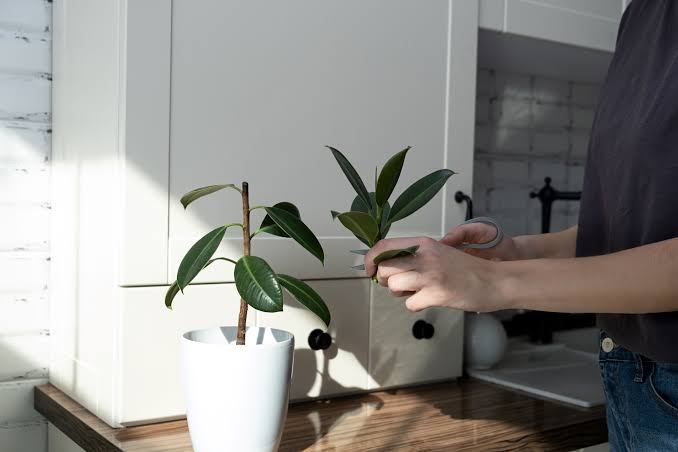
The rubber plant (Ficus elastica) is one of the most popular indoor houseplants thanks to its glossy leaves, bold height, and easy-care nature. But here’s the exciting part — you can grow an entire collection from just one plant! Learning how to propagate a rubber plant not only saves money but also gives you new plants to gift or expand your indoor jungle.If you want to grow smarter, the methods below will teach you exactly how to propagate a rubber plant successfully, even if you’re a complete beginner.Why Propagate a Rubber Plant?Before diving into the methods, here’s why propagation is such a smart choice:✔ Free new plants✔ Perfect way to shape or prune an overgrown plant✔ Very high success rate✔ Fun and beginner-friendly project✔ Helps rejuvenate leggy or old plantsIf you love rubber plants, propagation is the smartest gardening trick you can learn.Best Ways to Propagate a Rubber PlantThere are three effective propagation methods. Choose the one that fits your comfort level.1. Stem Cutting in Water (Easiest Method)This is the most popular and beginner-friendly way to propagate a rubber plant.How to Do ItChoose a healthy branch with at least 1–2 leaves.Make a clean cut below a leaf node using sterilized scissors.Remove the bottom leaf to expose the node.Place the cutting in a jar of clean water.Keep the jar in bright, indirect light.Change the water every 4–5 days.What Happens NextRoots begin forming in 3–6 weeks.Once roots are 2–3 inches long, transplant into potting soil.Why This WorksWater propagation lets you easily monitor root growth and adjust care quickly. It’s a smart method for beginners learning how to propagate rubber plant varieties.2. Soil Propagation (Fastest Rooting Method)If you want quicker, stronger roots, start your cutting directly in soil.StepsCut a healthy stem with one or two leaves.Dip the cut end in rooting hormone (optional but helpful).Plant the cutting into a pot of moist, well-draining soil.Cover the cutting with a plastic bag to create a mini-greenhouse.Place in bright, indirect light.Mist occasionally to prevent dryness.Rooting TimeYou’ll see signs of growth in 3–5 weeks.Why This WorksRoots adapt immediately to soil and grow faster than water propagation. If you want to grow smarter, soil propagation of rubber plants is efficient and reliable.3. Air Layering (Best for Large Plants)Air layering is the smart gardener’s trick when dealing with tall or woody rubber plants.How Air Layering WorksYou start roots while the branch is still attached to the plant — giving almost guaranteed success.StepsChoose a thick, mature branch.Make a small upward cut 1/3 into the stem.Insert a toothpick to keep the cut open.Wrap moist sphagnum moss around the cut area.Cover with plastic wrap and tie both ends.Keep the moss moist and place in indirect light.Rooting TimeRoots appear in 4–8 weeks.Once roots are visible, cut below the rooted section and pot it.Why This WorksAir layering is nearly fail-proof. It’s the smartest method for growers who want large, established plants quickly.How to Care for Newly Propagated Rubber PlantsOnce your cuttings root, follow these smart care tips to help them thrive:1. Use Well-Draining SoilRubber plants hate soggy roots. The best mix is:Indoor potting soilPerlitePine bark (optional for extra drainage)2. Give Bright, Indirect LightNew plants need gentle but consistent light. Avoid harsh direct sun until they mature.3. Water CarefullyThe golden rule:Water when the top 1–2 inches of soil feel dry.Overwatering is the most common mistake with new propagations.4. Keep Humidity ModerateRubber plants prefer:40–60% humidityMist lightly or place the pot near other plants for natural humidity.5. Don’t Fertilize Too SoonWait 4–6 weeks before applying fertilizer so roots can settle.6. Support the Young StemNew plants are delicate. A small wooden stick or support can help prevent leaning.Smart Propagation TipsWant even better success? Try these extra tricks:✔ Take cuttings in spring or early summer✔ Always sterilize your tools✔ Choose cuttings with at least one node✔ Warm temperatures (65–80°F / 18–26°C) speed root growth✔ Don’t disturb soil-propagated cuttings too soonConclusion: Grow Smarter With How to Propagate Rubber Plant!Propagating a rubber plant is simple, rewarding, and one of the smartest ways to expand your indoor garden. Whether you choose water propagation, soil propagation, or air layering, each method offers excellent results — even for beginners.By following these steps and smart tips, you’ll master how to propagate rubber plant quickly and grow a collection of healthy, beautiful ficus plants that brighten any room.