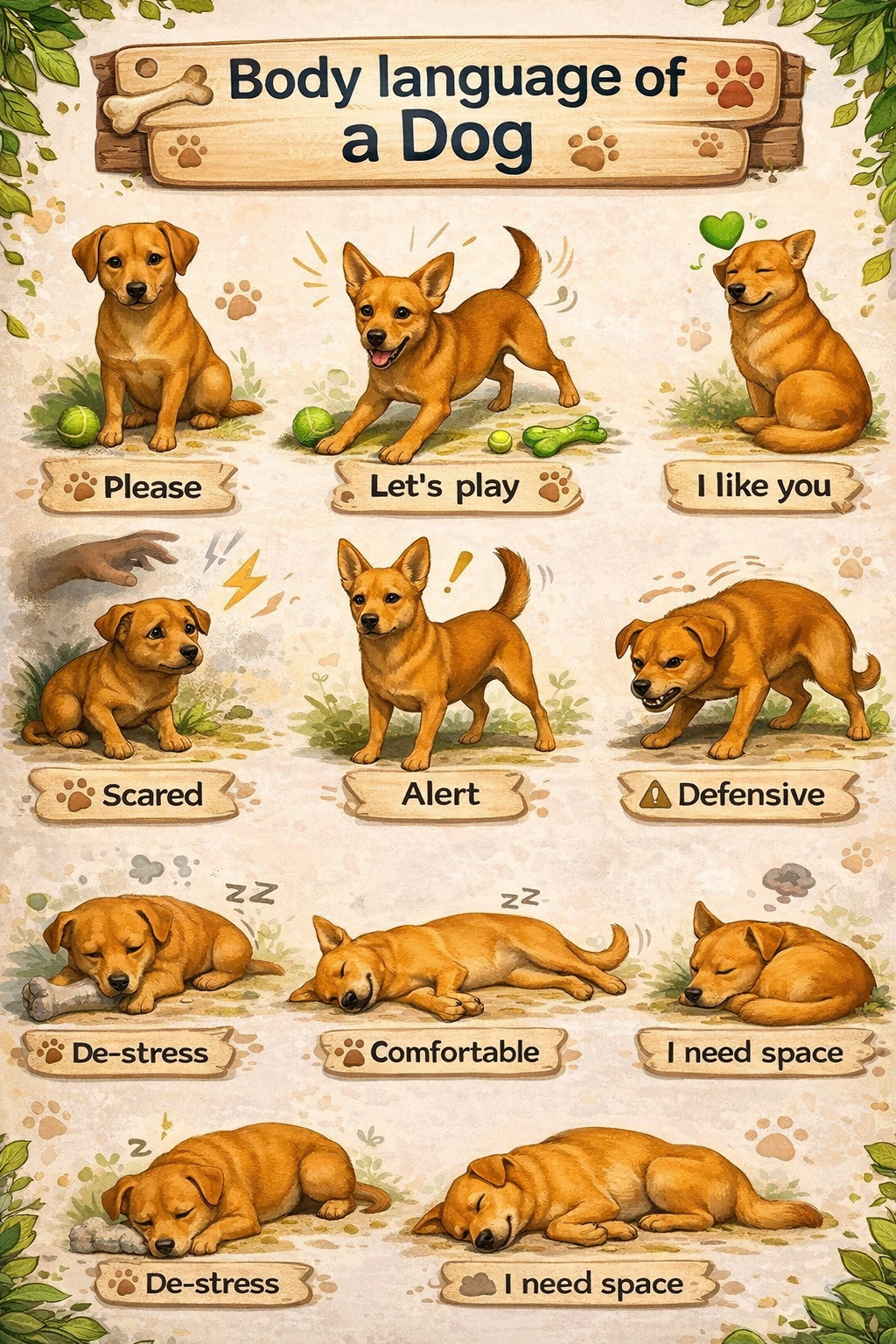
Dogs may not use words, but they are excellent communicators. Every tail wag, ear twitch, stretch, or sideways glance carries meaning. If you’ve ever wondered what your dog is really trying to tell you, you’re not alone. Understanding canine body language is one of the most valuable skills a dog owner can learn.Dogs Speak with Their Body – Learn to Read Their Emotions! 🐶 isn’t just a catchy phrase—it’s a truth backed by animal behavior science and everyday experience. By learning how dogs express feelings through posture, facial expressions, and movement, you can strengthen your bond, prevent misunderstandings, and respond more effectively to your dog’s needs.This guide will walk you through the key signs of dog body language, explain what different signals mean, and offer practical tips you can use at home—whether you’re in the United States, the United Kingdom, or Canada.Why Understanding Dog Body Language MattersDogs rely on body language to communicate with humans, other dogs, and their environment. When we misread—or ignore—these signals, it can lead to stress, fear, or even aggression.Benefits of Learning Canine Body LanguageImproves communication between you and your dogHelps prevent bites or behavioral issuesBuilds trust and emotional securityMakes training more effectiveSupports your dog’s mental well-beingWhen you truly understand that dogs speak with their body, everyday interactions become calmer, safer, and more meaningful.How Dogs Communicate Without WordsDogs use a combination of:PostureFacial expressionsTail movementEar positionOverall body tensionNo single signal should be read in isolation. Context matters. A wagging tail doesn’t always mean happiness, and a yawn doesn’t always mean sleepiness.Reading a Dog’s Emotional State Through Body Signals🐾 Tail Position and MovementA dog’s tail is one of the most expressive communication tools.Common tail signals include:High and stiff wag – Alert, aroused, or possibly overstimulatedLoose, wide wag – Happy, relaxed, friendlyLow or tucked tail – Fear, anxiety, or submissionFast, tight wag – Excitement mixed with tensionRemember: the speed, height, and stiffness of the tail matter more than wagging alone.🐾 Ears: Small Movements, Big MessagesEar position varies by breed, but the emotional signals remain consistent.Ears forward – Curious, alert, engagedEars relaxed or sideways – Calm, contentEars pinned back – Fear, stress, or appeasementRapid ear movement – Nervousness or uncertaintyWhen learning how dogs speak with their body, ears are a subtle but powerful clue.🐾 Eyes and Facial ExpressionsDogs communicate a lot through their eyes and face.Eye Signals to Watch For:Soft eyes, normal blinking – Relaxed and comfortableWide eyes with visible whites (“whale eye”) – Stress or fearHard stare – Warning sign, discomfort, or guarding behaviorAvoiding eye contact – Submission or anxietyA relaxed face usually includes a slightly open mouth and loose jaw.🐾 Mouth, Lips, and TongueA dog’s mouth tells you more than you might expect.Loose mouth, tongue slightly out – Calm and happyLip licking (without food present) – Stress or appeasementYawning – Often a stress signal, not tirednessGrowling or snarling – Clear communication to back offGrowling isn’t “bad behavior”—it’s your dog speaking honestly.Full-Body Posture: The Emotional SnapshotRelaxed and Happy DogLoose musclesBalanced stanceGentle tail wagSoft eyesFearful or Anxious DogCrouched bodyTail tuckedEars pinned backAvoiding eye contactExcited or Playful DogPlay bow (front down, rear up)Bouncy movementsExaggerated tail wagStressed or Defensive DogStiff postureWeight shifted forward or backwardHard stareSlow, tense movementsUnderstanding posture helps you see the whole message your dog is sending.Stress Signals Many Dog Owners MissOne of the most important lessons in Dogs Speak with Their Body – Learn to Read Their Emotions! 🐶 is recognizing early stress signals.Subtle Signs of Stress:Repeated yawningExcessive sniffingTurning head awayScratching when not itchySudden sheddingThese are often attempts to calm themselves—or you.Practical Tips to Respond to Your Dog’s Body Language🐕 1. Observe Before You ActTake a moment to read your dog’s posture and facial expression before petting, approaching, or correcting behavior.🐕 2. Respect WarningsIf your dog growls, stiffens, or avoids contact, give them space. Punishing warning signals can lead to bites without warning.🐕 3. Teach Children Dog Body LanguageKids should learn that dogs communicate differently than humans. This is crucial for safety in family homes.🐕 4. Match Your EnergyDogs respond strongly to human body language. Calm movements and relaxed posture help your dog feel safe.🐕 5. Use Body Language in TrainingPositive training works best when your body language is clear, relaxed, and consistent.Dogs Speak Differently in Different SituationsContext is everything. The same signal can mean different things depending on the environment.For example:A stiff tail at the dog park may signal alert curiosityThe same tail at a vet’s office may signal anxietyLearning how dogs speak with their body requires observing patterns over time.Common Myths About Dog Body Language❌ “A wagging tail always means a happy dog”Not true. Tail wagging can indicate excitement, stress, or even aggression.❌ “Dogs feel guilty”That “guilty look” is usually fear or appeasement in response to your tone or posture.❌ “Growling is bad behavior”Growling is communication. Suppressing it removes an important warning signal.Building a Stronger Bond Through UnderstandingWhen you learn to read your dog’s emotions accurately, trust grows naturally. Your dog feels seen, understood, and respected—and that leads to better behavior, stronger attachment, and a happier life together.Dogs Speak with Their Body – Learn to Read Their Emotions! 🐶 is about empathy as much as education.ConclusionDogs are constantly talking to us—we just need to learn their language. From tail position and ear movement to posture and facial expressions, every detail tells a story about how your dog is feeling in that moment.By understanding canine body language, you can:Respond to your dog’s emotional needsPrevent stress and conflictImprove training outcomesCreate a deeper, more trusting relationship