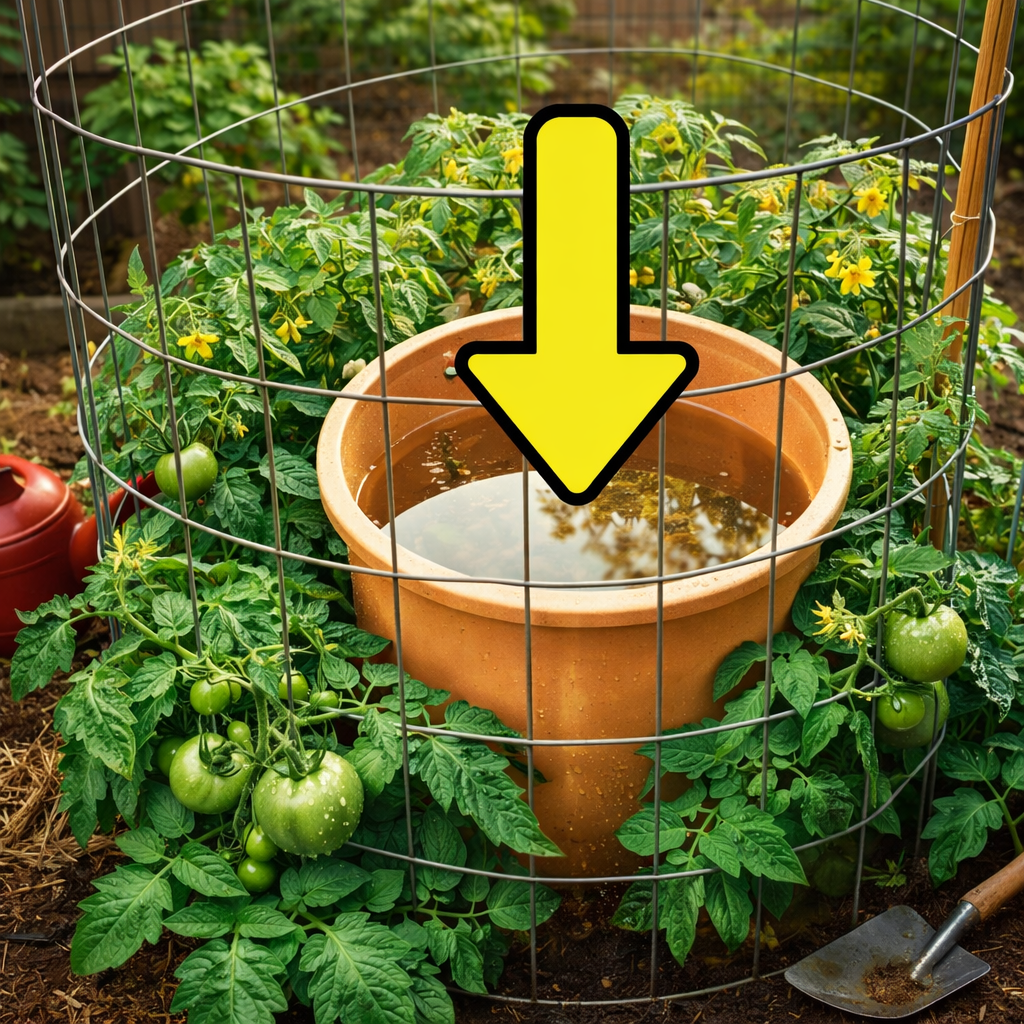
Growing healthy, productive tomato plants requires more than sunshine and good soil — consistent, deep watering is one of the most important factors for success. One highly effective and low-cost method is using a buried trash bin reservoir system with drilled holes to provide slow, deep irrigation directly to the root zone.This technique involves placing a trash bin with drainage holes at two levels into the soil, surrounding it with tomato plants, and filling it with water every couple of days. Compost added inside the bin naturally enriches the surrounding soil as nutrients slowly seep outward.Gardeners in the United States, United Kingdom, and Canada are increasingly turning to this method because it:Encourages strong root systemsReduces disease riskConserves waterMinimizes leaf wetnessImproves fruit productionIn this guide, we’ll explore how the buried trash bin watering system works, why it benefits tomato plants, and how to optimize it for maximum harvests.How the Buried Trash Bin Irrigation System WorksThe SetupThe system includes:A standard plastic trash binHoles drilled at two levels:Along the bottom edgeApproximately 25 cm (10 inches) above the bottomThe bin buried so the upper holes sit level with the soil surfaceTomato plants positioned around the binCompost placed inside the binWater added every two daysThis design creates a subsurface irrigation system that delivers moisture directly to deeper soil layers.Why Deep Watering Is Better for TomatoesTomatoes thrive when their roots grow deep into the soil. Surface watering often encourages shallow roots, which can lead to:Increased drought stressBlossom end rotCracked fruitWeak plant structureWith a buried reservoir:Water seeps slowly from underground holesRoots grow downward toward the moisture sourcePlants become more resilient in hot or dry weatherDeep watering promotes stronger, healthier plants and more consistent fruit production.Compost Inside the Bin: Natural Feeding SystemAdding compost inside the trash bin is a brilliant enhancement.When water fills the bin:Nutrients dissolve graduallyA mild compost tea formsFertilizing solution seeps into surrounding soilThis provides:Slow-release nutrientsImproved microbial activityEnhanced soil fertilityUnlike synthetic fertilizers, compost feeding is gentle and reduces the risk of over-fertilization.Benefits of This Tomato Watering Method1. Reduces Leaf WetnessTomato diseases such as:Early blightLate blightSeptoria leaf spotspread more easily when foliage remains wet.Because water is delivered underground:Leaves stay dryHumidity around foliage is reducedFungal infections are less likelyThis is especially valuable in humid climates like parts of the eastern US or southern UK.2. Saves WaterSurface watering can result in evaporation loss. Subsurface irrigation:Minimizes evaporationDelivers water directly where neededImproves efficiencyThis makes the system ideal for dry regions or gardeners looking to conserve water.3. Encourages Strong Root DevelopmentWhen moisture is consistently available at deeper soil levels:Roots expand downwardPlants anchor more securelyNutrient uptake improvesStronger roots mean better flowering and fruiting.How Often Should You Fill the Bin?Filling the reservoir every two days works well in moderate conditions. However, frequency depends on:TemperatureSoil typeRainfallPlant maturityAdjusting for ClimateHot, dry weather → may require daily fillingCooler or rainy conditions → every 3–4 days may be enoughCheck soil moisture by inserting your finger 5–7 cm (2–3 inches) into the soil near plants. It should feel slightly moist, not soggy or dry.Plant Spacing ConsiderationsPlacing four tomato plants around one bin can work effectively if:Plants are spaced at least 45–60 cm (18–24 inches) apartGood airflow is maintainedPlants are properly supportedIf plants appear crowded or fruit production slows, competition for nutrients may be occurring.Practical Tips for Best ResultsAdd Mulch Around PlantsA 5–8 cm (2–3 inch) layer of mulch such as:StrawDried grass clippingsWood chipshelps:Retain soil moistureRegulate soil temperaturePrevent soil splash (reducing disease risk)Prevent Hole CloggingOver time, compost particles may block drainage holes. To avoid this:Stir compost occasionallyFlush the bin with plain water weeklyEnsure holes remain clearUse a LidIf the bin remains open:Mosquitoes may breedDebris can accumulateWater evaporates fasterA simple lid with a small opening for filling improves efficiency and cleanliness.Support Tomato Plants EarlyDeep watering encourages vigorous growth. Install:Tomato cagesStakesTrellisesEarly support prevents stem breakage and improves airflow.Comparing This System to Traditional WateringSurface Watering Buried Bin SystemEncourages shallow roots Promotes deep rootsWet foliage increases disease risk Leaves remain dryHigher evaporation loss Efficient water useUneven moisture Consistent hydrationFor serious tomato growers, deep watering methods often lead to healthier plants and higher yields.Common Mistakes to AvoidOverwatering: Soil should be moist, not saturated.Poor drainage: Ensure soil drains well to prevent root rot.Ignoring spacing: Crowded plants increase disease risk.Skipping mulch: Bare soil dries out faster.Monitoring your plants regularly ensures early detection of issues.Why This Method Works So Well for TomatoesTomatoes are heavy feeders and heavy drinkers. They require:Consistent moistureDeep root supportNutrient-rich soilThe buried trash bin irrigation system meets all three needs simultaneously.By combining:Deep wateringSlow compost feedingLeaf-dry irrigationyou create ideal growing conditions for productive tomato plants.ConclusionThe buried trash bin irrigation method is a simple yet highly effective solution for growing strong, healthy tomatoes. By drilling holes at two levels, burying the bin so upper holes align with soil level, adding compost, and filling it every two days, you create a sustainable deep watering system that supports vigorous root growth and reduces disease risk.This approach conserves water, delivers nutrients gradually, and minimizes foliage wetness — all critical factors for successful tomato cultivation in the United States, United Kingdom, and Canada.If your plants are thriving with dark green leaves, steady flowering, and developing fruit, your system is working beautifully. With proper spacing, mulch, and occasional maintenance, this deep watering technique can significantly improve both plant health and harvest quality.Healthy roots lead to healthy tomatoes — and your method is built for exactly that. 🍅🌿