
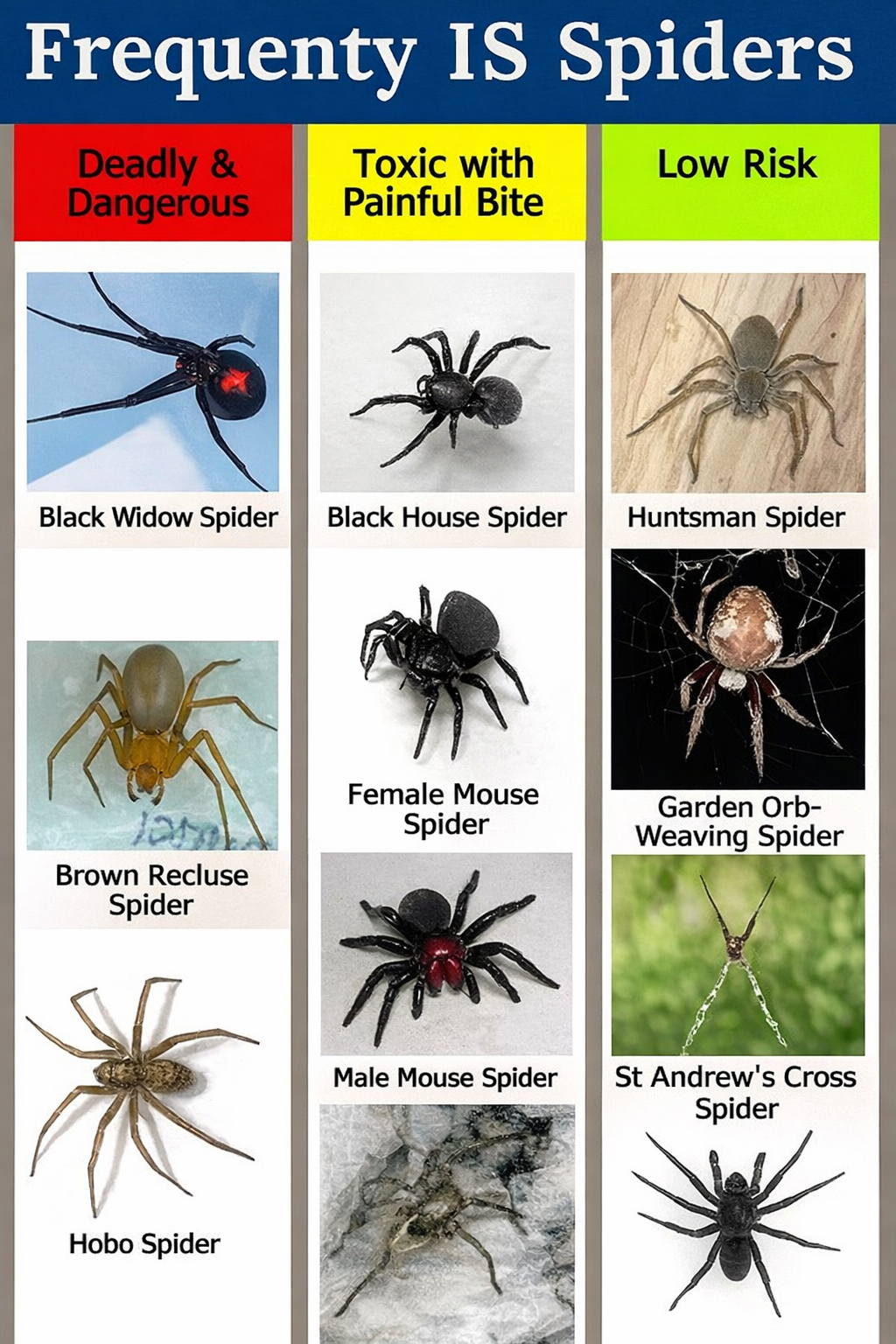
Spiders are a natural and important part of ecosystems across the United States. While they often inspire fear, most spiders are harmless to humans and play a valuable role by controlling insect populations. From gardens and forests to basements and garages, a wide variety of spiders coexist with people every day.
This guide covers common spiders in the United States, how to recognize them, where they live, and what you should know about their behavior. Understanding these spiders can help reduce unnecessary fear and promote safe coexistence.
Why Spiders Are Important
Before exploring individual species, it’s helpful to know why spiders matter.
- They help control pests like flies, mosquitoes, and agricultural insects
- Most are non-aggressive and avoid human contact
- Bites are rare and usually mild
- They contribute to balanced ecosystems
Out of thousands of spider species in the U.S., only a small handful are medically significant.
House and Indoor Spiders
American House Spider (Parasteatoda tepidariorum)
Appearance:
- Small to medium-sized
- Brown or gray with mottled patterns
Where Found:
- Corners of ceilings
- Basements, garages, and sheds
Behavior:
The American house spider builds messy, irregular webs and feeds on household insects. It is harmless and rarely bites.
Cellar Spider (Daddy Longlegs Spider)
Appearance:
- Very long, thin legs
- Small pale or gray body
Where Found:
- Basements, crawl spaces, cellars
Behavior:
Despite common myths, cellar spiders are not dangerous. They are excellent at controlling other spiders and insects indoors.
Garden and Outdoor Spiders
Orb-Weaver Spiders (Family Araneidae)
Appearance:
- Large, round abdomens
- Often brightly colored or patterned
Where Found:
- Gardens, porches, forests, and fields
Behavior:
Orb-weavers spin large, circular webs and are active at night. They are gentle, beneficial, and excellent pest controllers.
Wolf Spider (Lycosidae family)
Appearance:
- Large, hairy body
- Brown or gray with striping
Where Found:
- Lawns, gardens, woodlands
Behavior:
Wolf spiders do not spin webs to catch prey. Instead, they hunt on the ground. They may look intimidating but are not aggressive.
Jumping Spider (Salticidae family)
Appearance:
- Small and compact
- Large forward-facing eyes
Where Found:
- Window sills, walls, plants
Behavior:
Jumping spiders are curious and active hunters. They have excellent vision and are harmless to humans.
Common Web-Building Spiders
Barn Spider
Appearance:
- Medium to large size
- Brown with orange or yellow markings
Where Found:
- Barns, fences, sheds
Behavior:
Barn spiders are a type of orb-weaver and are commonly seen in rural areas. They help reduce flying insect populations.
Funnel Weaver Spiders (Agelenidae family)
Appearance:
- Medium-sized with long legs
- Brown with darker markings
Where Found:
- Grass, shrubs, foundations
Behavior:
They build funnel-shaped webs and retreat quickly when disturbed. Funnel weavers are often mistaken for more dangerous species but are harmless.
Medically Significant Spiders (Rare but Notable)
While most spiders in the United States are harmless, a few species deserve special mention due to their venom.
Black Widow Spider (Latrodectus)
Appearance:
- Shiny black body
- Red hourglass marking on the abdomen
Where Found:
- Woodpiles, garages, outdoor clutter
Behavior:
Black widows are shy and bite only when threatened. Bites can be serious but are rarely fatal with modern medical care.
Brown Recluse Spider (Loxosceles reclusa)
Appearance:
- Light to dark brown
- Violin-shaped marking on the back
Where Found:
- Primarily the central and southern U.S.
- Dark, undisturbed indoor spaces
Behavior:
Brown recluses avoid people. Bites are uncommon but can require medical attention.
How to Avoid Spider Encounters
Simple steps can greatly reduce unwanted spider encounters.
Practical Tips
- Keep homes clean and clutter-free
- Seal cracks and gaps around doors and windows
- Reduce outdoor lighting that attracts insects
- Shake out shoes, gloves, and stored items
Spiders usually enter homes in search of prey, not people.
What to Do If You See a Spider
- Stay calm—most spiders are harmless
- Capture and release outdoors if possible
- Avoid crushing spiders with bare hands
- Seek medical advice only if a bite causes unusual symptoms
Spiders typically flee rather than attack.
Common Myths About Spiders
- “All spiders are dangerous” – False; most are harmless
- “Spiders chase people” – False; they avoid humans
- “Daddy longlegs are deadly” – False; they are harmless
Understanding spiders helps reduce fear and misinformation.
Conclusion: Learning to Live With Spiders
Common spiders in the United States are far more helpful than harmful. From orb-weavers in gardens to jumping spiders on windowsills, these creatures quietly work to keep insect populations in check. While a few species require caution, the vast majority pose no threat to humans.
By learning to identify common spiders and understanding their behavior, you can appreciate their role in nature and coexist safely—without unnecessary fear.