
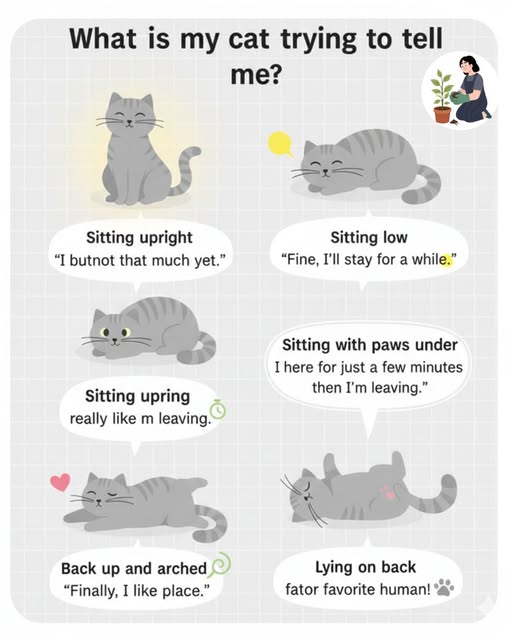
Cats communicate a lot without making a sound. Their posture reveals how they feel—whether they’re relaxed, curious, threatened, or ready to play. Understanding these signals helps you build trust and respond to your cat’s needs more confidently.
Materials or Tools Needed:
Your cat
Calm environment for observation
Notebook or notes app (optional for tracking behavior patterns)
Step-by-Step Method:
Observe the back and spine:
Relaxed body: calm, confident, and comfortable.
Arched back: fear or defensive readiness.
Check the tail position:
Tail up: friendly and confident.
Puffed tail: startled or scared.
Low tail: anxious or unsure.
Look at leg posture:
Tucked legs: feeling safe, resting.
Crouched body: alert or preparing to react.
Watch the head and ears:
Ears forward: curious and engaged.
Ears back or flat: fear, irritation, or stress.
Note the overall stance:
Combine body, tail, and ear signals to understand the full message. Cats rarely communicate with just one sign.
Additional Tips:
Observe your cat in different situations to learn its unique signals.
Avoid approaching when posture shows fear or tension—give space instead.
Use treats or gentle play when your cat shows relaxed or curious postures.
This technique also helps you read unfamiliar cats safely.