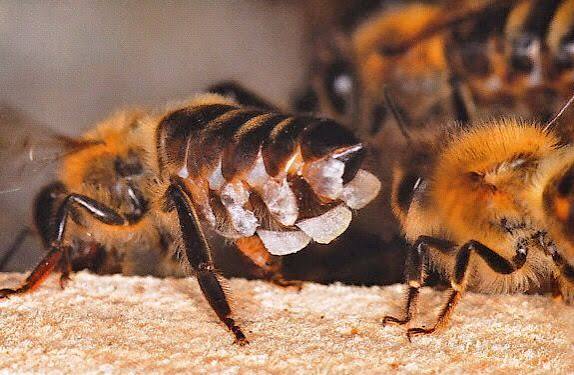
Bees are tiny engineers with an incredible superpower: they produce their own wax to build honeycombs, store honey, and raise their young. This natural process is fascinating, efficient, and completely done by the bees themselves—no outside materials needed!Here’s how bees make wax, broken down into 4 easy-to-understand steps 👇🟡 Step 1: Bees Eat Honey 🍯Wax production starts with food.Worker bees (usually 12–18 days old) consume large amounts of honey, which provides the energy needed to produce wax.👉 Fun fact: Bees must eat about 8 pounds of honey to make 1 pound of wax!🟡 Step 2: Wax Glands Get to Work 🐝Inside a worker bee’s abdomen are special wax glands.After digesting honey, these glands convert sugars into tiny, clear flakes of beeswax.These flakes ooze out through small pores on the bee’s belly.🟡 Step 3: Bees Chew and Shape the Wax 🧱The wax flakes are:Pulled off with the bee’s legsChewed and softened using their mouthpartsMixed with saliva to make the wax flexibleThis chewing process transforms brittle wax into a moldable building material.🟡 Step 4: Honeycomb Is Built 🏗️Now the real magic happens ✨Bees carefully shape the softened wax into perfect hexagonal cells, forming the honeycomb.These cells are used to:Store honey 🍯Store pollen 🌼Raise baby bees 🐣The hexagon shape is incredibly strong and space-efficient—nature’s perfect design.🌼 Why Beeswax Is So SpecialBeeswax is:100% naturalWaterproofAntibacterialLong-lastingThat’s why humans use it in candles, cosmetics, food wraps, and even medicine.🐝 Final BuzzFrom eating honey to building geometric masterpieces, bees are true natural architects. Their ability to make wax from scratch is just one more reason these tiny creatures are essential—and amazing.Next time you see a honeycomb, remember:✨ It all started with a bee, some honey, and a lot of teamwork. ✨