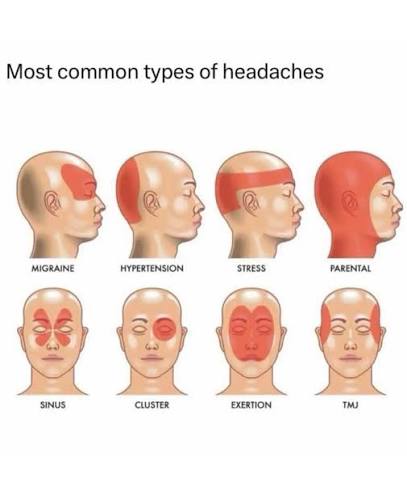
Headaches are incredibly common, but not all headaches are the same. Understanding the type of headache you’re experiencing can help you manage it better, avoid triggers, and know when to seek medical advice. Below is a clear, practical guide to the most common types of headaches, their symptoms, causes, and key characteristics.🤕 Tension Headaches (Most Common)What it feels like:Dull, aching painTight or pressure-like sensation around the forehead or back of the headOften described as a “tight band” around the headKey characteristics:Mild to moderate intensityAffects both sides of the headNo nausea or vomitingNeck and shoulder tightness is commonCommon triggers:Stress or anxietyPoor postureEye strainFatigueDuration:30 minutes to several hours (sometimes days)🌋 Migraine HeadachesWhat it feels like:Throbbing or pulsating painUsually on one side of the headKey characteristics:Moderate to severe painSensitivity to light, sound, or smellsNausea and/or vomitingPain worsens with movementPossible warning signs (aura):Visual disturbances (flashing lights, zigzag lines)Tingling in face or handsTemporary speech difficultyCommon triggers:Hormonal changesCertain foods (chocolate, cheese, caffeine)Stress or lack of sleepBright lights or strong smellsDuration:4 to 72 hours🔥 Cluster Headaches (Severe but Rare)What it feels like:Intense, burning, or piercing painKey characteristics:Severe pain around one eye or templeOccurs in “clusters” (multiple headaches over weeks or months)Often happens at the same time each dayOne-sided painAssociated symptoms:Red or watery eyeDrooping eyelidStuffy or runny nose on the affected sideRestlessness or agitationDuration:15 minutes to 3 hoursCan occur multiple times per day🤧 Sinus HeadachesWhat it feels like:Deep, constant pressure in the face or foreheadKey characteristics:Pain around the eyes, cheeks, or noseWorsens when bending forwardOften confused with migrainesAssociated symptoms:Nasal congestionFacial swellingThick nasal dischargeFever (sometimes)Common causes:Sinus infectionsAllergiesCold or fluDuration:As long as sinus inflammation lasts⚡ Cervicogenic Headaches (Neck-Related)What it feels like:Steady, non-throbbing pain that starts in the neckKey characteristics:Pain radiates from neck to headOne-sided painReduced neck movementTriggered by neck posture or movementCommon causes:Poor postureNeck injuryMuscle stiffnessProlonged screen useDuration:Hours to days💊 Rebound (Medication-Overuse) HeadachesWhat it feels like:Constant or daily headacheKey characteristics:Occurs from frequent use of pain relieversOften worse in the morningTemporary relief from medication, then returnsCommon triggers:Overuse of headache medicationsCaffeine dependencyDuration:Chronic (daily or near-daily)⚠️ When to Seek Medical AttentionSee a healthcare professional if you experience:Sudden, severe “worst headache of your life”Headache with fever, confusion, or stiff neckHeadache after head injuryVision loss or weaknessHeadaches that are increasing in frequency or severity🌿 Managing Headaches Naturally (Helpful Tips)Stay hydrated 💧Maintain good postureGet regular sleep 😴Manage stress with breathing or meditationTake breaks from screensKeep a headache diary to track triggers✅ Final ThoughtsHeadaches may be common, but they’re not all the same. Identifying the type of headache you have—whether tension, migraine, sinus, cluster, or neck-related—can make a huge difference in how effectively you manage it.Listening to your body, recognizing patterns, and responding early can help reduce pain, improve clarity, and support overall well-being. If headaches interfere with daily life, don’t hesitate to seek professional guidance—relief is possible. 💙