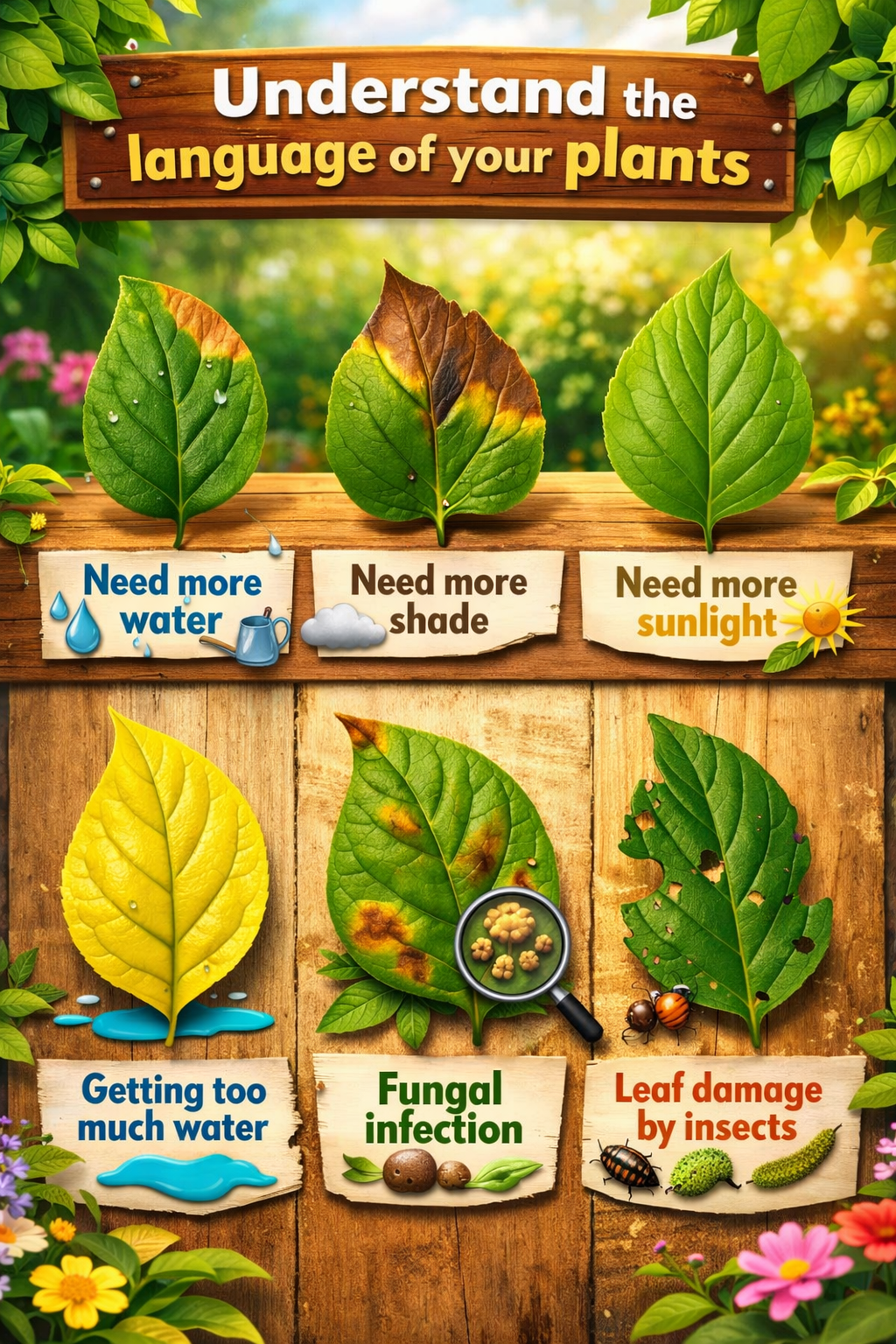
Plants can’t talk—but they definitely show when something is wrong. Learning to recognize visual warning signs early can save your plants and keep your garden thriving. Whether you grow houseplants, vegetables, or outdoor flowers, understanding what your plant’s leaves, stems, and soil are telling you is a powerful gardening skill.Below are the most common visual signs that a plant needs help, what they usually mean, and how to fix the issue quickly.🍃 Yellowing Leaves (Chlorosis)What It Looks LikeLeaves turning pale yellow or fading from greenYellowing starting at older leaves or edgesWeak, slow plant growthPossible CausesOverwatering or poor drainageNutrient deficiencies (especially nitrogen or iron)Lack of sunlightRoot stress or compacted soilHow to HelpCheck soil moisture before wateringImprove drainage or repot if roots are soggyAdd balanced fertilizer if nutrients are lackingMove the plant to brighter light if needed🍂 Brown, Crispy Leaf EdgesWhat It Looks LikeDry, crunchy tips or edgesLeaves curling inwardDiscoloration turning from yellow to brownPossible CausesUnderwatering or dry airExcess fertilizer (salt buildup)Heat stress or strong direct sunLow humidity indoorsHow to HelpIncrease watering frequency graduallyMist plants or use a humidifierFlush soil occasionally to remove fertilizer saltsProvide filtered light instead of harsh sun🥀 Drooping or Wilting LeavesWhat It Looks LikeLimp, hanging leavesSoft stems or droopy growthSudden plant collapsePossible CausesUnderwatering or severe drynessOverwatering causing root rotTransplant shockExtreme temperature changesHow to HelpCheck soil moisture immediatelyTrim rotting roots if overwateredKeep plants away from drafts or heatersProvide consistent watering routines🕳️ Holes, Spots, or Damaged LeavesWhat It Looks LikeChewed holes or irregular leaf damageBlack or brown spotsSticky residue or visible insectsPossible CausesPests like aphids, caterpillars, or beetlesFungal or bacterial diseasesPoor air circulation or overcrowdingHow to HelpInspect leaves regularly (top and underside)Remove affected leavesUse insecticidal soap or neem oilImprove spacing and airflow🌱 Slow Growth or Pale New LeavesWhat It Looks LikeSmall or weak new growthPale or faded young leavesThin stems and delayed developmentPossible CausesPoor soil nutritionRoot-bound plantsInsufficient sunlightIncorrect watering habitsHow to HelpRepot into fresh, nutrient-rich soilFeed with a balanced plant fertilizerProvide adequate sunlight exposureEnsure proper watering consistency🌿 Quick Daily Plant Health ChecklistUse this simple routine to catch problems early:👀 Look for color changes in leaves💧 Check soil moisture with your finger🐛 Inspect for pests weekly☀️ Make sure plants get enough light🌬️ Maintain good airflow around plantsSmall daily observations can prevent major plant issues later.🌼 ConclusionRecognizing visual signs that a plant needs help is one of the most valuable skills any gardener can develop. Yellow leaves, brown tips, drooping stems, pest damage, and slow growth are all signals your plant is trying to communicate with you. The sooner you notice these changes, the easier it is to correct the problem and restore plant health.With regular observation, proper watering habits, balanced nutrition, and good lighting, most plants can recover quickly. Pay attention to these visual cues, respond with care, and your plants will reward you with stronger growth, vibrant leaves, and a thriving garden. 🌱✨