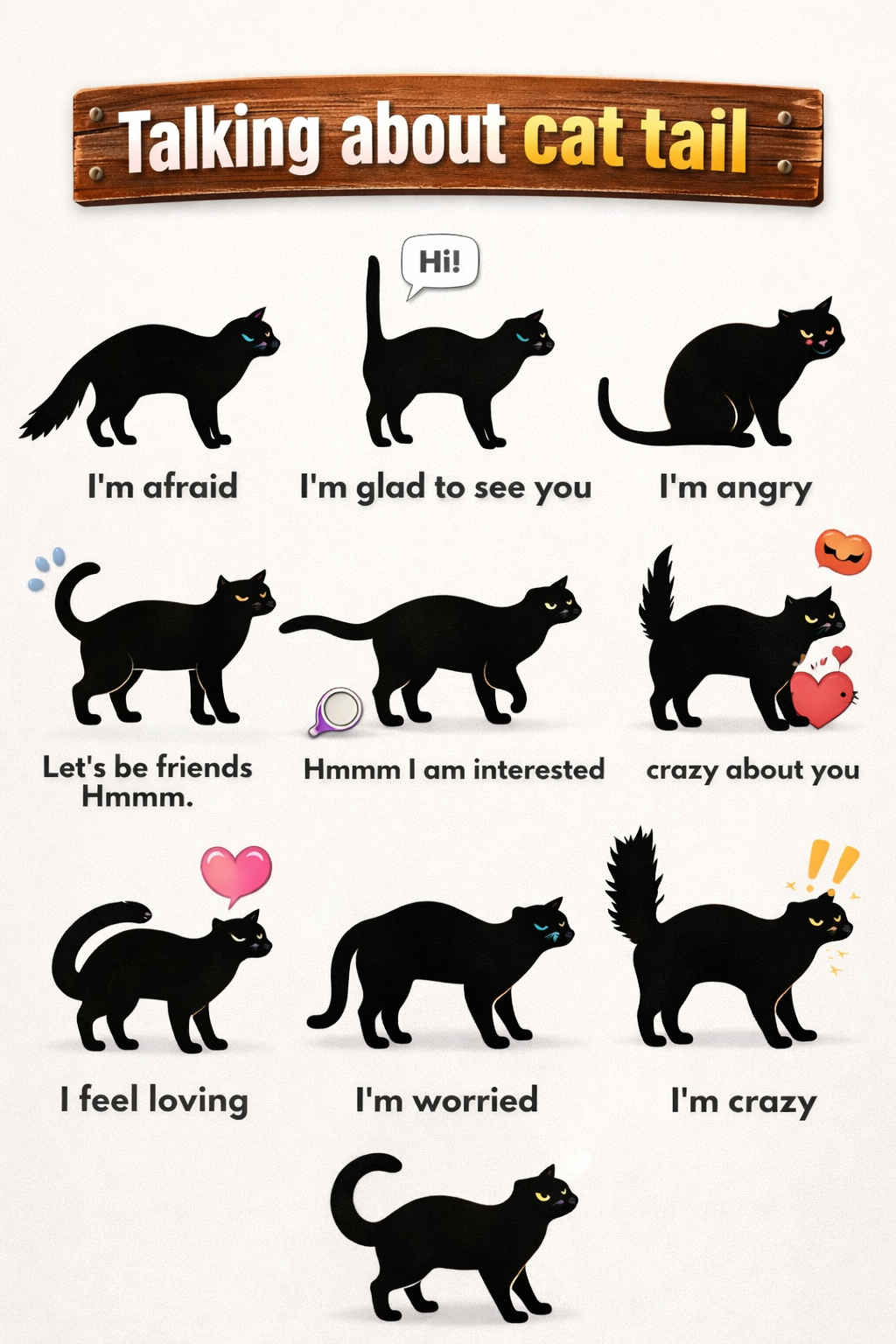
Cats are often mysterious creatures, with their independent nature and subtle ways of communicating. While they might not speak in words, they have a rich language of body signals that help them express their feelings, needs, and even their moods. One of the most expressive parts of a cat’s body is their tail, which can convey a range of emotions from happiness to frustration, and everything in between.Understanding your cat’s tail language is key to building a stronger bond with your feline companion and responding appropriately to their needs. In this guide, we’ll break down what different tail positions and movements can mean, helping you to better understand your cat’s emotions and enhance your communication with them.Why Cats Use Their Tails for CommunicationCats communicate using their tail for a variety of reasons:Balance: Cats use their tails to help maintain balance when climbing or making sharp turns.Mood Indicators: A cat’s tail is one of their primary ways of expressing emotions and intentions.Social Signaling: Cats use their tails to communicate with other animals and humans, letting them know if they’re feeling playful, aggressive, threatened, or relaxed.By learning the subtle language of your cat’s tail, you can gain a deeper understanding of how they’re feeling in any given moment.Cat Tail Positions and What They Mean1. Straight Up Tail (with a slight curve at the top)Mood: Happy, Confident, CuriousWhat it means: A tail held high, often with a slight curve at the tip, is a sign of confidence and happiness. Cats hold their tails up when they feel secure and positive. This posture typically indicates that your cat is feeling comfortable in their environment and is open to interaction. It’s a sign that they trust you and feel at ease.Tip: If your cat approaches you with their tail up, they may be seeking affection or simply want to greet you!2. Tail Straight Up with a Quiver or VibratingMood: Excited, AffectionateWhat it means: When your cat’s tail quivers or vibrates while held upright, it’s usually a sign of excitement or affection. Cats often do this when greeting their favorite humans or other cats. This behavior is especially common in mating behavior, but it can also be a sign of happy recognition and affection.Tip: Take this as a sign that your cat is happy to see you and may want attention or cuddles!3. Low, Straight TailMood: Neutral or SubmissiveWhat it means: A tail that’s held low and straight usually indicates that your cat is feeling neutral or possibly submissive. It’s a non-threatening posture, but it can also be a sign that your cat is feeling cautious or unsure about a situation.Tip: If your cat’s tail is straight but low, they may be observing something in their environment and trying to determine if it’s safe to approach.4. Tucked TailMood: Fearful, Anxious, SubmissiveWhat it means: A tail tucked tightly between your cat’s legs is a strong sign of fear or anxiety. Cats will often adopt this posture when they feel threatened, scared, or submissive. It’s a way for them to protect their sensitive underbelly and indicate that they do not want to engage in conflict.Tip: If your cat’s tail is tucked, try to remove any stressors in their environment and give them some time to relax.5. Puffed-Up Tail (Feathered or Bushy)Mood: Territorial, Agitated, DefensiveWhat it means: A puffed-up tail is a clear indication that your cat is feeling threatened or agitated. This often happens when they are scared, angry, or in a defensive stance. A cat’s tail will puff up to make them appear larger and more intimidating to perceived threats.Tip: If your cat’s tail is puffed up, back off slowly and give them space to calm down.6. Slowly Swishing or Flicking TailMood: Irritated, Focused, AnnoyedWhat it means: A cat that is slowly swishing or flicking their tail back and forth is usually showing irritation or frustration. It can also indicate that they are focused on something, such as a toy or prey, or that they’re preparing to act.Tip: If your cat’s tail is flicking or swishing slowly, give them space and avoid overstimulating them. They might need some quiet time.7. Fast-Twitching or Flicking TailMood: Angry, AggressiveWhat it means: A fast-twitching or flicking tail can indicate that your cat is getting agitated, angry, or upset. This usually happens when they’re feeling frustrated or preparing for an altercation. If their tail is moving quickly and erratically, they are likely on edge.Tip: If you see this behavior, it’s best to back off slowly and give your cat some space to cool down.8. Curled TailMood: Content, RelaxedWhat it means: A cat that curls their tail around their body (often when resting) is typically feeling content and relaxed. It’s a sign of comfort, as cats often curl up like this when they are in a safe and secure environment.Tip: If you see your cat curled up with their tail wrapped around them, they are probably enjoying some downtime and are not in the mood for play.9. Wagging Tail (Side to Side)Mood: Frustrated, Annoyed, or PlayfulWhat it means: Unlike a slow swish, when a cat’s tail is moving side to side quickly, it typically means they are frustrated or annoyed. In some cases, they might be indicating that they are in a playful mood, especially if they are preparing to pounce or engage in interactive play.Tip: Watch the overall body language. If the tail wagging is accompanied by wide eyes or crouching, they may be preparing for play. If their body is tense, they may be frustrated or irritated.Understanding Your Cat’s Tail for Better BondingBy paying attention to your cat’s tail movements and positions, you can gain a deeper understanding of their emotional state and provide them with the care they need. Here are some ways to use tail language to strengthen your relationship with your cat:Respect Their Boundaries: If your cat’s tail is tucked or puffed up, they may need space. Respect their boundaries to avoid stressing them out.Engage with Play: A slowly swishing or flicking tail might indicate that your cat is ready to play, so use it as a cue to engage in fun, interactive playtime.Show Affection: When your cat’s tail is upright or quivering, it’s a sign they are happy to see you. Reward this behavior with gentle affection or a treat.Conclusion: Speak Cat TailYour cat’s tail is a powerful tool of communication. By learning to interpret its various movements and positions, you can become more in tune with their feelings, needs, and moods. Whether it’s a wag of excitement, a puff of defense, or a sign of love, your cat’s tail tells you more than you might think. By tuning into these tail signals, you can deepen your bond with your feline friend and ensure they feel understood and cared for.If you want to know more about cat body language or behaviors, I’d be happy to dive deeper into their paws, ears, and