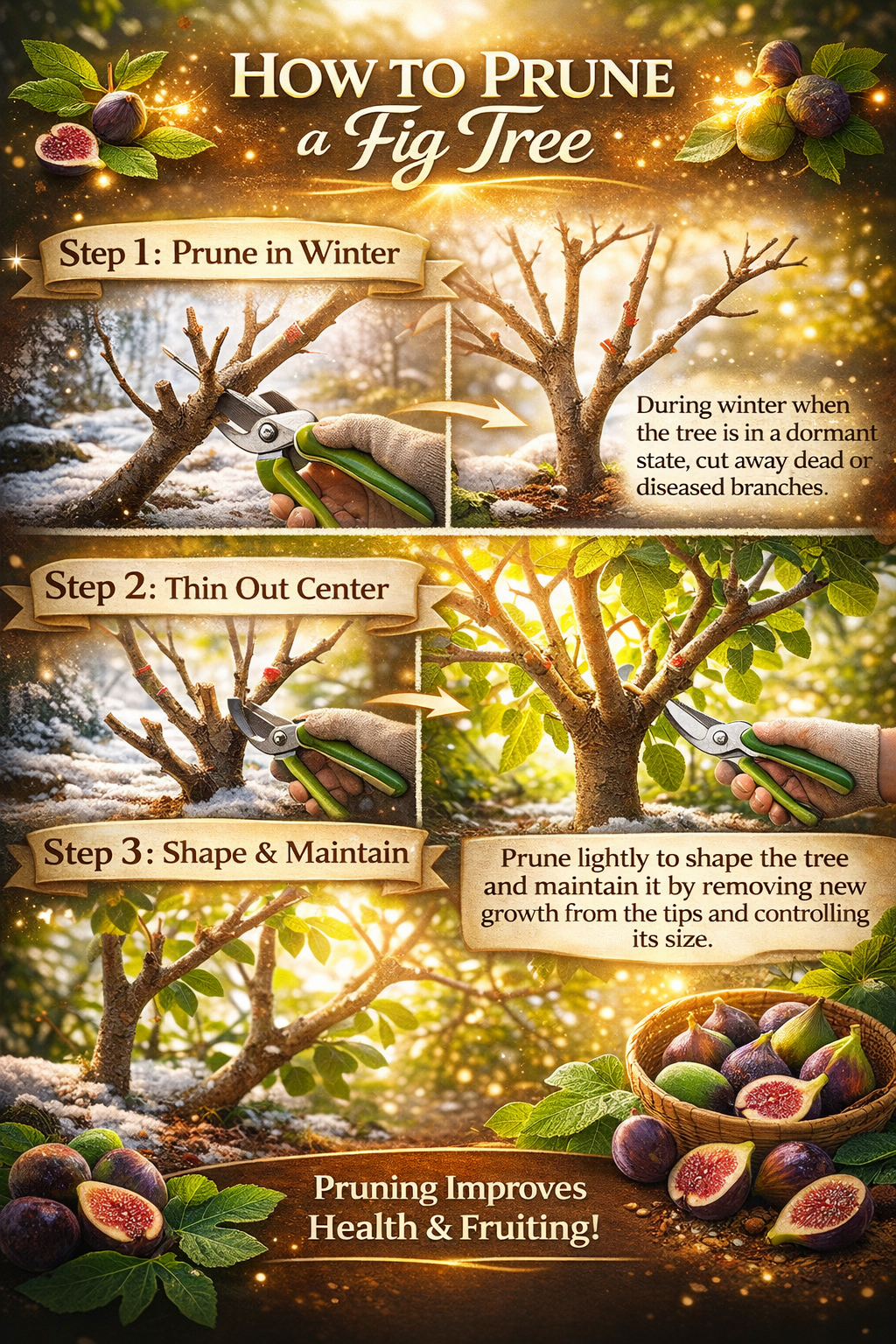
Fig trees are among the most rewarding fruit trees to grow, offering sweet, nutrient-rich fruit and lush foliage with relatively low maintenance. However, one critical practice separates average harvests from truly abundant ones: proper pruning. Understanding pruning fig trees for high production is essential if you want larger yields, healthier branches, and better-quality fruit year after year.Many gardeners hesitate to prune fig trees, worrying they might reduce fruiting. In reality, strategic pruning improves airflow, directs energy to productive growth, and encourages stronger fruit-bearing branches. Whether you grow figs in the ground, in containers, or in colder climates where winter protection is needed, pruning plays a vital role in long-term success.This guide will walk you through when, why, and how to prune fig trees for high production, along with practical tips tailored to climates across the US, UK, and Canada.Why Pruning Fig Trees Increases ProductionEncourages Fruit-Bearing GrowthFig trees produce fruit on new wood (current season’s growth). Pruning stimulates fresh shoots, which directly leads to increased fruit production.Improves Light and AirflowRemoving overcrowded or inward-growing branches allows sunlight and air to reach the interior of the tree. This results in:Healthier leavesReduced disease riskBetter fruit ripeningDirects Energy EfficientlyWithout pruning, fig trees waste energy on excessive foliage and weak branches. Strategic pruning redirects nutrients toward fruit development instead of unnecessary growth.Understanding Fig Tree Growth HabitsBefore pruning, it’s important to understand how fig trees grow.Types of Fig TreesCommon figs (most backyard varieties) produce fruit without pollinationHardy figs are suitable for colder regionsContainer figs require more controlled pruningGrowth CharacteristicsVigorous, fast-growing branchesMultiple stems if left unmanagedStrong response to pruningThis natural vigor is why pruning fig trees for high production is not only safe—but essential.When to Prune Fig TreesWinter Pruning (Primary Pruning)The best time to prune fig trees is during late winter or early spring, while the tree is dormant.Benefits of winter pruning:Clear view of branch structureMinimal sap lossStrong regrowth in springSummer Pruning (Light Maintenance)Summer pruning is optional and focuses on:Removing excessive shootsControlling sizeImproving airflowAvoid heavy summer pruning, as it may reduce current-season fruit.🍇🌳 How to Prune Fig Trees for High Production 🌳🍇Step 1: Remove Dead and Damaged WoodStart by cutting away:Dead branchesDiseased woodBroken or frost-damaged limbsThis allows the tree to focus on healthy, productive growth.Step 2: Thin Out Crowded BranchesRemove:Branches crossing or rubbingInward-growing shootsWeak, spindly growthAim for an open, vase-like structure that allows light to reach the center.Step 3: Reduce Height and SpreadTall fig trees waste energy on vertical growth rather than fruit.Cut back tall branches to outward-facing budsKeep trees at a manageable height (6–10 feet for most gardens)This step is crucial when pruning fig trees for high production.Step 4: Encourage New GrowthTrim older branches to stimulate fresh shoots. Since figs fruit on new wood, this step directly boosts yields.Avoid removing more than 25–30% of the tree in one season.Step 5: Shape Young Fig TreesFor young trees:Choose 3–5 strong main branchesRemove competing shootsEstablish a strong framework earlyGood structure leads to easier pruning and higher production in later years.Pruning Fig Trees in Different ClimatesUnited StatesWarm regions: Light winter pruning and occasional summer thinningCold regions: More aggressive pruning and winter protectionUnited KingdomBest grown against a wall or fenceFan-trained pruning improves heat retentionLight but regular pruning supports consistent productionCanadaFocus on compact size for winter protectionContainer growing is commonPrune heavily in spring after frost risk passesClimate-specific pruning is essential for high fig production.Pruning Fig Trees in ContainersContainer fig trees need special care.Key TipsPrune annually to control sizeRemove root-bound stress by pruning roots every 2–3 yearsLimit height to encourage fruit over foliageContainer figs respond extremely well to pruning and often produce heavily when properly managed.Common Pruning Mistakes to Avoid❌ Over-pruning in one season❌ Pruning too late in spring after growth starts❌ Leaving dense, crowded centers❌ Ignoring weak or non-productive branches❌ Cutting without clean, sharp toolsAvoiding these mistakes is just as important as knowing how to prune.Practical Tips for Pruning Fig Trees SuccessfullyUse sharp, sterilized pruning toolsMake clean cuts just above outward-facing budsWear gloves—fig sap can irritate skinApply mulch after pruning to support regrowthMonitor new shoots and thin if overcrowdedConsistent care maximizes the benefits of pruning fig trees for high production.Does Pruning Reduce Fig Harvests?This is a common concern—but the answer is no, when done correctly.Proper pruning:Encourages productive new growthImproves fruit size and qualityReduces disease-related lossesPoor or neglected pruning is far more likely to reduce harvests than correct pruning.Signs Your Fig Tree Needs PruningExcessive leafy growth with little fruitTall, hard-to-reach branchesDense interior canopySmall or underdeveloped figsIf you notice these signs, it’s time to focus on pruning fig trees for high production.Long-Term Benefits of Proper Fig Tree PruningHigher and more consistent yieldsStronger branch structureEasier harvestingHealthier trees with longer lifespanImproved resistance to pests and diseasePruning is an investment that pays off year after year.Conclusion🍇🌳 Pruning fig trees for high production is one of the most powerful tools a gardener can use to boost fruit yield, improve tree health, and maintain manageable growth. By pruning at the right time, removing unproductive branches, and encouraging fresh growth, you create the ideal conditions for abundant fig harvests.Whether you’re growing figs in the ground, in containers, or in cooler climates across the United States, United Kingdom, or Canada, thoughtful pruning ensures your fig tree thrives and produces sweet, delicious fruit season after season.With patience, consistency, and the techniques outlined in this guide, you’ll be well on your way to enjoying healthier trees and heavier harvests 🍇🌿