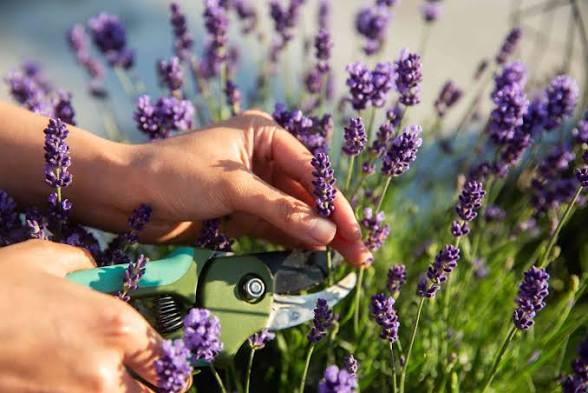
Lavender is one of those magical plants that rewards you with beauty, fragrance, and pollinator love—if you prune it correctly. Done right, pruning keeps lavender compact, encourages more blooms, and prevents that woody, leggy look gardeners dread. Done wrong (or not at all), and lavender can quickly decline.Let’s break down the simple, proven secrets to pruning lavender so your garden stays lush, fragrant, and thriving year after year.🌱 Why Pruning Lavender Is So ImportantPruning isn’t just cosmetic—it’s essential for lavender’s long-term health.Benefits of regular lavender pruning:🌸 Promotes more flowers🌿 Keeps plants compact and bushy🪵 Prevents woody, split stems🐝 Encourages pollinator activity💜 Extends the plant’s lifespanLavender naturally wants to grow woody at the base. Pruning redirects energy into fresh, flexible growth where flowers form.✂️ When to Prune Lavender (Timing Matters!)🌼 After Flowering (Light Prune)When: Late spring to early summerWhy: Encourages a second flush of bloomsHow much: Remove spent flower stems and a small amount of soft growthPerfect for gardeners in the UK and cooler parts of Canada where summers are mild.🌞 Late Summer Pruning (Shaping Cut)When: After the main bloom finishesWhy: Keeps the plant tidy and fullHow much: Up to one-third of the plantIdeal for maintaining neat borders and container-grown lavender.🍂 Early Fall (Only in Warm Climates)When: Early autumn only in mild regionsWhere: Southern U.S. or coastal areasWarning: Do not prune late in cold climates—new growth won’t survive frost.❄️ Never Prune in WinterLavender needs its woody structure to protect itself from cold and moisture. Winter pruning can lead to rot and dieback.✂️ How to Prune Lavender Properly (Step-by-Step)1️⃣ Use Clean, Sharp ToolsDull shears crush stems. Always use clean, sharp pruners to prevent disease.2️⃣ Find the “Green Zone”Only prune above the woody part of the plant.👉 Look for flexible green growth—this is where new shoots will emerge.3️⃣ Cut Back by One-ThirdA good rule of thumb:✂️ Never remove more than ⅓ of the plant at once4️⃣ Shape Like a DomeAim for a rounded mound. This helps sunlight reach all parts of the plant and improves air circulation.🌿 Lavender Pruning Tips Most Gardeners Don’t Know💡 Always leave 1–2 inches of green growth above the woody base💡 Prune after the morning dew dries to prevent fungal issues💡 Harvest flowers while pruning—two birds, one snip!💡 Avoid pruning young plants heavily in their first year🌸 What to Do With Pruned LavenderDon’t toss those fragrant stems!✨ Use them for:Dried lavender bundlesSachets for drawers and closetsHomemade lavender oilHerbal teas (culinary varieties only!)Natural air fresheners🐝 Common Lavender Pruning Mistakes to Avoid🚫 Cutting into woody stems🚫 Pruning too late in fall🚫 Skipping pruning altogether🚫 Using dirty or rusty toolsThese mistakes can weaken or even kill lavender plants over time.🌍 Pruning Tips by Lavender TypeEnglish Lavender (Lavandula angustifolia)✔ Most cold-hardy✔ Responds very well to regular pruningFrench / Spanish Lavender (Lavandula stoechas)✔ Prune lightly and more often✔ Avoid heavy cutsHybrid Lavender (Lavandula x intermedia)✔ Vigorous grower✔ Can handle stronger pruning💜 The Secret to Long-Lived LavenderConsistent, gentle pruning—year after year—is the real secret. Lavender thrives on routine care, good drainage, and sunlight. When you prune with intention, your plants reward you with strong growth, more blooms, and unbeatable fragrance.🌿 Final ThoughtLavender pruning doesn’t have to be intimidating. Once you understand when and where to cut, it becomes one of the most satisfying garden tasks. A few careful snips now can mean years of healthy, fragrant plants ahead.